
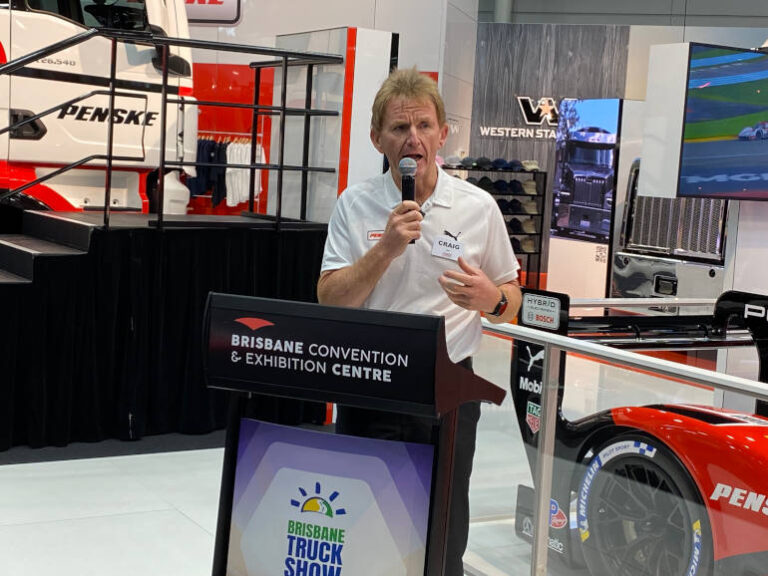
As the heavy vehicle market moves through a period of correction, the gap between strong operators and those struggling has become increasingly visible. According to Craig Lee, Executive General Manager – On-Highway at Penske Australia & New Zealand, the difference is less about fleet size and more about maturity.
“There’s a very simple financial metric, and that is equity,” Lee said.
In an environment of escalating operating costs, volatile freight rates and tighter margins, balance sheet strength matters. Operators that can recover their costs through disciplined pricing and maintain sustainable levels of leverage are better positioned to withstand downturns.
“Your ability to recover your costs in an escalating cost market, sophisticated price modelling, transparency — that’s very important,” he said.
Access to capital, borrowing costs and cash flow discipline all influence resilience. But while financial fundamentals are critical, Lee believes the most decisive factor sits elsewhere.
“The single biggest thing that separates good companies from ordinary companies, whether it’s transport or anything, it’s the people,” he said.
For Lee, fleet maturity is fundamentally cultural. In an industry where assets are expensive and margins are thin, the human element often determines performance outcomes.
“If you’re running a fleet and you’ve got reliable drivers who turn up every day and keep that relationship with the customer, and you’ve got schedulers that have a relationship with customers, and you’ve got a customer-first behaviour, your customer will be far more inclined to renew contracts with you,” he said.
Driver capability has direct commercial consequences. Fuel efficiency, vehicle uptime, maintenance outcomes, insurance performance and reputational standing are all influenced by the person behind the wheel.
“The single most important thing around vehicle reliability, vehicle uptime, vehicle fuel economy, your insurance premiums and your reputation is all the bloke at the steering wheel,” Lee said.
Mature fleets invest in retaining skilled drivers and building long-term customer relationships. They understand that transparency — particularly when things go wrong — builds trust.
“When I trust my supplier, I’m far more likely to retain that supplier,” Lee said. “When they can tell me the bad news as well as the good news in advance, that matters.”
In contrast, operators that focus solely on short-term cash flow without building equity or culture are more vulnerable during market contractions. The recent rise in insolvencies and repossessions has reinforced that point.
Lee also rejects the idea that scale alone guarantees stability. Smaller fleets with strong culture, disciplined cost recovery and committed staff can outperform larger operators lacking those fundamentals.
“It’s not just top management,” he said. “It’s actually the driver.”
In a sector often focused on equipment specifications, emissions standards and technology upgrades, Lee’s assessment is notably straightforward. Fleet maturity is not defined by the newest trucks or the largest order books, but by financial sustainability and people capability.
As freight volumes stabilise and competition intensifies, operators that combine strong equity positions with a customer-centric culture are more likely to navigate volatility successfully.
In the current market, maturity is less about growth and more about resilience. And according to Lee, resilience begins with people — supported by disciplined financial management.
- Blacktown targets the biggest emitters first
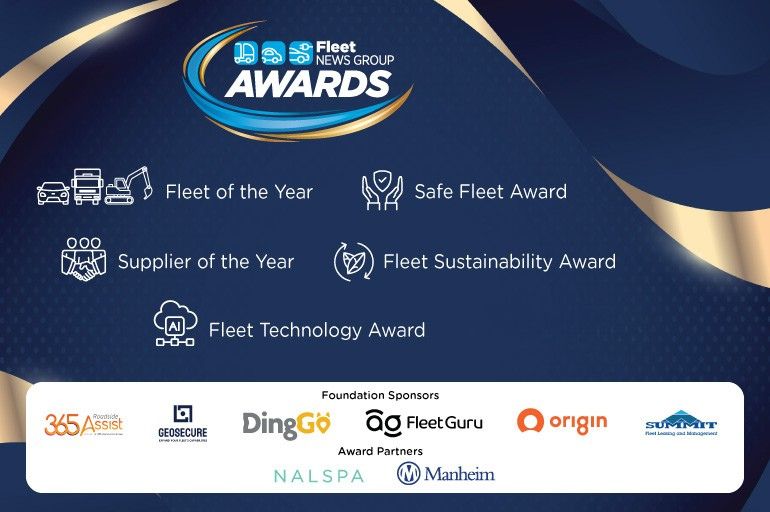
 Electrifying passenger vehicles might deliver some quick wins for fleet emissions, but Blacktown City Council is looking further down its fleet list to find where the biggest emissions are actually being produced. That has put garbage trucks firmly in the spotlight. Speaking during the Fleet News Group Awards finalists panel at Everything Electric Sydney, Blacktown
 - Fleet sustainability goes beyond the drivetrainThe race to reduce heavy vehicle emissions is often framed around the choice between diesel, battery electric, hydrogen and other alternative fuels. But a case study presented at TruckShowX showed that fleet sustainability reaches much further than the powertrain. Scott Donnelly, New Energy & Emissions Reduction Lead at TR Group, and Will Samuel, General Manager
- Cutting truck emissions will take more than electric vehicles: Hino CEOAustralia could reduce road transport emissions sooner by taking a broader approach that includes newer trucks, alternative fuels, hybrids and driver training rather than waiting for the entire heavy vehicle fleet to become electric. That is the view of Hino Australia President and CEO Richard Emery, who believes governments need to consider the unique operating
- BetterFleet data reveals the hidden efficiency gap inside electric truck depotsSwitching from diesel to electric removes tailpipe emissions, but BetterFleet says that is only the beginning of the emissions and efficiency story. Speaking at TruckShowX, BetterFleet Vice President APAC Markets Russ Yell said the way energy is managed after it enters a depot can have a significant impact on operating costs, carbon performance and the
- Hydrogen freight network targets Australia’s fuel security challengeAustralia’s reliance on imported diesel has become a business continuity risk for the freight industry, according to transport and energy leaders speaking at TruckShowX. During a panel session, Hiringa Founder and CEO Andrew Clennett joined Ofload Director of Growth Drew McKinnel and Ofload Senior Director Karishma Bhatt to examine how hydrogen, freight data and greater