

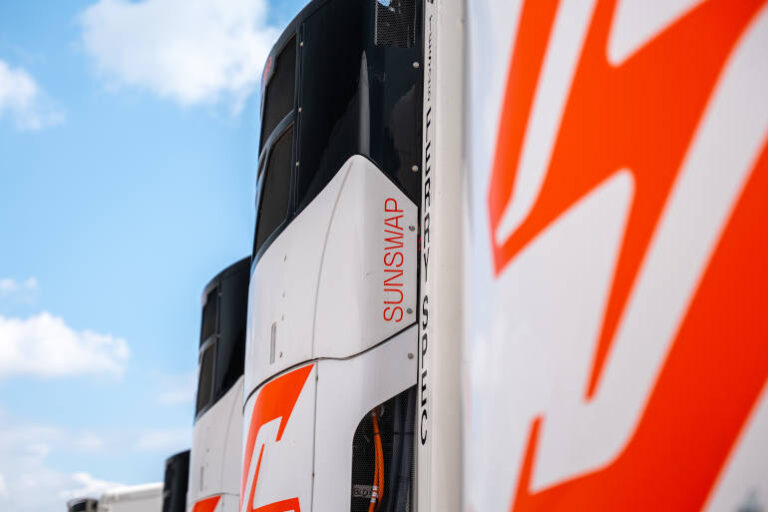
Protran Solutions used TruckShowX 2026 to demonstrate how solar-electric refrigeration technology could help transport operators reduce emissions and diesel consumption without compromising cold-chain performance.
At the event in the Hunter Valley, Protran Solutions showcased the Sunswap Endurance, a fully integrated solar-electric transport refrigeration unit designed to operate without diesel power. The company positioned the technology as a practical solution for fleet operators facing increasing pressure to lower emissions, reduce operating costs and meet sustainability targets.

Unlike conventional refrigeration units that have been converted from diesel to electric operation, the Sunswap Endurance was engineered from the ground up as an electric system. The refrigeration unit combines batteries, solar panels and cooling technology into a single integrated platform capable of maintaining temperatures as low as -25°C while eliminating refrigeration-related exhaust emissions.
Solar panels mounted across the trailer roof continuously harvested energy throughout the day while vehicles were travelling, parked in depots or waiting at loading docks. This allowed the onboard battery system to recharge during normal operations, reducing reliance on charging infrastructure and improving operational flexibility.
Speaking at the event, Grant Turner, General Manager of Protran Solutions, said Australian operators had been looking for a commercially proven alternative to diesel-powered refrigeration.
“Australian fleet operators have been waiting for a credible, commercially proven alternative to diesel refrigeration — and that’s exactly what the Sunswap Endurance delivers,” said Turner.
One of the key messages delivered at TruckShowX was that the technology had already been tested extensively under Australian operating conditions.
Protran Solutions highlighted the completion of what it described as the world’s longest zero-emission solar-charged refrigerated transport trial, covering a 1,671-kilometre return journey between Sydney and Brisbane. The vehicle completed the trip entirely on battery-electric refrigeration power, finishing with 62 per cent battery capacity remaining.
The company also referenced a more recent 1,200-kilometre trial between Sydney, Canberra and Griffith. Operating at a constant temperature of -5°C over a 36-hour cycle, the refrigeration system completed the route with 67 per cent battery capacity remaining.
“These trials are not a scientific exercise. They are real-world scenarios on some of Australia’s most demanding freight corridors,” Turner said.
“In both cases outlined, we finished with 62 and 67 per cent battery remaining in two very different cases of cartage and roads. That’s a statement about what this technology can do in Australian conditions.”
TruckShowX provided an opportunity for transport operators, fleet managers and logistics businesses to inspect the technology firsthand and discuss its application in Australian cold-chain operations.
Turner was joined at the event by Sunswap founder and CEO Michael Lowe, who helped demonstrate the technology and discuss its potential role in reducing emissions across refrigerated freight operations.
As fleet operators continue to explore lower-emission technologies beyond the prime mover itself, solar-electric refrigeration systems are emerging as another pathway to reducing the environmental impact of freight transport while maintaining operational performance across Australia’s long-distance supply chains.