
Across worksites, industrial estates and suburban streets, the dual-cab ute has become the default vehicle for many trades and service businesses. It’s familiar, versatile and widely available.
But as workloads increase and jobs become more complex, many operators are starting to reassess whether that default choice is still the most productive one.
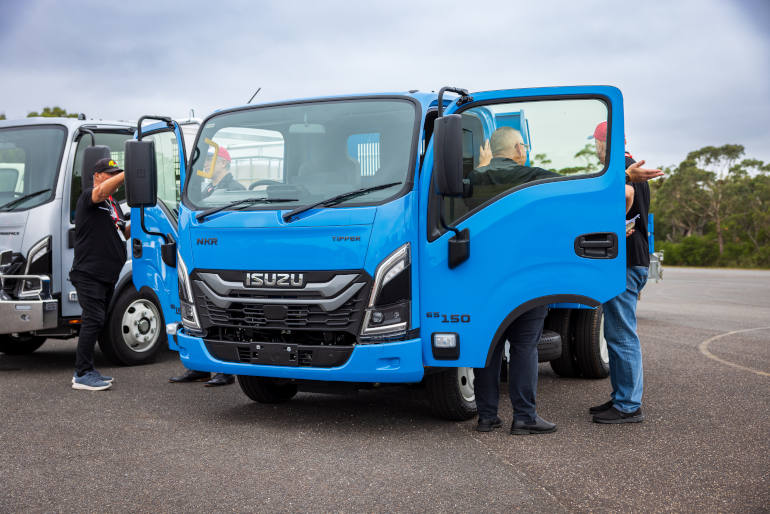
That question was at the centre of a recent drive event run by Isuzu Trucks, where Fleet News Group was invited to take part in a series of back-to-back comparisons between fully loaded utes and light-duty trucks. The aim of the exercise was straightforward: to convince attendees that, in many real-world fleet applications, a truck may be the more practical option once the work demands increase.
Rather than relying on specifications or sales claims, the event focused on hands-on experience — loading vehicles, towing trailers and driving them through identical tasks to see how each performed.
The Hidden Cost of the Second Vehicle
For many fleets, the tipping point arrives when a trailer becomes part of the daily routine.
A typical scenario might involve tools in the tray, materials in the trailer and multiple trips to complete the day’s work. The vehicle itself may still be operating within its limits, but the workflow becomes more complicated.
Reversing takes longer. Parking becomes harder. Loading and unloading adds time. And every additional component — trailer, hitch, tyres, brakes — introduces more maintenance and risk.
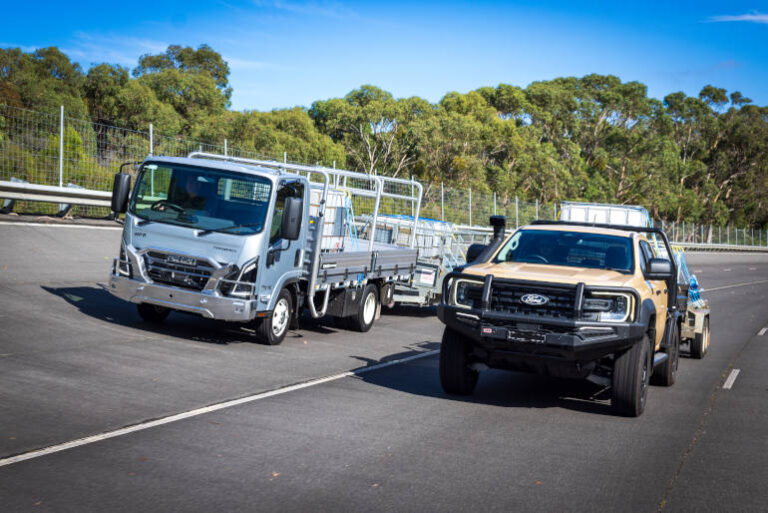
At the Isuzu drive day, that difference became obvious during manoeuvring exercises. The ute required a trailer to carry the same load, while the truck carried everything in one vehicle.
All attendees quickly noticed the operational impact.
“It’s just so much easier when you’ve got everything in one unit,” was one of the observations after completing the test runs.
It’s a practical advantage that shows up immediately in day-to-day operations.
Productivity Is About Time, Not Just Payload
When fleets compare utes and trucks, the conversation often focuses on payload capacity. That’s important, but productivity is just as much about time.
How long does it take to load the vehicle? How many trips are required to complete the job? How much time is spent managing equipment rather than doing the work?
A vehicle that can carry everything in one trip reduces downtime and increases output. Over weeks and months, those small gains add up.
Light trucks are engineered for this type of workload. Their larger load areas, higher payload ratings and purpose-built bodies allow businesses to transport more equipment and materials in a single journey.
Compared to traditional utes, operators gain significantly greater payload capacity and more versatile storage space — advantages that translate directly into improved productivity on site.
In practical terms, fewer trips mean more time spent working and less time spent driving.
Stability and Control Under Load
Another factor that affects productivity — often overlooked — is how a vehicle performs when it’s fully loaded.
Vehicles operating near their limits require more attention from the driver. Braking distances increase. Acceleration slows. Stability becomes more sensitive to load distribution.
During the drive comparisons, both vehicles were loaded to simulate real operating conditions. The difference in effort was noticeable. The ute required more work from its braking and transmission systems, while the truck handled the load more comfortably across hills, corners and braking zones.
That reduced strain doesn’t just improve safety. It can also reduce wear and tear on key components, helping to control maintenance costs over time.
Designed for the Job
The core advantage of a light truck lies in its design.
Unlike many passenger-based vehicles, trucks are built specifically for commercial use. Their chassis, suspension and braking systems are engineered to carry heavy loads day after day.
Industry data reflects this difference. Rigid trucks transport significantly more freight per vehicle than smaller commercial vehicles, demonstrating their ability to deliver higher productivity under working conditions.
For fleets operating in trades, construction, delivery or service roles, that capability can make a measurable difference to efficiency.
A Practical Test, Not a Sales Pitch
What stood out from the event wasn’t a single feature or specification. It was the simplicity of the comparison.
Same load. Same route. Same job.
The exercise was designed to challenge assumptions — particularly the long-standing view that a ute is always the most practical fleet vehicle.
And in fairness, utes still have a clear role. They remain an effective solution for lighter duties or mixed personal use.
But for fleets regularly carrying heavy loads, towing equipment or running multiple trips each day, the comparison highlighted a different reality.
Sometimes the most productive solution isn’t a bigger ute. It’s a vehicle designed for the work from the start.