
For many organisations, fleet management starts with a simple question: are the vehicles available when the business needs them?
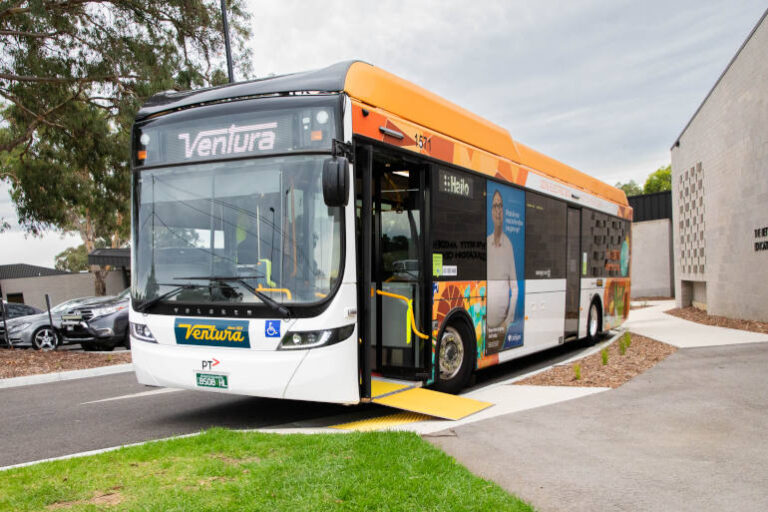
At Ventura Bus Lines, the question is getting bigger. With around 1,000 vehicles across government route bus services, coach and charter operations, the business is not only managing vehicles. It is managing a network of assets that includes depots, workshops, panel shops, charging infrastructure, support vehicles, buildings and property.
That broader responsibility is reflected in the role held by Jeremy Gunnell, Executive General Manager – Assets at Ventura Bus Lines.
“When I first started here, my title was General Manager of Fleet and Maintenance,” Gunnell said. “I was promoted six months or so ago into the EGM of Assets, because I’m now responsible for all of our fixed assets and infrastructure as well as our mobile assets.”

For Fleet Managers, Sustainability Managers and Finance Managers, the change in title is more than corporate language. It reflects the next stage in fleet maturity, where the job is no longer just about maintenance schedules, replacement programs and vehicle availability. It is about whole-of-life performance, capital planning and asset value.
“I oversee all of our buildings, our properties, the ongoing maintenance and responsibilities around that, but also all of our mobile infrastructure,” Gunnell said. “So the vehicles, the support vehicles, workshops, panel shops, the whole.”
Ventura Bus Lines is 102 years old and was privately owned by the Cornwell family for most of its history before being sold to Keppel Infrastructure Trust. Gunnell said the business still carries the same legacy of delivering public transport to the community, but the ownership change has brought a more corporate approach to reporting, finance and governance.
That shift has made asset management more important.
“The business is, or it’s 102 years old now, but up until maybe 101 years it was privately owned by the Cornwell family,” Gunnell said. “You wouldn’t really know that there has been a change other than we are a lot more corporatised now in terms of our main office and the way which we report up, and manage our financial status.”
The difference between fleet management and asset management becomes clearer when lifecycle planning is considered. In many fleets, replacement decisions are still influenced by age, kilometres, budget availability or the simple fact that an asset still works. Asset management adds another layer. It asks whether the vehicle is still delivering the best financial and operational outcome across its full life.
Gunnell said his earlier roles helped shape this mindset because he was responsible for the full life of assets, from selection through to disposal.
“In my prior roles, I had a lot of responsibility and ownership of the assets,” Gunnell said. “In terms of that full cycle responsibility, it was one, procuring the appropriate asset for the customer’s requirement, and then us managing that asset.”
This is where many fleets can improve their maturity. Procurement is not just about buying the cheapest or most available vehicle. Maintenance is not just about keeping it running. Disposal is not just something that happens when the asset is no longer useful.
The full lifecycle needs to be considered at the start.
“We would manage the asset in line with OEM recommendations in terms of the preventative maintenance, with a vision that when it came off contract, we had either an opportunity to sell it into the open market, or the asset would have reached its end of life, and we would scrap that asset,” Gunnell said.
For Finance Managers, this is an important point. The asset’s final value is influenced by decisions made years earlier, including the purchase specification, maintenance regime, expected life, timing of replacement and disposal channel.
Gunnell said he has always been mindful of the return on capital and the importance of having the asset ready for divestment when the time comes.
“We were always very mindful of the full ownership, cradle to grave, and where we could get the best capital return, or return on capital,” he said.
That thinking has also influenced Ventura’s approach to end-of-life planning. Gunnell said the business has changed some of its strategies around disposal and end-of-life outcomes, with positive results.
The challenge is finding the right point between useful life, maintenance cost, depreciation, operational reliability and resale value.
For organisations preparing for electric vehicles, this broader asset management view becomes even more important. The asset is no longer just the vehicle. It includes charging infrastructure, energy supply, depot layout, software, data, property constraints and future operational flexibility.
A diesel vehicle replacement program may be largely vehicle-led. An electric vehicle transition is asset-system led.
That means Fleet Managers need stronger relationships with finance, property, sustainability, operations and executive leadership. Sustainability Managers need to understand operational use cases before setting vehicle targets. Finance Managers need whole-of-life cost models that include infrastructure, downtime risk, residual values and disposal assumptions.
Ventura’s example shows why fleet maturity matters. The organisation is not just replacing vehicles; it is managing the systems that allow those vehicles to operate productively across their full life.
Gunnell said the aim remains simple at an operational level: keep vehicles on the road and servicing contracts.
“It’s a sizeable business. It’s a very fast paced business,” he said. “The aim of the game is keeping the vehicles on the road and productively servicing the contracts.”
But the way that outcome is achieved is changing. For modern fleets, especially those facing emissions reduction targets and new powertrain choices, the best results will come from treating vehicles as assets within a broader operating system.
Fleet management keeps the wheels turning. Asset management asks whether every decision across the life of the asset is improving service delivery, reducing risk and protecting capital value.
For organisations planning to add electric vehicles to the fleet, that distinction will become increasingly important.