

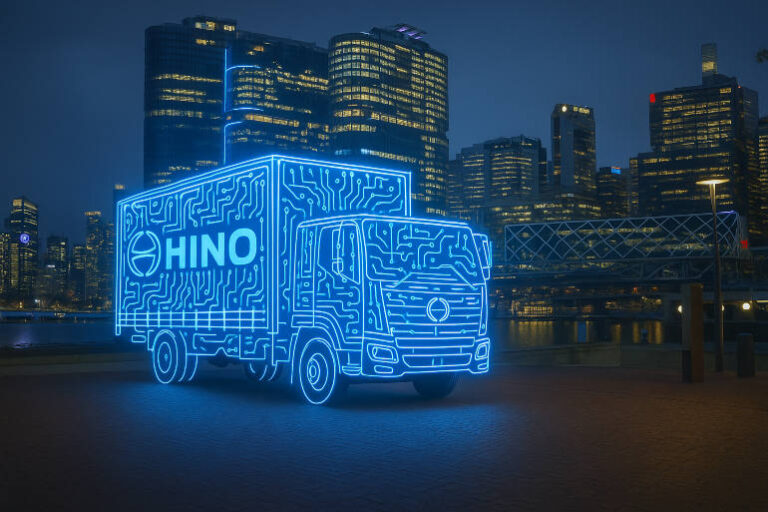
Fleet Managers have always understood the importance of specifying the right truck body for the job. Whether it’s a tipper, chiller, curtain-sider or service body, designing the body to suit the task is critical to achieving operational efficiency, safety and cost control.
But in today’s connected fleet world, there’s now a new dimension to that role — designing thedigital body of your truck. And this is where Australian company Directed Technologies is helping redefine best practice for Fleet Managers.
“We think of it as being the digital body builder,” says Brent Stafford, Executive Director at Directed Technologies. “Just as fleets have always worked with body builders to get the physical layout right, now they also need to consider the digital layer — the data flows, the safety systems, the integrations — as part of the initial vehicle design.”
From Afterthought to Essential Layer
In the early days of telematics, many fleets simply added aftermarket systems to vehicles after delivery — often as an afterthought.
That approach might have been acceptable when fleets were exploring basic tracking or fuel savings. But not anymore.
“Today, the digital layer is core to how the vehicle will perform operationally and financially across its lifecycle,” Brent says.
Rich, validated vehicle data is now required for:
- Fuel and emissions management
- Driver safety and fatigue monitoring
- Maintenance and uptime planning
- Lease and contract management
- Integration with enterprise platforms
And like truck bodies, poorly integrated systems lead to inefficiency, risk and additional costs.
Designing The Digital Layer Up Front
This is why leading fleets are now thinking about the digital body of their truck during the procurement process — not as a retrofit.
Directed Technologies works closely with truck OEMs to make this seamless. Their solutions are increasingly factory fitted or port-fitted, so the vehicle arrives at the fleet ready to plug into enterprise systems.
“We want fleets to think about their digital layer the same way they think about physical spec — it should be part of the initial design conversation,” Brent explains.
Mark Whitmore, Senior Vice President Global Sales, adds: “Our job is to remove friction. The vehicle should arrive fully connected, with validated data flows that meet the fleet’s operational needs.”
Why It Matters More Than Ever
As truck business models change — with more leasing and vehicle-as-a-service arrangements — having validated, transparent data is essential for:
- Accurate cost recovery
- Proving compliance
- Managing contract performance
- Ensuring asset health and uptime
And as Brent points out, “You can’t manage that effectively with a basic aftermarket install anymore.”
Modern OEM platforms offer rich data on everything from fuel burn to driver inputs to advanced safety system activations. Directed Technologies helps fleets harness this data — and connect it to systems like finance platforms, maintenance planning tools, CRM systems and more.
Practical Steps For Fleet Managers
If you’re specifying new trucks today, here’s how to apply the digital body builder mindset:
- Engage your OEM and tech provider early — ensure your digital requirements are discussed at spec stage.
- Map your required data flows — what data do you need, where should it flow, and who needs access?
- Consider the lifecycle — plan for how digital systems will support not just initial deployment, but maintenance, end-of-life and remarketing.
- Ensure data governance — understand where your data is stored and how it is protected.
- Integrate with enterprise systems — avoid data silos by ensuring seamless integration with core platforms.
The Future Is Digital By Design
Directed Technologies believes the fleets that embrace this mindset will gain a competitive advantage.
“We’re seeing that fleets who design their digital layer up front are getting better efficiency, better safety outcomes and better cost control,” Mark says.
It’s not hard to see why.
The days of ‘bolt-on’ telematics are fading fast. Fleet Managers now need to approach digital design with the same rigour they apply to truck body design.
“The digital body of the vehicle is now just as important as the physical body. Fleet Managers who understand that will be the ones driving the most efficient, safest and smartest fleets.”
Brent Stafford