

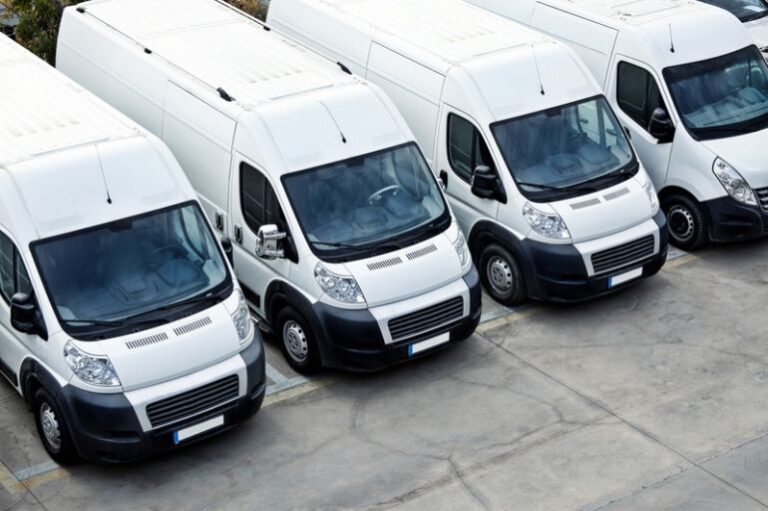
For many fleet operators, route planning has traditionally been viewed as a back-office function — a daily exercise in allocating vehicles, assigning customers and setting estimated time windows.
But leading transport operators in Latin America are reframing route planning as a frontline safety and efficiency strategy.
Recent discussions at Geotab Connect 2026 with fleet leaders from major regional operators revealed a clear theme: the real opportunity is not just building better routes — it’s closing the gap between what is planned and what actually happens on the road.
The Compliance Challenge
Survey results presented during the session showed that 42 per cent of drivers admitted they had prioritised productivity over safety due to operational pressure. More than 83 per cent said work-related stress affects their daily driving habits.
Those figures provide important context.
When drivers feel pressure to meet delivery targets, complete additional stops or recover lost time in traffic, route compliance can quickly break down. Speeding, aggressive manoeuvres and unauthorised detours are often symptoms of unrealistic planning rather than driver intent.
For fleet leaders, the solution lies in making routes executable — not just theoretically efficient.
From Static Planning to Data-Driven Optimisation
One of the most practical examples shared was how telematics data is now being fed directly back into route planning systems.
Rather than relying solely on estimated stop times or historical assumptions, fleet teams are measuring:
- Actual travel time between distribution centres and first customers
- Real service time at each customer
- Variations by time of day
- Route adherence between planned and executed journeys
By analysing this data at a granular level, operators have been able to lift route adherence to around 88 per cent between planned and executed activity.
That figure matters. High adherence means drivers are following realistic schedules. It also reduces the need for last-minute adjustments that create stress and unsafe behaviours.
Identifying the “Soft Window”
One example highlighted how data revealed a subtle but powerful optimisation opportunity.
Some customers were classified as “all day” deliveries — meaning they could receive goods at any time. However, telematics analysis showed that:
- Morning deliveries were completed in 30 minutes
- Afternoon deliveries at the same customer could take up to two hours
That insight changes everything. By prioritising those customers in the morning window, fleets improved:
- Productivity
- Route completion time
- Driver working hours compliance
It also reduced pressure later in the day, improving safety outcomes. This is where efficiency and safety align.
The Role of the Control Room
Centralised control rooms are increasingly being used not just to monitor safety events, but to ensure route discipline.
Rather than having individuals manually reviewing alert after alert, fleets are:
- Monitoring deviations from preferred routes
- Identifying repeat patterns of non-compliance
- Escalating only high-risk or recurring issues
- Using supervisors to provide structured coaching
Importantly, control rooms allow for real-time intervention — not just post-event reporting. Geotab LATaM customers_otter_ai
If a driver deviates significantly from a planned corridor or experiences delays that threaten safe working hours, action can be taken before a safety incident occurs.
Artificial Intelligence and Predictive Routing
With thousands of vehicles generating large volumes of data daily, manual analysis is no longer sufficient. Fleet operators are now experimenting with artificial intelligence to:
- Filter non-critical alerts
- Identify high-risk driver behaviour patterns
- Recommend retraining actions
- Predict which routes are most likely to overrun
- Optimise delivery windows dynamically Geotab LATaM customers_otter_ai
Rather than reacting to speeding events or fatigue indicators, AI models can flag drivers or routes likely to generate risk before it materialises. The shift is from corrective enforcement to predictive management.
Why Route Planning Is Now a Safety Strategy
The traditional separation between “productivity” and “safety” is breaking down. Better route planning:
- Reduces time pressure
- Minimises aggressive driving
- Lowers fatigue exposure
- Improves driver morale
- Protects asset security
In the Latin American context — where urban congestion, security risks and long-distance logistics intersect — route efficiency is no longer just about fuel consumption or service level. It is a risk management tool.
Lessons for Fleet Leaders
For fleets looking to improve route efficiency and compliance, several practical principles emerged:
- Measure reality, not assumptions
Use telematics to understand what actually happens between stops. - Feed execution data back into planning systems
Route optimisation must be continuous, not annual. - Align KPIs with safe behaviour
Drivers should not feel forced to choose between safety and productivity. - Use control rooms strategically
Focus on patterns and predictive indicators, not individual minor alerts. - Leverage AI to manage scale
Human oversight is essential — but not sufficient on its own.
Closing the Loop
The most advanced fleets in the region are demonstrating that route planning does not end when the vehicle leaves the depot.
Planning, monitoring, analysing and refining must operate as a continuous feedback loop.
By closing the gap between planned and executed routes, fleet operators are not just lifting efficiency. They are creating safer, more sustainable operations where drivers can complete their workday without unnecessary pressure.
In a region where 42 per cent of drivers admit prioritising productivity over safety, that shift may be one of the most important operational improvements a fleet can make.