

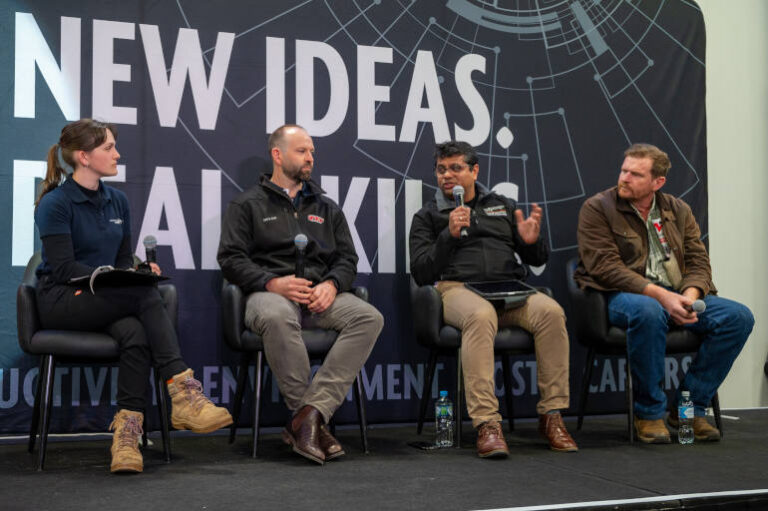
At the Australian Trucking Association’s Technology and Maintenance Conference (TMC) 2025, a powerful message resonated across the room: the industry’s future depends on how well today’s employers train, mentor and retain apprentices.
The panel session Working with TAFEs to Get Training Results brought together four experienced voices — Ashley Belteky, (Apprenticeship Mentor – Women in Male-Dominated Trades at Apprenticeship Support Australia), Paul Chaseling (Head Teacher – Heavy Vehicles Automotive at Dubbo TAFE NSW), Dylan Jenkin (Service Manager at Tatiara Truck and Trailers), and Raman Badekar (Educator at CIT Electric Vehicle TAFE Centre of Excellence).
The discussion provided practical, evidence-based advice for employers wanting to keep apprentices engaged and committed through to qualification — a vital goal in a trade currently losing around 40 per cent of apprentices before completion.
1. Start with good supervision and clear expectations
Belteky opened with a sobering statistic: “In automotive, we have about 15,000 active apprentices, yet we’re still losing about 40 per cent throughout their apprenticeship.”
Research by Apprenticeship Support Australia found the main reasons for drop-out were “poor supervision, poor workplace conditions and poor relationships with workplace peers.”
Chaseling agreed that supervision is critical from day one. “A lot of apprentices sign a piece of paper without understanding what they’re committing to,” he said. “Employers need to take time to walk them through the process, explain what an apprenticeship means, and make them feel like part of a team from the start.”
He added that TAFEs can help employers set the structure. “At Dubbo TAFE, we create a yearly plan showing which competencies we’ll deliver. We send it to the employer and suggest they match workshop tasks with the next topic — like getting an apprentice to replace a starter motor before coming in for electrical training. It reinforces learning both ways.”
2. Mentor, don’t just manage
Mentoring was one of the strongest themes of the session. Chaseling highlighted that many young people entering the trade lack the guidance previous generations may have taken for granted.
“About 50 per cent of the young people who come through our TAFE doors don’t have dads or male role models,” he said. “When they get yelled at for making a mistake, they go to water. A mentor in the workplace can help them through those difficult times and teach them how to respond to pressure.”
Belteky encouraged employers to use available resources. “We’ve developed a free online supervisor training resource so employers understand their obligations and learn best-practice mentoring,” she said.
3. Understand how Gen Z learns
Jenkin said understanding the next generation is vital to running a successful workshop. “They speak a different language,” he said. “Rather than trying to change them, we need to change how we communicate. They like to know the how and why behind everything — once you explain that, they open up.”
His business has implemented HR support and parental engagement to keep apprentices on track. “Their parents are invested in their future, so we involve them too,” Jenkin said. “It takes effort and expense, but our business doesn’t survive without apprentices. They’re our future.”
Belteky added that younger workers also respond differently to feedback. “They need a lot more affirmation — up to four times what was the old norm,” she said. “It’s about encouraging progress, not just waiting for perfection.”
4. Make apprentices feel useful early
Badekar, who has managed apprenticeship programs across Australia, India, and New Zealand, said the biggest motivator for young people is the feeling of usefulness.
“I call it the three Cs — Context, Contribution and Commitment,” he explained. “Help them understand why their role matters, give them meaningful work early, and show them they’re part of the business.”
He urged employers to spend more time on onboarding. “Explain the big picture — how they contribute to the workshop and the customer. Then, as soon as possible, help them produce something tangible, like completing part of a service or rebuilding a component. It’s human nature to want to feel valuable.”
5. Collaborate with TAFEs and training providers
The panel agreed that strong communication between employers and TAFEs is key to improving outcomes.
Chaseling said Dubbo TAFE takes this seriously. “We spend six weeks at the end of every year visiting employers to talk about their apprentices — what’s working, what’s not, and what support they need,” he said.
Badekar added that employers shouldn’t wait for TAFE to call. “Make your local TAFE your best friend,” he advised. “Invite teachers to your business, involve them when new apprentices start, and build a relationship based on open communication.”
6. Support mental wellbeing and life skills
Recognising that not all apprentices have strong support networks, Chaseling said Dubbo TAFE has partnered with Trademutt Inside, a mental health organisation. “They help students with budgeting, communication skills, and managing stress,” he said. “It’s not just about teaching mechanical skills — it’s about preparing them for life and work.”
Employers were encouraged to take a similar approach by providing safe spaces for apprentices to talk about issues and by checking in regularly.
7. Invest in the next generation
Jenkin summed up the mindset employers need to adopt. “Our business doesn’t survive without apprentices. We plan a year ahead, aligning workloads with training, because it’s an investment — not a cost,” he said.
Badekar agreed, adding that the benefits go beyond one workshop. “The apprentices you train today will keep the industry alive tomorrow,” he said. “We’re in an era of rapid change, and the only way to keep up is to make learning continuous and collaborative.”
The takeaway
The panel’s message was clear — the success of the next generation of heavy vehicle technicians will depend on leadership, communication, and culture in today’s workshops.
“Collaboration is the key,” Belteky said in closing. “When employers, TAFEs and apprentices work together, everyone wins — the business, the individual, and the industry.”
Top employer tips
1) Provide structure, mentoring, and regular feedback
2) Involve parents and make apprentices feel part of the team
3) Communicate with TAFEs about training plans and progress
4) Give apprentices meaningful work early on
5) Support mental health and wellbeing
6) Treat apprenticeships as a long-term investment in your business and the industry