

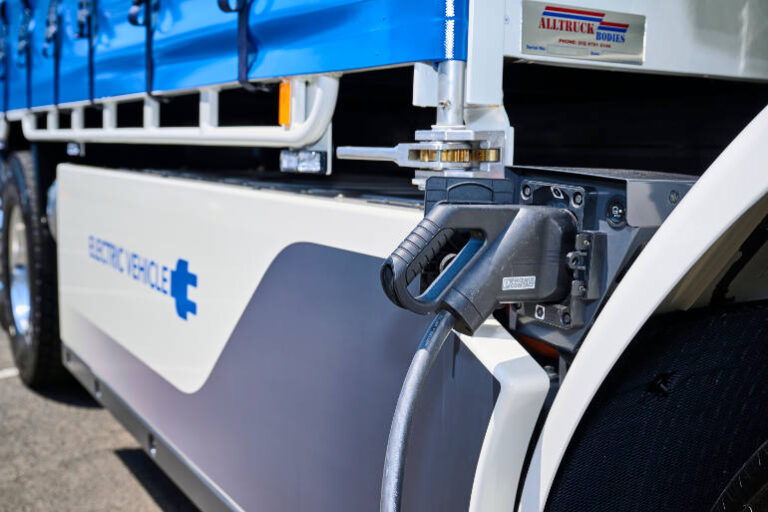
Truck operators will be offered free guidance on cutting fuel consumption and assessing new vehicle technology through FLEETLEAP, an industry alliance launched at the NatRoad National Conference on the Gold Coast.
The initiative brings together transport associations, energy specialists and technology providers, with a focus on helping businesses identify practical savings and make informed decisions about lower-emissions transport.
For smaller operators, the aim is to reduce the time and resources needed to investigate different technologies and operating practices.
Savings start with the existing fleet
While electric trucks form part of the program, FLEETLEAP will also address opportunities to improve the efficiency of trucks already working in Australian fleets.
MOV3MENT Managing Director Mark Gjerek said operators could reduce costs through vehicle specification and driver practices.
“Every litre of diesel saved makes a difference. Something as simple as choosing the right tyres or fitting aerodynamic fairings can reduce fuel costs by up to five per cent,” Gjerek said.
“We’re also seeing differences of more than 20 per cent in fuel consumption between drivers operating the same truck. That’s money businesses could be saving right now.”
These potential savings will vary between operations, but the message for Fleet Managers is that reducing fuel consumption can begin before the next vehicle replacement.
Gjerek said the alliance would also help operators assess where electric trucks were becoming a practical option.
“Electric trucks are becoming viable for more operators so that is one focus area. But they don’t yet work everywhere, and we want businesses to understand all opportunities to reduce fuel costs and emissions that make commercial sense for them.”
Practical help for small businesses
NatRoad CEO Warren Clark said smaller operators needed accessible advice that recognised the pressures of running a transport business.
“Most trucking businesses are small operations. Their owners are focused on keeping trucks moving and making ends meet, not spending weeks researching new technologies,” Clark said.
“With diesel prices where they are, even modest savings can make a real difference to a business’s bottom line. Operators need to know what they can do today to reduce costs, while understanding the options available for the future.”
FLEETLEAP will launch with four areas of support:
- An information hub bringing together advice on reducing fuel consumption and emissions.
- A regular electric truck market report comparing available Australian models and specifications.
- Run on Less Australia, demonstrating electric trucks on Australian roads, carrying real freight on real routes.
- A fleet advice service to help operators understand their options, including whether electric trucks suit their businesses and how to make the transition.
The demonstration program is intended to provide operating experience that can inform purchasing decisions alongside vehicle specifications.
Industry partners coordinate their efforts
FLEETLEAP’s founding partners are Heavy Vehicle Industry Australia (HVIA), NatRoad, the Queensland Transport and Logistics Council (QTLC), the Australian Alliance for Energy Productivity (A2EP), National Transport Insurance (NTI), NewVolt, JET Charge and MOV3MENT.
Together, the partners represent almost 3,000 businesses across Australia’s freight, logistics and energy sectors.
HVIA CEO Todd Hacking said the alliance would help connect work already underway across the industry.
“FLEETLEAP shows we can work together as an industry to not duplicate projects, and coordinate and connect our efforts across the sector and with government,” Hacking said.
The Australian Renewable Energy Agency (ARENA) has provided funding for some of the alliance’s electric truck initiatives, including Run on Less.
ARENA CEO Darren Miller said the project would give industry a forum to coordinate activity and share lessons.
“This is a challenge no single company could solve alone,” Miller said.
Planning beyond the first electric truck
For businesses considering electrification, the challenge extends beyond selecting a vehicle. Moving from a small trial to wider fleet adoption will require operators to consider charging and how the technology fits their operations.
NewVolt Co-Founder Rainer Knobloch said operators needed information to support that longer-term planning.
“Putting one or two electric trucks on the road is the easy part. Most operators need help working out how to get from there to a scaled fully electric fleet. That information just isn’t out there for Australian fleets yet.”
NTI Chief People and Services Officer Kerrie Challenor said the transition would differ between businesses.
“Decarbonisation is a significant challenge for the transport and logistics industry, and the transition will look different for different operators,” Challenor said.
FLEETLEAP says its approach will be independent and technology-agnostic. Its membership includes industry associations alongside commercial technology and service providers.
For Fleet Managers and business owners, the practical test will be whether the resources help identify improvements suited to their routes, loads and operating costs.
The alliance plans to expand its tools, industry data and case studies, with other freight supply chain organisations invited to participate or register for updates.