

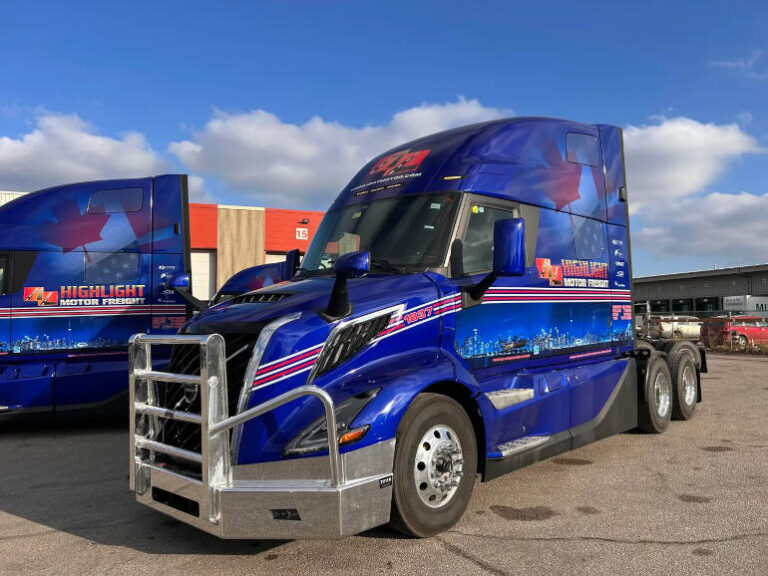
Volvo Trucks has delivered 125 units of its new VNL flagship to Highlight Motor Group, marking the largest Canadian order to date for the all-new VNL.
The trucks are VNL 860 variants and will join Highlight’s long-distance fleet operating across North America. The order builds on a long-standing relationship between the two companies and aligns with Highlight’s approach of running one of the youngest fleets in the industry, with vehicles typically replaced every four to five years. The majority of its fleet is made up of Volvo trucks.
Safety and driver comfort were key factors in Highlight’s purchasing decision, particularly as the industry continues to grapple with driver recruitment and retention challenges.
“Highlight Motor Group has been a strong long-term partner to Volvo Trucks, and this order is a clear demonstration of their commitment to safety, efficiency, and their drivers,” said Matthew Blackman, Managing Director, Canada, Volvo Trucks North America.
The all-new Volvo VNL has been engineered for long-haul operations, with Volvo reporting up to a 10 per cent improvement in fuel efficiency compared to the previous generation. These gains are attributed to improved aerodynamics and powertrain refinements, alongside a wide range of updates aimed at boosting productivity and reducing operating costs.
Safety technology is a major focus of the VNL 860 specification, which includes Volvo Active Driver Assist Plus, lane keep support, pedestrian detection and automated emergency braking. Volvo has also made noticeable changes to the cab design, with a strong emphasis on ergonomics and day-to-day usability for drivers spending extended periods on the road.
In 2025, the Volvo VNL received a Red Dot Award for Product Design in the commercial vehicles category, recognising the model’s design and functionality.
For Volvo Trucks, the Highlight order provides a strong early endorsement of the new VNL platform in the North American long-haul market. For operators, it highlights the growing importance of combining fuel efficiency, safety and driver appeal as fleet replacement cycles continue to tighten.