
For heavy vehicle operators watching the gradual electrification of transport with interest — and caution — the NSW Government’s latest EV fleet incentive round marks an important shift: heavy vehicles up to 23 tonnes GVM are now eligible for funding.
This change moves the program beyond passenger cars and light commercials and squarely into the territory of real-world fleet operations, where emissions reduction is harder, capital costs are higher, and duty cycles are far less forgiving.
The new funding round makes $5 million available to help businesses and organisations overcome the upfront cost of deploying electric heavy vehicles and installing smart charging infrastructure — a key barrier that has slowed adoption in the HV sector to date.
Heavy vehicles finally part of the equation
Under the expanded eligibility, the incentive now covers:
- Heavy commercial vehicles from 3.5 tonnes up to 23 tonnes GVM
- Incentives ranging from $10,000 to $50,000 per vehicle, depending on class and application
- Support for smart charging infrastructure, covering up to 50 per cent of charger port costs, capped at $60,000
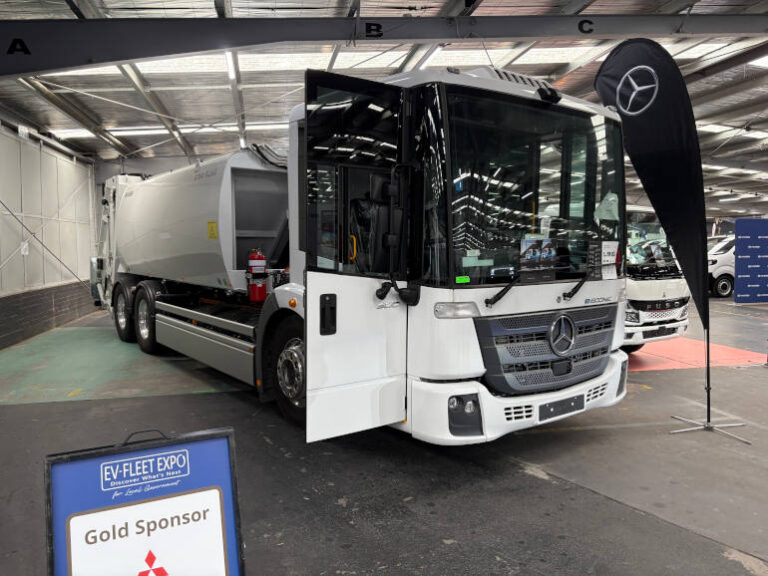
For operators in sectors such as waste, local government, construction, utilities, logistics and urban delivery, this opens the door to trial electric rigid trucks and heavier vans in controlled, fit-for-purpose applications.
Crucially, the program is designed to support pilot deployments, allowing fleets to test electric heavy vehicles alongside diesel assets before committing to broader transition strategies.
Designed for fleets, not theory
Unlike many grant programs, this incentive is non-competitive and allocated on a first-come, first-served basis, remaining open until May 2026 or until funding is exhausted. Eligible organisations can apply for support to purchase or lease up to 15 battery electric vehicles, making it suitable for small-scale but meaningful trials.
Since inception, the NSW EV fleets incentive program has already supported the deployment of more than 5,300 battery electric vehicles and 2,400 chargers, representing 5.2 per cent of all EV registrations in NSW — a strong indicator of fleet-led adoption when financial risk is reduced.
What this means for HV fleet strategy
For heavy vehicle fleets, the inclusion of trucks up to 23 tonnes is less about rapid replacement and more about targeted use cases:
- Urban and metropolitan operations
- Predictable routes with depot-based charging
- Vehicles returning to base daily
- Noise- or emissions-sensitive environments
The incentive does not remove all the challenges — payload, range, charging time and capital cost remain critical considerations — but it does lower the cost of learning, allowing operators to gather real operating data rather than relying solely on overseas case studies or supplier modelling.
Relevant beyond NSW-only fleets
While the funding is NSW-based, it is also relevant to national operators with assets registered or operating in NSW. This makes the program particularly useful for organisations looking to trial electric heavy vehicles in one state before considering broader rollout.
As more OEMs introduce electric rigid trucks and heavier vans into the Australian market, programs like this provide a practical bridge between early technology availability and commercial confidence.
Next steps for operators
Fleet and transport managers considering electric heavy vehicles should begin by identifying fit-for-purpose routes, confirming vehicle availability, and assessing charging infrastructure requirements at depots or operating bases.
With funding allocated on a first-come basis, early planning may prove critical.
For the heavy vehicle sector, this expansion is not a mandate — but it is a clear signal that electric trucks are moving from demonstration projects into mainstream fleet policy conversations.