


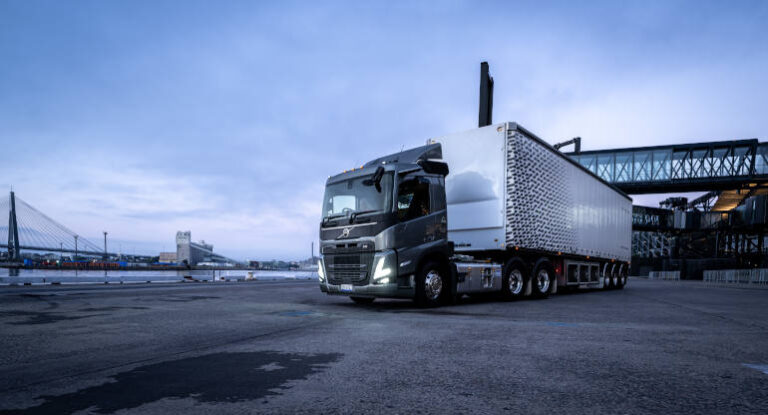
Volvo Trucks Australia has expanded its popular FM range with the introduction of new low-horsepower variants of its Euro 6 13-litre engine platform, aimed at operators seeking efficiency and flexibility across a wide range of applications.
The new line-up includes power ratings from 380hp with 1850Nm of torque through to 420hp and 2100Nm, alongside a 460hp/2300Nm option. While positioned as lower horsepower offerings within the 13-litre family, the variants are designed to deliver robust output suitable for both lightweight and rigid transport tasks.
A key feature of the new range is the broader torque delivery at lower engine speeds. Volvo says peak torque is available from 905rpm through to 1400rpm across the three new variants, which should support driveability and fuel efficiency in real-world conditions.
Engine braking performance has also been improved, with braking power increased by 70kW compared with comparable 11-litre variants. For operators running in urban or hilly environments, this may reduce reliance on service brakes and contribute to lower maintenance costs over time.
Tom Chapman, Vice President Sales and Marketing at Volvo Trucks Australia, said the new variants are intended to strengthen the FM’s appeal across a broader spread of applications.
“This new offering is designed to support FM customers with potential gains in efficiency and performance for lightweight and rigid applications,” Chapman said.
He added that Volvo remains focused on delivering practical benefits for operators. “We remain committed to delivering value to our customers with features such as extended oil drain intervals, more torque and more powerful engine braking. We’re confident that the Volvo FM will continue to offer a compelling option for Australian transport operators.”
The Volvo FM is rated to operate at a gross combination mass (GCM) of up to 90 tonnes and is available in six cab configurations, ranging from day cab (low and high) to sleeper (low and high), Globetrotter and crew cab variants.
For fleet buyers, the expansion of the 13-litre range provides additional specification flexibility. Rather than stepping down to an 11-litre platform, operators can now select a lower horsepower 13-litre engine that maintains higher torque characteristics and braking performance, which may be particularly relevant in applications where payload, terrain and duty cycle demand durability without the need for maximum output.
As transport operators continue to balance fuel efficiency, compliance with Euro 6 emissions standards and whole-of-life costs, incremental changes such as broader torque bands and improved engine braking are likely to factor into specification decisions. The updated FM engine range appears aimed squarely at that segment of the market.