
When fleet operators first consider in-vehicle video, the conversation usually centres on crash evidence and driver behaviour.
But insights shared during the LATAM customer session at Geotab Connect 2026 revealed a broader and more strategic use of video technology across transport operations in Latin America.
For these fleet leaders, video is no longer just a safety camera. It has become a tool for asset protection, operational compliance and real-time security response.
Beyond Telematics: Why Video Adds a Layer of Context
Telematics has become standard across most large fleets. It can detect:
- Speeding
- Harsh braking
- Rapid acceleration
- Cornering events
- Engine data and idle time
However, several operators explained that telematics alone does not always provide full context. Accelerometers may detect an impact, but they cannot always explain what actually happened. Was it driver error? A third-party vehicle? Road conditions? A security event? Video fills that gap.
During the LATAM session, fleet leaders described how video has helped them understand incidents that sensors alone could not fully interpret. This shift from “data points” to “visual context” is changing how transport control rooms operate.
Fuel Theft and Unauthorised Behaviour
One of the more practical applications discussed was fuel security. Fleet operators reported using video to identify irregular refuelling behaviour and suspected fuel theft. When paired with telematics data and fuel reporting systems, video provides verification — either confirming compliance or identifying discrepancies.
In regions where fuel costs represent a significant operational expense, this capability adds measurable financial value. Video has also been used to detect:
- Camera obstruction attempts
- Unauthorised passenger behaviour
- Non-compliance with operating procedures
Rather than relying solely on post-event investigations, fleets are using video to reinforce standards in real time.
Supporting Panic Button and Security Events
In parts of Latin America, security risk is a daily operational consideration. Operators explained that when a driver activates a panic button, the control room can immediately access camera footage to assess the situation.
Instead of responding blindly, control room teams can determine:
- Whether the event is a robbery
- Whether it is a traffic accident
- Whether emergency services are required
- Whether the driver is in immediate danger
This immediate visibility reduces response time and improves decision quality. Importantly, some drivers now view the control room as an ally rather than a surveillance mechanism — particularly when video has helped resolve security situations effectively.
Real-Time Alerts That Prevent Incidents
Another benefit highlighted was in-cab alerting. Modern video systems can generate real-time warnings for:
- Following distance
- Forward collision risk
- Distraction
- Fatigue
These alerts function even in areas with limited cellular connectivity, providing preventative support before a safety event occurs. For drivers operating long hours in congested urban environments, this technology acts as an additional layer of protection.
Changing the Narrative Around Surveillance
Resistance to video adoption remains a common concern across global fleets. However, speakers during the LATAM session emphasised that implementation strategy matters.
Rather than positioning cameras as a disciplinary tool, successful fleets:
- Communicate the safety benefits clearly
- Apply consistent rules for all drivers
- Recognise good performance
- Enforce non-negotiable behaviours (such as camera tampering)
By embedding video within a broader safety and productivity framework, fleets have been able to gain driver acceptance over time.
A Multi-Layered Risk Strategy
The key takeaway from the LATAM session at Geotab Connect 2026 is that video technology has evolved beyond its original purpose. In Latin American fleet operations, it now supports:
- Accident prevention
- Incident clarification
- Fuel loss mitigation
- Route and behaviour compliance
- Security response coordination
Video is no longer just about proving what happened after a crash. It is about understanding what is happening in the moment — and intervening before risk escalates.
For Fleet Managers operating in complex, high-pressure environments, that broader capability may ultimately be where the strongest return on investment lies.
- Scania Powers Up the Slopes
 Scania has signed a long-term agreement with Italian manufacturer Prinoth to expand the use of its industrial battery technology in electric snow groomers, taking electrification into demanding alpine operating conditions. The partnership will support Prinoth’s Husky E-Motion and newly introduced Leitwolf E-Motion, with both machines powered by Scania Core 800 battery packs. For heavy vehicle
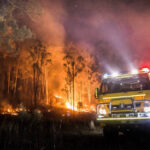
 - HERE Connects the Missing Routes for Fire CrewsHERE Technologies and the NSW Rural Fire Service have integrated more than 60,000km of fire trails into an emergency response routing network, helping crews navigate beyond public roads to reach incidents in remote locations. The initiative combines HERE’s road network data with NSW RFS operational mapping to create a unified, routable network incorporating fire trails,
- Scania Expands Digital Tools for Heavy FleetsScania is expanding the technology around its latest truck updates, using connected services, driver coaching and maintenance support to help fleet operators turn vehicle improvements into measurable operating benefits. The company says the Scania Dynamic updates are designed to improve the driver environment, energy efficiency and everyday usability, but the broader fleet proposition increasingly relies
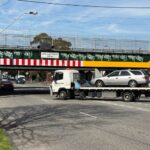
- Minor Bridge Strikes Are Creating a Major BillThe most spectacular bridge strikes attract the headlines, but a new economic study suggests Australia’s biggest bridge-strike bill is being generated by much less dramatic incidents. HoustonKemp Economists estimates protection beam and signage strikes accounted for 79 per cent of Australia’s approximately 1,220 bridge-strike incidents in FY2025. Despite being the lowest severity category used in
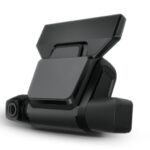
- Dash cams are becoming a driver coaching tool, not just an incident recorderDash cams have traditionally been associated with providing evidence after a collision, but Australian fleets are increasingly using video telematics as part of a broader approach to driver safety and risk management. The Geotab Report 2026: Connected Fleets in Australia found 65% of respondents using in-cab video reported improved driver safety. A further 61% reported a reduction