

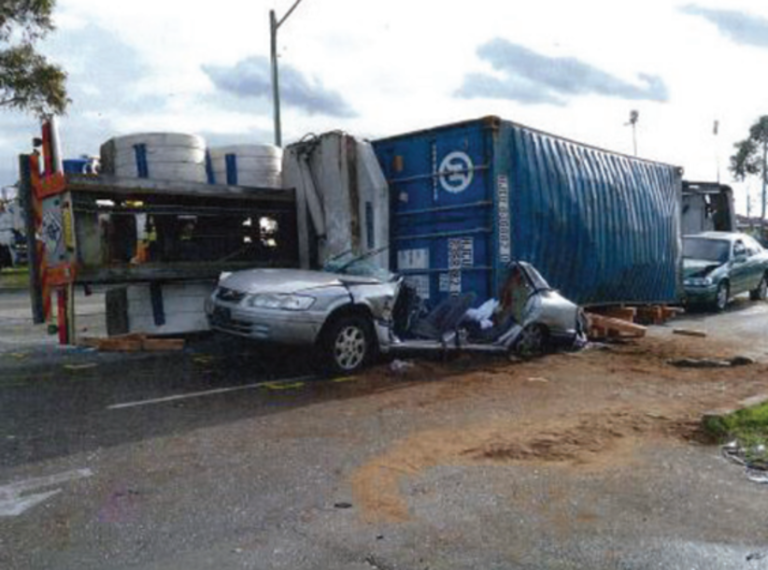
Fleet Managers are under increasing pressure to demonstrate control over costs, risk and operational efficiency. Fuel spend, lease rates and servicing are typically tracked in detail. Accident and repair costs, however, remain one of the least visible areas of fleet operations.
According to Shaun Janks, Co-Founder and Chief DingGo at DingGo, many fleets still do not have a consolidated view of what accidents truly cost the organisation.
“We often ask straightforward questions like how many incidents occurred last year, or what was spent on repairs outside insurance,” Janks says. “In many cases, the answer isn’t clear — not because fleet managers aren’t capable, but because the data hasn’t been captured in one place.”
This challenge exists across fleets of all sizes. Major incidents that trigger insurance claims are usually recorded, but a significant proportion of damage never enters a formal reporting system. Minor collisions, parking scrapes and cosmetic repairs are often handled informally or deferred.
“Accident costs don’t sit neatly in a single category,” Janks explains. “Some go through insurance, some hit maintenance budgets, and others only appear at lease end or resale. Without a consolidated view, you’re missing a substantial part of the spend.”
Over time, these fragmented costs accumulate. A series of small repairs that appear insignificant individually can translate into meaningful financial exposure — particularly when vehicles are returned, resale values fall short, or unexpected lease-end invoices arrive.
“You might not feel the impact immediately,” Janks says, “but the cost is there. It just surfaces later.”
The issue extends beyond dollars. Incomplete accident data also limits safety improvements and risk management. Without reliable information on incident frequency, damage types and contributing factors, it becomes difficult to identify trends or implement preventative strategies.
“You can’t manage what you can’t measure,” Janks says. “If you don’t know where incidents are occurring, how often they happen or what they’re costing, you can’t reduce them in a meaningful way.”
Many fleets continue to rely on manual processes — paper forms, email notifications or spreadsheets — to capture incidents. These methods introduce friction, discourage reporting and make it difficult to analyse data over time.
“When reporting feels like a burden, compliance drops,” Janks notes. “That’s when minor damage slips through the cracks.”
Digitised incident reporting addresses this gap by centralising information and capturing the full spectrum of accident-related costs — insured and uninsured alike.
“When every incident is logged digitally, patterns become visible very quickly,” Janks says. “That’s when fleets start to understand the true scale of what’s happening.”
Those patterns may reveal higher repair costs for specific vehicle models, recurring low-speed incidents in particular locations, or a volume of minor damage that had previously gone unnoticed.
Importantly, Janks emphasises that recording an incident does not mandate immediate repair.
“Logging is about visibility, not punishment,” he says. “Once you have the data, you can decide whether to repair now, defer or plan for it at end of life. The key is that it’s a conscious decision, not a surprise.”
As governance expectations increase and budgets tighten, accident management can no longer be treated as an administrative afterthought. It is central to whole-of-life cost control and overall fleet maturity.
“Fleets that understand their accident data are in a much stronger position,” Janks says. “They can manage costs, negotiate insurance with confidence and make better procurement decisions. But it all starts with knowing the numbers.”
In an environment where margins are scrutinised and accountability is rising, failing to measure accident costs effectively means surrendering control over one of the fleet’s most significant — and most overlooked — areas of expenditure.
- “You Can’t Manage What You Can’t Measure”: Why Most Fleets Still Don’t Know Their Accident Costs
 Fleet Managers are under increasing pressure to demonstrate control over costs, risk and operational efficiency. Fuel spend, lease rates and servicing are typically tracked in detail. Accident and repair costs, however, remain one of the least visible areas of fleet operations. According to Shaun Janks, Co-Founder and Chief DingGo at DingGo, many fleets still do not
 - New Volvo FMX Trucks Drive REMONDIS’ Waste Operations ForwardREMONDIS Australia has bolstered its heavy vehicle fleet with the delivery of nine new Volvo FMX prime movers, reinforcing its operational capacity to support growing demand across the waste and recycling sector. The new trucks will operate primarily in South East Queensland, hauling materials between REMONDIS’ resource recovery facilities at Rocklea and Northgate to its
- Why Europe is moving faster on truck emissions and technologyEurope is accelerating the transition to cleaner and safer commercial vehicles through legislation and policy support, while Australia is moving at a slower pace due to infrastructure gaps and different regulatory priorities. According to Glen Dyer, Managing Director at IVECO Australia, the European market has advanced more quickly in areas such as emissions reduction, alternative
- How Latin American Fleets Are Lifting Efficiency and ComplianceFor many fleet operators, route planning has traditionally been viewed as a back-office function — a daily exercise in allocating vehicles, assigning customers and setting estimated time windows. But leading transport operators in Latin America are reframing route planning as a frontline safety and efficiency strategy. Recent discussions at Geotab Connect 2026 with fleet leaders
- Euro 6 and Multi-Combination Trucks: The Emissions Lever Hiding in Plain SightAs debate continues around battery electric and hydrogen trucks, Craig Lee, Executive General Manager – On-Highway at Penske Australia & New Zealand, believes Australia may be overlooking a far more immediate emissions opportunity. “If you actually want to make the single biggest emission reduction that you can in Australia,” Lee said, “provide significant incentives to