




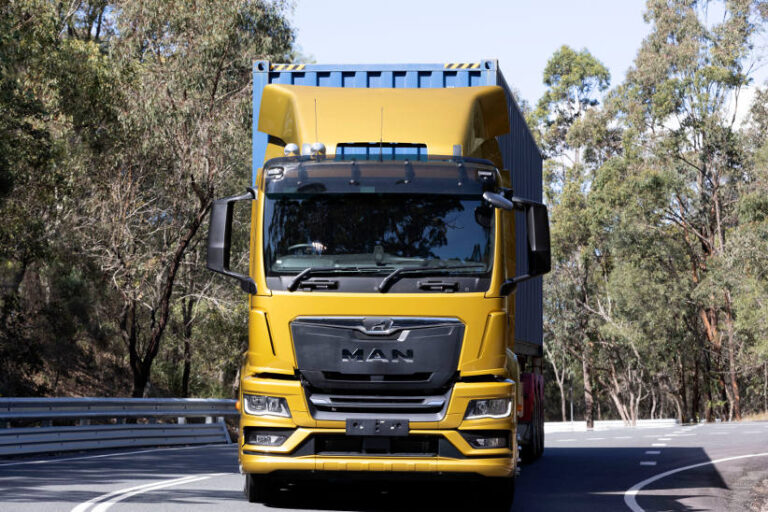
Truck driving in Australia is more than moving freight – it’s about resilience, safety, and opportunity. At a national roundtable, multicultural drivers shared their experiences with ATA leaders, underlining both the challenges and rewards of the profession.
Drivers reported wellbeing issues such as abuse on UHF radios and social media, but they also reinforced a key message: all drivers should meet the same licensing standards. They welcomed South Australia’s model requiring logged hours before advancing to an MC licence, a system that helps ensure drivers are competent before operating B-doubles or road trains.
The roundtable’s findings matter for anyone considering a trucking career. Unlike other professions where long training or expensive degrees are required, trucking offers quick entry and strong pay:
- Truck drivers can earn $88,000, with higher rates for long-distance work.
- Police officers start on $81,500 after nearly a year of training.
- Mechanics complete a four-year apprenticeship to reach $53,700.
- Business graduates spend three years at university before earning $58,000–$88,000.
With the trucking industry facing a driver shortage, the ATA is also developing resources to help drivers report sham contracting and creating an industry-wide charter against racism. More than 1,850 people have already registered for ATA’s Diversity & Inclusion training, supporting workplaces to better attract and retain staff.
“While the focus of the roundtable was multicultural drivers, their insights into driver licensing and training are vital for the safety of all,” said ATA CEO Mathew Munro. “By strengthening these pathways, we can build a fairer industry and help more Australians build long-term careers.”
Truck driving is a career where your skills are valued, your work is essential, and your future can grow as fast as the freight you move.
- Penske Crowns 2026 Master Technicians
 Penske Australia & New Zealand has named Luke Andrew and Luke Reid as its 2026 Penske Guild Master Technicians, recognising technical excellence across the company’s on-highway and off-highway operations. Andrew, a leading hand at Penske’s Perth branch, claimed the on-highway title, while Darwin-based Reid took out the off-highway category. The biennial Penske Guild competition brings
 - WABCO Air Dryer Range Targets Heavy Vehicle UptimeZF Aftermarket has highlighted its WABCO air dryer cartridge range for Australian commercial vehicle operators, with the products designed to protect compressed-air systems from moisture, oil and other contaminants. The range was showcased at the recent Australasia Bus & Coach Expo, where ZF demonstrated the role air treatment can play in maintaining the reliability of
- Five-year warranty becomes part of Hino’s aftersales retention strategyHino Australia is positioning its five-year warranty as part of a broader aftersales package designed to give fleet buyers more certainty over vehicle ownership costs. At the company’s recent business briefing, Hino Australia President and CEO Richard Emery said the warranty extension was one element of a wider focus on the customer lifecycle after delivery.
- Why trailers are the missing link in linehaul fuel efficiencyWhen linehaul fleets look for fuel savings, attention often turns first to the prime mover. Engine specification, cruise control settings, driver behaviour, aerodynamic packages and route planning all matter. But a TruckShowX case study has highlighted another area that can quietly undermine efficiency: the trailer. Speaking during a practical TruckShowX session, Lachlan Van de Haar,
- Truck alignment is a driver fatigue and retention issue, not just a tyre issueTruck wheel alignment is often viewed as a workshop task: correct uneven tyre wear, protect the steering components and reduce fuel use. Presented at TruckShowX, the case study from Big Wheels Truck Alignment and Impact HQ Australia showed that wheel alignment can influence more than tyre life and fuel consumption. It can also affect driver