
The Australian transport industry is heading into 2026 with a mix of caution and underlying confidence, as operators, fleets and suppliers adjust to softer market conditions following several years of intense activity.
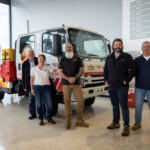
Speaking at a media briefing late in 2025, Richard Emery, President and CEO of Hino Motor Sales Australia, outlined why the current slowdown should be viewed as a pause rather than a downturn — and how truck sales, fleet investment and the broader economy are expected to evolve over the next 12–18 months.
A market taking a breather
After the post-COVID surge in truck demand across 2021–2024, Emery said the industry is now experiencing what he described as a “breather”.
“It’s as if we’ve been running since COVID and everyone’s just having a breather,” he said, noting that decision-making has slowed rather than stopped.
This pause is being felt across new truck purchases, maintenance spend and refurbishment decisions. Workshops are seeing customers prioritise essential servicing only, with discretionary reconditioning work increasingly deferred into future years.
Importantly, this slowdown is not isolated to one segment. While prime movers and long-haul operations are under the most pressure, the effect is being felt right through the supply chain.
Why renewal pressure is building
One of the structural drivers pointing to renewed activity beyond 2026 is the age of the national truck fleet.
Emery said much of the growth seen during the boom years was driven by the need for additional vehicles, not replacement.
“We didn’t do a lot of replacing old trucks. We did a lot of ‘we need extra trucks’,” he said.
With the average truck now sitting at around 14 years of age, renewal pressure is building — particularly as emissions standards tighten and safety technology expectations rise.
“There’s got to be some renewal,” Emery said, pointing to Euro 6 emissions, safety systems and operational efficiency as unavoidable drivers of future replacement cycles.
Economic signals heading into 2026
Looking more broadly at the Australian economy, Emery suggested confidence should begin to stabilise through late 2026, supported by:
- Large-scale government infrastructure projects already in the pipeline
- A gradual recovery in consumer and business confidence
- Ongoing investment in mining, construction and logistics, particularly in Queensland and Western Australia
While growth is not expected to return to the double-digit levels seen during the COVID period, Emery expects a more sustainable expansion phase to emerge from late 2026 into 2027.
“We think the market will return to a normal growth stage going into 2027,” he said, forecasting more modest annual growth of around five to six per cent.
Truck sales outlook for 2026
From a truck sales perspective, 2026 is shaping up as a transitional year.
Ongoing supply constraints linked to the industry-wide move from Euro 5 to Euro 6 emissions standards will continue to affect model availability across several brands. This is expected to keep overall volumes below recent peaks, even as underlying demand remains intact.
The combination of delayed replacement cycles, emissions compliance and rising operating costs suggests demand has not disappeared — it has simply been deferred.
Key focus areas for Hino Motor Sales Australia
Against this backdrop, Emery outlined several clear focus areas for Hino as it navigates 2026.
1. Hybrid electric momentum
Hino’s 300 Series Hybrid has gained renewed interest from fleets reassessing full battery-electric timelines.
“The market is certainly rethinking low-to-zero emissions,” Emery said, noting increased order intake during the second half of 2025 as customers seek practical, near-term emissions reductions.
2. Expanding the 700 Series footprint
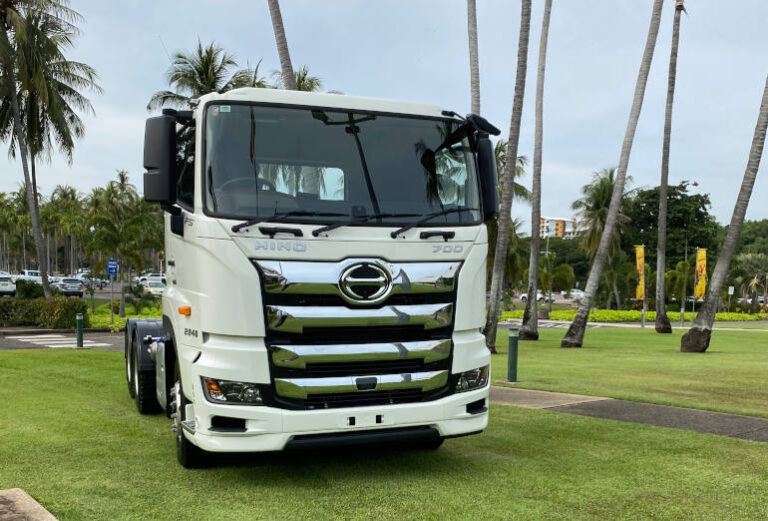
Hino is placing increased emphasis on the 700 Series, particularly in heavy rigid and single-trailer applications.
“We’re clearly highlighting ourselves as the heavy-duty rigid and single-trailer champion,” Emery said, identifying this segment as a core opportunity as fleets replace ageing assets.
3. Navigating Euro 6 transition
Managing production gaps during the Euro 5 to Euro 6 transition remains a key operational challenge for 2026, particularly in the medium-duty segment. Maintaining supply continuity where possible is a priority.
4. Preparing for the next growth phase
Hino’s longer-term “Horizon 30” strategy is focused on ensuring the business is structurally ready when growth returns — from dealer capacity and parts supply through to logistics efficiency and brand positioning.
“We want to be ready to take advantage of all of the positive things that are planned,” Emery said, referencing the expected benefits of global collaboration and scale over time.
What fleets should plan for in 2026
For Fleet Managers and Procurement Managers, 2026 is shaping up as a year to plan rather than rush.
Key considerations include:
- Assessing replacement backlogs created over the past four years
- Aligning replacement timing with Euro 6 availability
- Reviewing hybrid and alternative powertrains as interim solutions
- Factoring longer lead times into procurement strategies
While conditions remain challenging in parts of the market, the fundamentals of freight demand, asset renewal and infrastructure investment remain intact.
As Emery summed up, predictability — rather than explosive growth — is what the industry should expect next.
“I think 2027 will be a little bit more predictable,” he said. And for fleets that prepare during 2026, that predictability may prove to be the real opportunity.
- Scania Resets the Touring Experience
 Scania has unveiled a new generation of its Touring coach, combining a more efficient powertrain with improved driver visibility, increased luggage capacity and an updated passenger interior. For coach fleet operators, the changes target several factors that influence operating performance: fuel consumption, maintenance requirements, vehicle availability and the experience of drivers and passengers. The new
 - Better Support for Women Behind the WheelTransport employers are being urged to recognise menopause as a potential contributor to driver fatigue, as New Zealand’s trucking industry works to attract and retain more women. Fleet safety specialist AutoSense has launched a workplace education seminar exploring how perimenopause and menopause can affect sleep, energy and concentration, and what businesses can do to support
- WATIA Pushes Joint Freight and Defence PlanningAustralia’s civilian freight networks and Defence logistics should be planned together to strengthen supply routes serving Western Australia and the Northern Territory, according to the Western Australian Transport Industry Association (WATIA). The association says increasingly frequent disruptions to long-distance freight corridors are threatening supplies to communities and businesses, while driving up transport costs. Defence’s growing
- Hino eyes 2027 recovery as truck market downturn tests fleet confidenceAustralia’s truck market is facing another difficult year, with weaker business confidence and delayed purchasing decisions weighing on sales. But Hino Australia believes growing freight demand and ageing fleets will eventually bring buyers back, even if the timing of a recovery remains uncertain. Speaking at an exclusive media briefing during the launch and drive of
- Isuzu Delivers Helping Hand to BlazeAidBlazeAid has strengthened its ability to reach disaster-affected rural properties with a new Isuzu NPS 75-155 4×4 Crew truck, donated by Isuzu Australia Limited. Equipped with a purpose-built body designed and manufactured by Service Bodies Australia (SBA), the truck will transport volunteer crews, tools and equipment to communities recovering from bushfires, floods and cyclones. The