

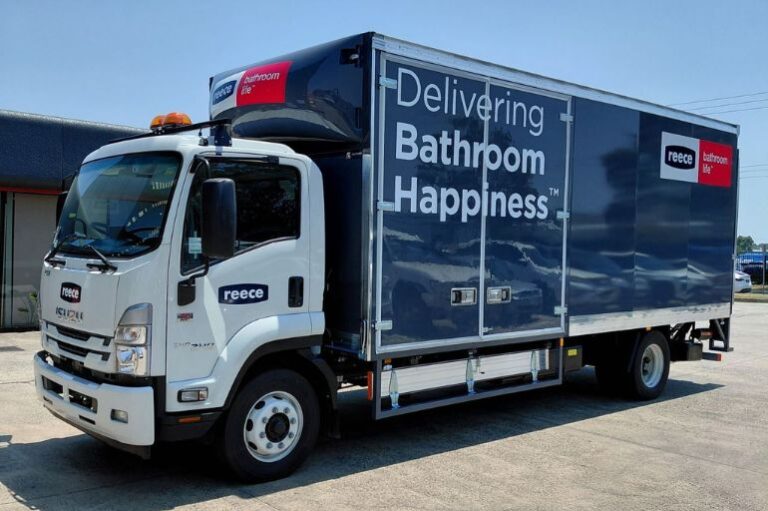
Truck bodies and trailers are long-life assets, and for many fleets they outlast the vehicle they are first mounted on. For Austruck X, that reality shapes how the business designs, builds and supports its products.
Following new ownership and a major reinvestment program, Austruck X has repositioned itself around engineering depth, manufacturing quality and aftersales support — areas that are becoming increasingly important as fleets focus on whole-of-life cost and downtime.
A business reshaped through reinvestment
Austruck’s transition to Austruck X followed the acquisition of the business by Ree Ram in January 2025 and the relocation of operations to a new site in Dandenong South.
Grant Mitchell, General Manager – Sales and Marketing at Austruck X, said the move was about setting the business up for long-term capability rather than short-term volume.
“We relocated from Seaford to Dandenong South, put two new paint booths in and set the business up more like a production line. We invested heavily in equipment, and we’re still investing.”
The new ownership also brought a deliberate focus on retaining experience within the business.
“A lot of our guys on the floor have been with the company for 15 to 20 years — welders, fabricators, painters. There’s a lot of knowledge there, and that’s been critical.”
Engineering-led design for durability
Austruck X positions itself as an engineering-driven manufacturer, with a larger in-house engineering team than many comparable body builders.
“For the size of our business, we probably have double the number of engineers most other businesses would have. We put a lot of time into design and customisation.”
That engineering focus shows up in how bodies are constructed, particularly for fleets running pallet trucks and forklifts.
“We weld all of our floors so every welding seam is directly over a bearer. Others don’t always do that. Over time, pallet trucks and forklifts buckle floors — we don’t have that problem because it’s designed out.”
Paint quality and corrosion protection are also areas where Austruck X has invested.
“We put treatment on in the paint booth and then apply three top coats. We’re the only ones that do that, and it gives more durability over the life of the body.”
Supporting fleets beyond delivery
For Austruck X, the relationship with fleet customers does not end once a body or trailer leaves the factory.
“You can’t just look at the purchase price up front. What happens post-sale is critical, because these assets might be in service for 10 or 15 years.”
Mitchell said aftersales capability is often underestimated in truck body procurement.
“Downtime costs money. If something breaks or there’s an accident, fleets need support to get back on the road quickly.”
Austruck X supplies spare parts nationally and works closely with repairers, insurers and fleet workshops.
“Whether it’s a truck dealer, a smash repairer or the fleet’s own workshop, we can ship parts — curtain rails, corner posts, doors — whatever is needed to get the vehicle back into service.”
The business also undertakes major repairs and body replacements following accidents.
“We remove damaged bodies, build new ones and remount them. The truck might be four or five years old, but the body is brand new again.”
Premium specification as a deliberate choice
Mitchell said Austruck X does not compete on lowest price and is upfront about that with customers.
“We make no qualms about saying we have a premium product. Our pricing is above competitors, but we build premium componentry into the engineering and manufacturing.”
That approach extends to component selection on trailers.
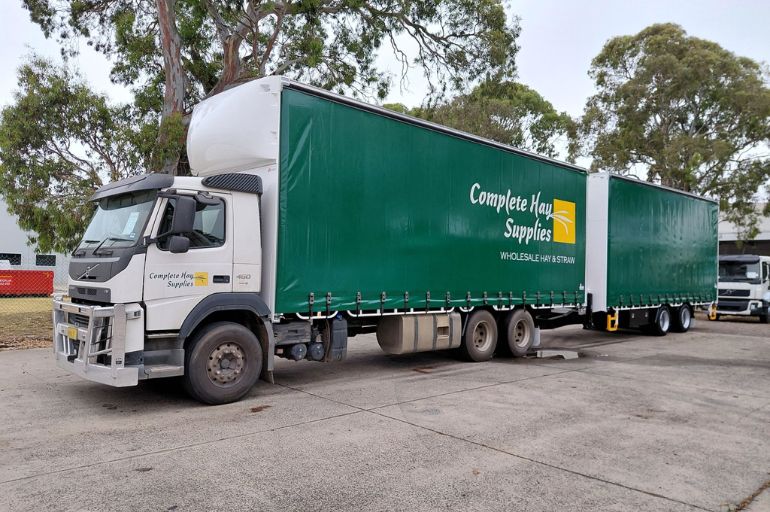
“We’ve upgraded all our suspensions to Hendrickson and use premium landing legs and tyres as standard. We walked away from cheaper components because long-term performance matters.”
Responding to electric vehicle payload challenges
With growing interest in electric light and medium trucks, Austruck X has developed new body solutions to address payload constraints.
“We’ve released an all-aluminium curtain sider body specifically for electric trucks.”
Mitchell said the difference can be significant for urban delivery fleets.
“A four-and-a-half-tonne GVM electric truck with a steel curtain sider might only have 700 kilos of payload. With our aluminium body, you’re looking at 1.4 to 1.5 tonnes.”
Focused growth, not mass production
Rather than chasing volume, Austruck X targets customised and fleet-specific work across transport, agriculture and own-user fleets.
“We’re not a sausage factory building 50 rental vans. We focus on custom builds and customers who value engineering and long-term support.”
Looking ahead, Mitchell said demand is strong and production capacity is being expanded.
“We’re gearing up to double production this year, but we’re doing it carefully. Quality and support have to scale with volume.”
What fleets should take away
For fleet buyers, Austruck X positions itself as a supplier focused on durability, repairability and lifecycle support rather than lowest upfront cost.
As Grant Mitchell summarised:
“Truck bodies and trailers live a long life. Fleets want to know that when something happens — and it will — there’s support there to keep vehicles working.”
For fleets planning long replacement cycles and managing downtime risk, that focus is increasingly part of the procurement conversation.
- Dig once: What to build into an electric truck depot
 The best time to put a spare conduit under a truck depot is when the trench is already open. Once the yard is resurfaced and trucks are back on their normal routes through the site, adding another cable run can mean digging up the same ground and disrupting the operation a second time. That was
- Why Borger Cranes invests in fleet management to keep the business movingWhen a truck breaks down, the cost can be much greater than the repair bill. For Borger Cranes, operating a fleet of more than 200 trucks alongside hundreds of cranes means reliability, safety and equipment availability are essential to delivering services to customers. General Manager Shawn Borger explains how the business has developed a fleet
- Is this Australia’s hardest-working Isuzu?For most transport operators, the decision to replace a truck comes down to reliability, maintenance costs and the risk of unexpected downtime. But for one Australian removalist, a 2014 Isuzu FRR 600 with more than 1.6 million kilometres on its original engine is proving that age and kilometres aren’t always reasons to upgrade. Clinton Simpson,
- 4,000 Hino trucks in 27 years: The relationships behind sales successSelling 4,000 trucks is a remarkable achievement in the commercial vehicle industry, but for Christian Geadah from City Hino, the milestone represents more than 27 years of building relationships, understanding customers and finding the right truck for the job. Christian Geadah has spent his entire truck sales career with City Hino, joining the dealership in
- Workhorse LCVs resist the slide in ICE residual valuesFleetPartners’ FY26 results show the used-vehicle market is starting to behave very differently depending on the type of vehicle being sold. Higher fuel prices weakened demand for used internal combustion engine vehicles during the second half of FY26, contributing to lower End of Lease income and softer residual values. But FleetPartners also pointed to one