

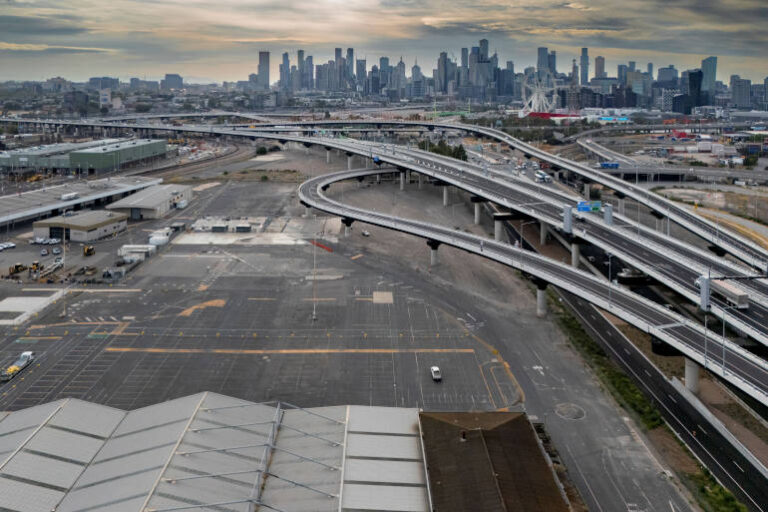
A major logistics redevelopment in West Melbourne is set to reshape freight movements around the Port of Melbourne, with industry and government leaders highlighting the potential to improve efficiency while easing congestion on local roads.
Global logistics company MEDLOG has signed on as a major tenant at the former Melbourne Market site in West Melbourne, partnering with the Port of Melbourne to redevelop part of the 29-hectare precinct into a container storage and logistics hub located close to the port.

The project is designed to bring container storage closer to shipping terminals, reducing the distance trucks need to travel across Melbourne’s inner west. Suburbs including Yarraville, Tottenham, Brooklyn and Seddon are expected to see fewer truck movements on local streets as freight handling becomes more concentrated near the port.
The redevelopment forms part of a broader transformation of the former market site, which is comparable in size to more than 14 Melbourne Cricket Grounds and is supported by approximately $500 million in private investment.
Victoria’s freight task continues to grow, with the sector contributing more than $36 billion to the state economy each year, supporting around 240,000 jobs and moving approximately 440 million tonnes of freight annually. The Port of Melbourne remains Australia’s busiest container port, handling more than one-third of the nation’s container trade.
Minister for Ports and Freight Melissa Horne said the project reflects a practical approach to improving freight efficiency while responding to community concerns about heavy vehicle traffic.
“This is about keeping goods moving while taking pressure off local streets – cutting truck traffic, improving safety and strengthening Victoria’s supply chains,” Horne said.
“By bringing freight closer to the port, we’re making the system more efficient and delivering real benefits for communities, the freight industry and businesses right across the state.”
The Government said the redevelopment builds on recent infrastructure investments, including the West Gate Tunnel and the introduction of No-Truck Zones, which are intended to shift heavy vehicle traffic away from residential areas.
Member for Footscray Katie Hall said the project would deliver tangible benefits for local communities in Melbourne’s inner west.
“This project will reduce truck movements on local roads and make a real difference for families in the inner west, with safer streets and better connections for our community,” Hall said.
From an industry perspective, the development highlights the importance of locating freight infrastructure close to ports to support supply chain resilience and reduce operational inefficiencies.
Port of Melbourne CEO Saul Cannon said the project would strengthen the state’s logistics capability while supporting economic growth.
“With approximately $500 million in private investment planned across the whole precinct and a significant uplift in jobs and economic activity, this redevelopment is a strategic investment in Victoria’s future that will help deliver a stronger and more resilient supply chain for the state,” Cannon said.
MEDLOG SA Chairman Giuseppe Prudente said the company’s investment reflects a long-term commitment to freight infrastructure linked directly to port operations.
“This investment reflects MEDLOG’s long-term commitment to building resilient, port-connected infrastructure that supports global trade and local economies,” Prudente said.
Victorian Transport Association CEO Peter Anderson said transport operators would benefit from improved access and fewer delays.
“By utilising this site for freight activity, transport operators will benefit from reduced congestion, improved access, and fewer avoidable delays that often lead to additional costs and compliance risks,” Anderson said.
As freight volumes continue to increase, projects that improve the interface between ports, logistics hubs and road networks are becoming a central part of transport planning. The West Melbourne redevelopment is one example of how land use and infrastructure decisions can influence both freight productivity and community outcomes.