

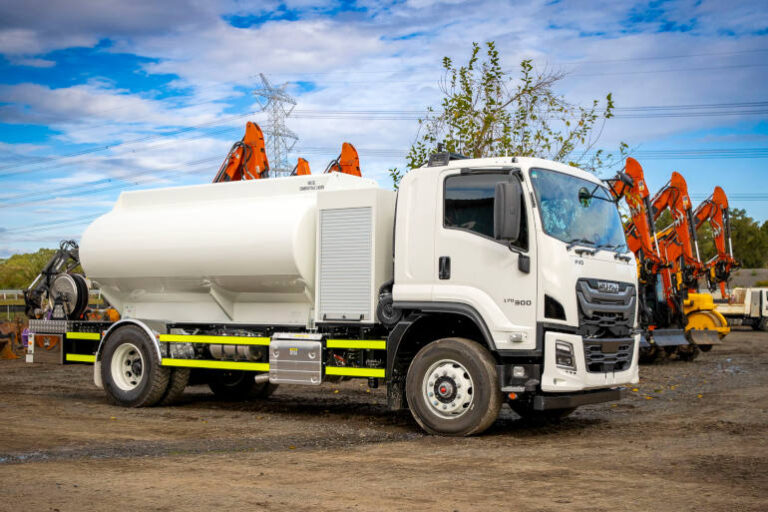
Keeping heavy machinery working across multiple construction sites is a logistical challenge, particularly when equipment needs hundreds of litres of diesel every shift. Rail and civil construction specialist Anric Group has invested in a purpose-built Isuzu refuelling truck to improve equipment uptime and reduce its reliance on external fuel suppliers.
The Sydney-based business operates an extensive fleet of construction and rail machinery, supporting major infrastructure projects including Sydney Metro, Western Sydney Airport and maintenance of the Sydney Trains network.
With equipment spread across multiple locations, Anric identified an opportunity to bring refuelling operations in-house and gain greater control over servicing its machinery.
“The reason we decided to look after our own refuelling on-site is there’s quite a lot of compliance and onboarding for different projects,” said Anthony Spinoza, Operations Manager at Anric Group.
“This way we can provide for our machinery, which means we’re servicing our customers better by keeping uptime to the maximum.”
A mobile fuel station for heavy equipment
Anric selected an Isuzu FVD 170-300 fitted with a specialised refuelling body developed by Capital Fleet Manufacturing.
The truck carries more than 9,000 litres of fuel, along with a separate 500-litre AdBlue dispensing system. An onboard air system and greasing equipment provide additional maintenance support for machinery operating on-site.
The capacity allows Anric to service multiple machines during a single visit, reducing the need to coordinate deliveries from external suppliers.
Fuel demand varies significantly across the fleet. Smaller machines may have tanks holding around 100 litres, while larger equipment can consume between 500 and 700 litres during a shift.
For Anric, having a dedicated refuelling vehicle provides greater flexibility to respond to changing project requirements and maintain productivity.
Isuzu FVD delivers the capacity
The Isuzu FVD 170-300 has a Gross Vehicle Mass (GVM) rating of 17,000 kg and is powered by a 6.7-litre turbo-diesel engine producing 221 kW and 984 Nm of torque.
The drivetrain includes an Allison 3000 Gen 6 six-speed automatic transmission, while Hendrickson HAS230 rear airbag suspension supports the specialised application.
Driver comfort and safety were also important considerations.
The FVD features an ISRI air suspension driver’s seat with heating and ventilation, automatic climate control and electric power steering. Standard safety equipment includes Advanced Emergency Braking and Electronic Stability Control.
Anric already operates Isuzu trucks in its transport fleet, and previous experience influenced the purchasing decision.
“I think the reliability of the Isuzu is its strongest trait,” Anthony said.
“They’re easy to maintain and comfortable to drive.”
Fleet decisions driven by productivity
Anric employs approximately 300 people, depending on project requirements, and operates a diverse equipment fleet that includes excavators, dozers, dump trucks, compaction equipment and specialised rail machinery.
The business also designs and modifies equipment in-house to meet specific operational requirements.
For Anthony, selecting the right equipment starts with understanding the application and the people who will operate it.
“Performance is the key,” he said.
“Then after that, I’d say definitely operator comfort and ergonomics.
“We like to have the best kit for the best people, so they’re comfortable and they enjoy what they’re doing.”
The investment in the Isuzu refuelling truck highlights an important fleet management consideration for construction and infrastructure operators.
While machinery selection often focuses on performance and purchase price, the support vehicles and systems that keep equipment operating can be just as important.
By taking control of fuel delivery, Anric is aiming to reduce operational delays, simplify site compliance requirements and improve the utilisation of its machinery fleet.
For fleet managers operating across multiple worksites, the decision demonstrates how investing in the right support vehicle can help maximise the productivity of much more expensive assets.