

The National Heavy Vehicle Regulator (NHVR) is planning a significant change in how it regulates Australia’s trucking industry, moving away from traditional roadside compliance checks towards a more proactive, risk-based approach driven by data and intelligence.
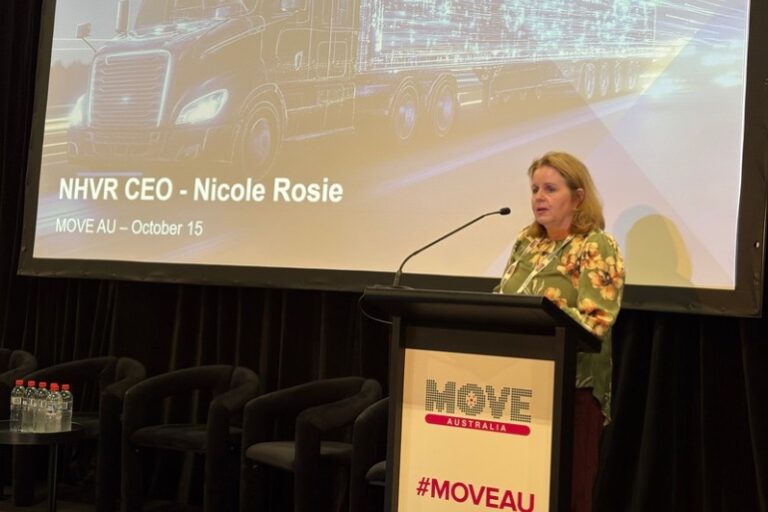
Speaking at MOVE Australia 2026 in Sydney, NHVR CEO Nicole Rosie outlined a vision for a regulatory system that identifies safety risks before they result in incidents, while helping compliant transport operators improve productivity and reduce unnecessary costs.
The change could have significant implications for fleet managers and transport businesses, with a greater emphasis on demonstrating effective safety management rather than simply meeting compliance requirements.
Moving beyond roadside enforcement
Rosie challenged the traditional approach to heavy vehicle regulation, where enforcement often identifies a problem only after a driver or vehicle is already operating outside the rules.
Using driver fatigue as an example, she questioned whether issuing an infringement to a driver actually addresses the conditions responsible for the breach.
Her argument was that drivers are often exposed to risks created elsewhere in the business, including scheduling, operational demands and management decisions.
By the time a truck is stopped with defective brakes or a driver is found to have exceeded permitted driving hours, the risk has already been present on the road.
The NHVR wants to move further towards identifying where those risks originate and intervening before they become safety incidents.
Data will drive regulatory decisions
Rosie explained that the NHVR is in a unique position to understand heavy vehicle operations across Australia because it can combine information from multiple jurisdictions and enforcement systems.
This includes vehicle registrations, roadside inspections, accreditation records, incidents, compliance history and other regulatory data.
By bringing this information together, the NHVR can develop risk profiles for operators and identify businesses that require closer attention.
Rather than applying the same level of regulatory activity across the industry, the intention is to direct resources towards operators presenting the greatest risk.
For compliant operators, this could eventually mean fewer unnecessary roadside interactions and less disruption to daily operations.
Safety, productivity and sustainability
Rosie also reminded the audience that the NHVR has a broader role than enforcing safety regulations.
Its responsibilities include improving heavy vehicle productivity and supporting government sustainability initiatives.
She highlighted the growing convergence of these objectives through technology, particularly telematics, onboard mass monitoring and Performance Based Standards (PBS) vehicles.
Better visibility of vehicle movements and loading could give infrastructure owners greater confidence to permit access for larger, more productive vehicles.
For fleet operators, that could mean improved payload efficiency, fewer vehicle movements and lower operating costs, while supporting emissions reduction objectives.
What it means for fleet managers
The direction outlined by Rosie reinforces the importance of mature fleet management practices.
Documented maintenance procedures, effective safety management systems, reliable operational data and regular risk reviews will become increasingly valuable as the NHVR develops its intelligence-led approach.
Fleet managers will need to demonstrate not only that policies and procedures exist, but that they are working effectively to control risks.
The message from MOVE Australia 2026 was clear: the future of heavy vehicle regulation is not simply about catching operators doing the wrong thing. It is about using better information to prevent unsafe practices, focus regulatory attention where it is needed most and help well-managed fleets operate more efficiently.