

Predictive fleet maintenance and strategic asset lifecycle management are now critical skills for fleet managers aiming to maximise uptime, reduce costs, and plan vehicle replacement with precision.
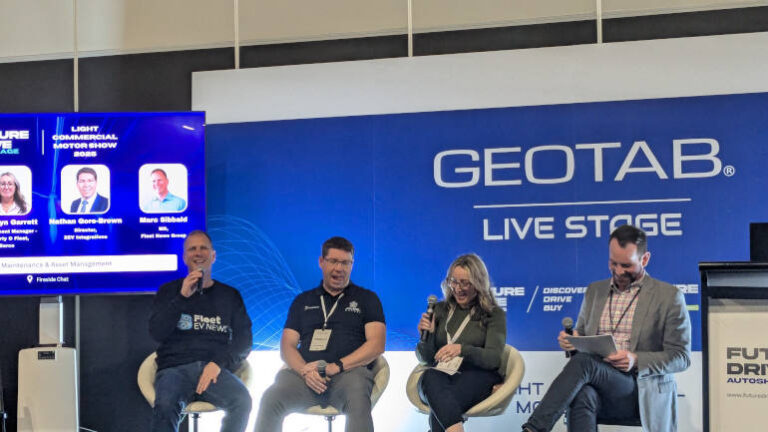
At the Light Commercial Motor Show in Sydney, three industry experts shared practical advice on how to make the shift from reactive maintenance to a proactive, data-driven approach:
- Marc Sibbald, Technical Director at WLC Fleet Consulting
- Shannyn Garrett, Procurement Manager – Property and Fleet at Serco
- Nathan Gore-Brown, Founder of ZEV Integrations and Test EV
Their collective insights form a practical playbook for any Fleet Manager looking to modernise maintenance strategies and improve the return on every asset.
1. Elevate Fleet Maintenance to a Strategic Level
Too many organisations still treat fleet as an operational necessity rather than a strategic enabler. Marc Sibbald highlighted the gap:
“We don’t quite have a seat at the boardroom table. If you took the keys for every vehicle in your business, the whole operation would stop—yet we have Chief Information Officers and Chief Technology Officers, but no Chief Fleet Officer.”
Action for Fleet Managers: Position maintenance and lifecycle planning as critical to service delivery and revenue generation. Use real-world examples from your own fleet to demonstrate the business impact of downtime.
2. Break the ‘If It’s Not Broken’ Mindset
Outdated thinking can hold fleets back. Shannyn Garrett explained:
“It’s about moving away from needing to be a mechanic to run a fleet, and towards strategic thinking—implementing processes and procedures that are both effective and efficient.”
Nathan Gore-Brown agreed, warning that old routines often persist unnecessarily:
“We’re still maintaining modern vehicles like it’s a HQ Holden in 1978. Old habits and old technical expectations sometimes trump good business.”
Action for Fleet Managers: Review every maintenance schedule to confirm it’s still relevant. If you’re servicing components at fixed intervals “because that’s how it’s always been done,” compare it against manufacturer data, telematics, and actual usage patterns.
3. Adopt Predictive Fleet Maintenance Tools
Predictive maintenance uses telematics, AI, and data analytics to spot problems before they cause breakdowns or safety issues. Nathan shared a case from an electric bus trial:
“We found one vehicle using 25% more energy than the others. The data showed it had a serious wheel alignment issue. That’s the power of using data—it flags a problem so you can fix it before it costs you.”
Shannyn added:
“You don’t have to be the expert in everything, but you do need to read the data and make informed decisions.”
Action for Fleet Managers:
- Set up telematics alerts for fault codes, abnormal fuel or energy use, and battery voltage drops.
- Train your team to interpret data, not just collect it.
- Integrate predictive maintenance insights into work orders and lifecycle planning.
4. Rethink Your Fleet Asset Lifecycle
Traditional time-based replacement cycles—three, four, or five years—can lead to premature replacement or excessive repair costs.
Marc explained:
“When COVID hit, we couldn’t replace vehicles on schedule, so we ran them longer. We assessed condition, moved underperforming assets out sooner, and kept the better ones longer. That’s smarter fleet management.”
Shannyn warned against budget “spikes”:
“You can’t just inject funds into the fleet every now and then. You need a 10-year plan so you hit that sweet spot consistently.”
Nathan noted that EV fleets will add a new variable:
“Replacement might not be driven by time or kilometres anymore—it could be based on battery health.”
Action for Fleet Managers:
- Base replacement decisions on whole-of-life cost analysis, condition assessments, and residual values.
- For EVs, track battery state of health to guide replacement timing.
- Use asset rotation to balance wear and optimise utilisation.
5. Fix Data Quality Before You Scale Up
Data integrity is the foundation of predictive maintenance and lifecycle planning. Shannyn was direct:
“You can have all the data in the world, but if it’s no good, it’s garbage in, garbage out.”
Nathan’s experience shows why this matters:
“Some fleets don’t even know the whole-of-life cost of a vehicle. You can’t make good decisions without that information.”
Action for Fleet managers:
- Consolidate data from all leasing, telematics, and maintenance systems.
- Regularly audit data for accuracy and completeness.
- Assign responsibility for data quality—either internally or through a specialist provider.
6. Plan for Skills and Resource Gaps
Marc raised the growing issue of skilled labour shortages:
“Local governments that run their own workshops are struggling to find staff. It’s a big issue for the industry.”
Action for Fleet Managers:
- Cross-train staff where possible.
- Build strong partnerships with external service providers.
- Factor technician availability into lifecycle and maintenance planning.
Final Word: Pick the Tomatoes at the Right Time
Marc used a simple analogy to capture the essence of lifecycle planning:
“Determining fleet replacement cycles is like growing tomatoes—you have to pick them at just the right time.”
By adopting predictive maintenance, improving data quality, and integrating fleet asset lifecycle planning into long-term budgets, fleet managers can ensure their vehicles are always performing at their peak—and being replaced at exactly the right moment.