
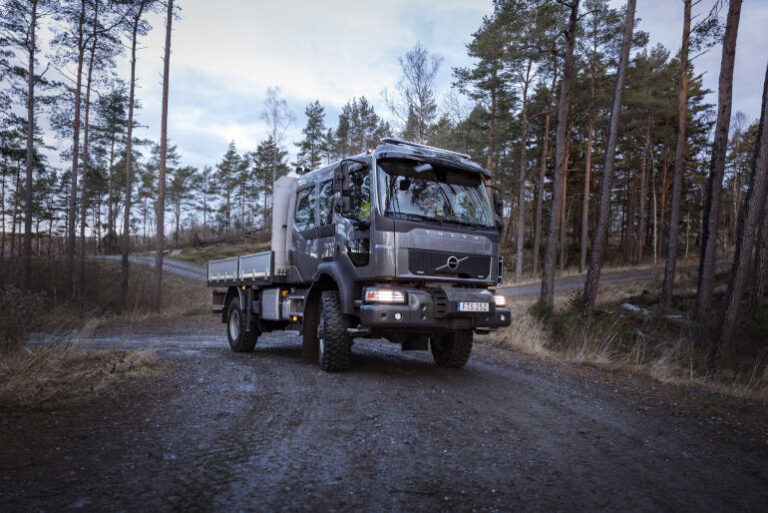
Volvo Trucks has added serious muscle to its medium duty range with the launch of an upgraded Volvo FL 4×4 – a compact truck built for the toughest jobs in the harshest conditions.
Known for its agility and manoeuvrability, the FL has long been a staple in urban and regional applications. Now, with permanent all-wheel drive, new heavy-duty axles, improved axle ratios, single tyres and generous ground clearance, the latest 4×4 version is aimed squarely at operators who need dependable performance where the bitumen ends.
Jan Hjelmgren, Head of Product Management at Volvo Trucks, says demand is strong.
“We can see a clear trend towards a higher demand for this type of truck from our customers. This compact, agile and easy to manoeuvre 4×4 truck will enable access to remote areas in rough conditions – this is a workhorse built with a clear purpose.”
Built for Demanding Applications
Volvo is positioning the FL 4×4 for work in sectors where uptime and access are critical. That includes construction sites, fire and rescue services, utilities, energy and power suppliers, and even defence operations.
Cab Options and Extras
The truck comes in both a two-seat day cab and a six-seat crew cab, giving buyers flexibility depending on the role. Optional extras underline its rugged intent: a winch, bullbar, headlight guards and additional gearbox protection are all available for extreme off-road conditions.
Powertrain
Under the cab sits Volvo’s efficient 8-litre diesel engine, delivering the power and torque required for both off-road traction and on-road efficiency.
For Fleet Managers running mixed fleets in regional or remote operations, the upgraded FL 4×4 adds another practical option – one that promises Volvo reliability with go-anywhere capability.
- Geotab adds mass management to heavy vehicle telematics
 Geotab has expanded its Australian heavy vehicle compliance offering by adding Smart On-Board Mass capability through a certified integration with Airtec Corporation, allowing heavy haulage operators to manage telematics and mass data through a single platform. The certification means Geotab can now support Telematics Monitoring Application schemes both with and without Smart OBM requirements, as
 - Bridge Strikes Start Before the Truck Reaches the BridgeA bridge strike may happen in seconds, but the circumstances that lead to it can develop much earlier in the journey. That is one of the key fleet-management implications to emerge from HoustonKemp Economists’ report, The economic costs of bridge strikes in Australia, prepared for HERE Technologies and the Australian Logistics Council. The report estimates
- Electric Trucks and Vans Join the Spotlight at Everything Electric SydneyThe transition to electric transport is moving beyond passenger cars, and fleet operators will get a closer look at the growing range of electric trucks, vans and commercial vehicles when Everything Electric returns to Sydney in September. The three-day event, held at Sydney Showground from 18–20 September 2026, is expected to attract more than 40,000
- Truck Access, PBS and EV Rules Targeted in Major Reform ReportAustralia’s road freight productivity has stalled for more than a decade, and the Productivity Commission says regulatory reform is needed if the industry is to capture the benefits of safer, more productive and lower-emission heavy vehicles. The Commission’s Impacts of heavy vehicle reform study examines five areas where changes to road access, permits, zero-emission vehicle rules, charging
- Active safety: what fleet buyers should ask for when purchasing trucksWhen buying trucks, it is easy to focus on engine output, payload, cab comfort, service intervals and price. But one of the most important procurement decisions is the active-safety specification. Active safety technologies are designed to prevent a crash or reduce its severity before impact. They use cameras, radar, sensors, braking systems, steering assistance and