
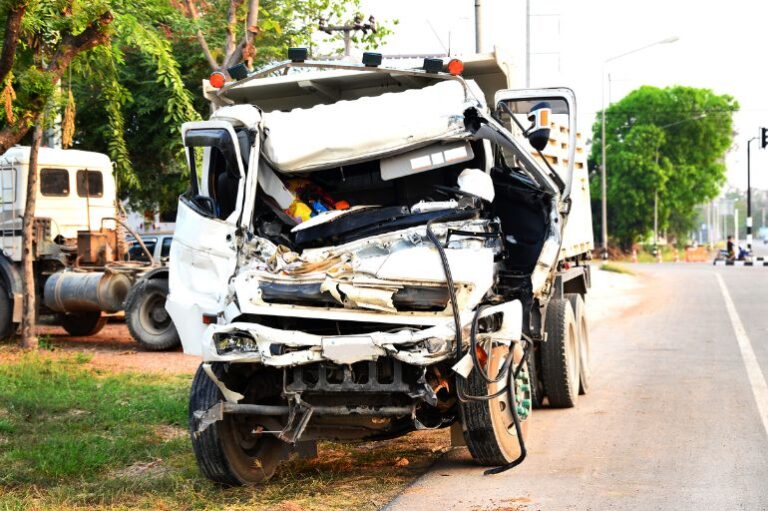
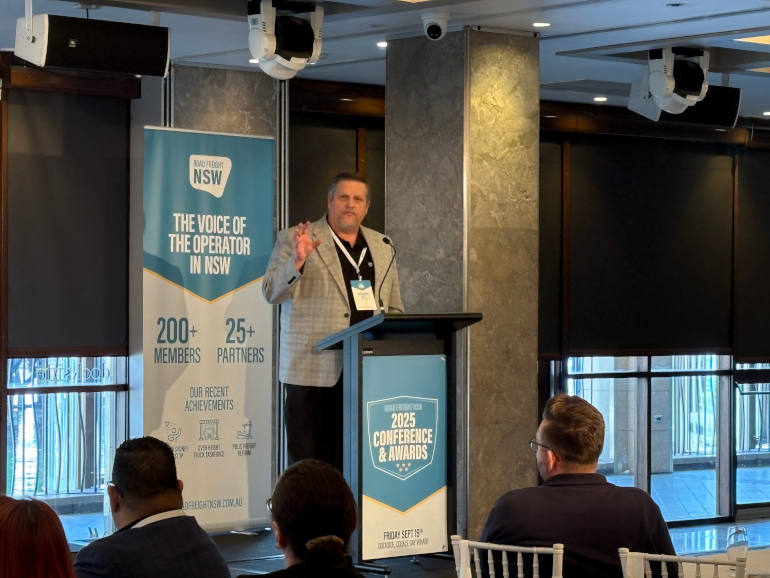
At the Road Freight NSW 2025 Conference and Awards, Shannon Kyle, Solutions Specialists Manager at Teletrac Navman, delivered a sobering reminder of the challenges still facing the transport industry.
“NSW has recorded 374 lives lost over the last 12 months, an increase on the previous year,” Kyle said. “In August alone, there were 38 fatalities — 24 more than the same month last year.”
Heavy vehicles remain a key focus. Kyle highlighted that there were 48 heavy vehicle fatalities in NSW in the past year, with 53 lives lost in related incidents. “The upward trend is pretty scary before we get to peak period,” he warned.
But Kyle stressed that technology offers a pathway to safer roads if used effectively. “The ultimate aim of this sort of technology and proactive risk management is to have a lasting effect on these numbers and these outcomes,” he said.
Using Data to Reduce Risk
One area showing strong results is speed management. Kyle explained how telematics data is being used not just to record breaches but to identify hotspots, track trends, and focus attention where it matters most.
“Some fleets, large and small, are averaging just one speed event per vehicle for an entire quarter,” Kyle said. “That’s an amazing result compared to when I was a compliance manager. It shows if we commit to the technology and use it properly, it can deliver real change.”
AI Cameras Changing Driver Behaviour
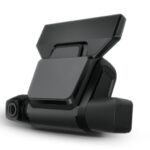
Beyond telematics, new in-cab camera systems are also making a difference. Kyle pointed to the latest AI-powered IQ camera, which provides real-time feedback to drivers and can prevent incidents before they occur.
“Rather than just record the incident, hopefully we’re changing the behaviour before the incident occurs,” he said. “That’s really the power of an AI camera system.”
For heavy vehicles, multi-camera versions now provide additional protection, with distress buttons positioned closer to drivers and footage that can exonerate them in the event of an incident.
Building a Safer Future
While technology is at the forefront, Kyle also called attention to initiatives like the Inroads program, which supports inclusive recruitment and helps bring new drivers into the industry.
“Programs like this help address the ageing driver workforce and open up the industry to more people,” he said.
Kyle’s message was clear: the industry still has work to do, but with proactive use of technology, data, and innovation, heavy vehicle fleets can play a leading role in making NSW roads safer for drivers and the community.
- HERE Connects the Missing Routes for Fire Crews
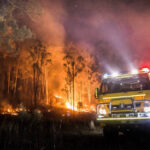
 HERE Technologies and the NSW Rural Fire Service have integrated more than 60,000km of fire trails into an emergency response routing network, helping crews navigate beyond public roads to reach incidents in remote locations. The initiative combines HERE’s road network data with NSW RFS operational mapping to create a unified, routable network incorporating fire trails,
 - Scania Expands Digital Tools for Heavy FleetsScania is expanding the technology around its latest truck updates, using connected services, driver coaching and maintenance support to help fleet operators turn vehicle improvements into measurable operating benefits. The company says the Scania Dynamic updates are designed to improve the driver environment, energy efficiency and everyday usability, but the broader fleet proposition increasingly relies
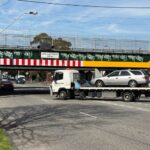
- Minor Bridge Strikes Are Creating a Major BillThe most spectacular bridge strikes attract the headlines, but a new economic study suggests Australia’s biggest bridge-strike bill is being generated by much less dramatic incidents. HoustonKemp Economists estimates protection beam and signage strikes accounted for 79 per cent of Australia’s approximately 1,220 bridge-strike incidents in FY2025. Despite being the lowest severity category used in
- Dash cams are becoming a driver coaching tool, not just an incident recorderDash cams have traditionally been associated with providing evidence after a collision, but Australian fleets are increasingly using video telematics as part of a broader approach to driver safety and risk management. The Geotab Report 2026: Connected Fleets in Australia found 65% of respondents using in-cab video reported improved driver safety. A further 61% reported a reduction
- Geotab adds mass management to heavy vehicle telematicsGeotab has expanded its Australian heavy vehicle compliance offering by adding Smart On-Board Mass capability through a certified integration with Airtec Corporation, allowing heavy haulage operators to manage telematics and mass data through a single platform. The certification means Geotab can now support Telematics Monitoring Application schemes both with and without Smart OBM requirements, as