





As fleet operators plan for 2026, suppliers across trucks, bodies and zero-emission technology are describing a market that is stabilising after several extraordinary years. Interviews with manufacturers and solution providers point to a more measured investment environment, where replacement cycles, whole-of-life cost and operational resilience are taking priority over rapid expansion.
From disruption to a “new normal”
Reflecting on the past year, suppliers described 2025 as a period of transition rather than growth. Product changeovers, delayed deliveries and the unwinding of COVID-era demand all shaped the landscape.
Andrew Harbison, Director and Chief Operating Officer at Isuzu Trucks, said the industry has moved on quickly from the post-pandemic surge.
“You probably spend about three minutes looking over your shoulder and reflecting on the year that’s been. We’re constantly working so far into the future. But it was a year of change for us… we’ve come off probably the five biggest years I’ve experienced in 20 years in the industry.”
Looking ahead, Harbison said the market is settling into what he describes as a more sustainable operating environment.
“We refer to this period as the new normal. Some segments have invested heavily and will be quieter for the next 12 months, while others are moving into replacement cycles. Long-term growth in freight doesn’t go away.”
A more cautious approach to fleet investment
Several suppliers reported that fleets are reassessing capital spend and focusing on asset utilisation. Rather than expanding fleet size, many organisations are extending vehicle life and reassessing finance structures.
Ben Nye, Sales Director – Truck at Scania Australia, said uncertainty is shaping decision-making.
“I’ve seen a lot of people extending finance and maintenance contracts. A lot of customers don’t want to jump in the deep end anymore and just buy new trucks, because there’s still uncertainty.”
Nye noted that vehicles purchased during the COVID period are now creating challenges.
“We’re entering a period where payout versus resale value has become a very real problem. Trucks bought at inflated prices are now sitting in a market that’s normalised.”
Whole-of-life cost is now central
Across all interviews, suppliers said total cost of ownership is now a baseline requirement in fleet conversations, driven by tighter margins and greater financial scrutiny.
Grant Walford, National Fleet Sales Manager at Isuzu Trucks, said the shift is industry-wide.
“Whole-of-life cost is something we talk about with every major fleet now. Warranties, fuel, servicing, safety and resale — fleets want clarity on all of it.”
Walford said the change is also being driven by procurement teams with finance backgrounds.
“A lot of procurement people aren’t truck people anymore. They want certainty around costs, service agreements and residual values, not just the purchase price.”
Harbison added that the strongest outcomes occur when procurement and fleet teams work together.
“The most effective procurement processes are where procurement works alongside fleet management. Procurement understands the buying process, but Fleet Managers understand the operational realities.”
Safety expectations continue to rise
Suppliers consistently reported that safety technology is no longer optional, particularly in urban and last-mile operations.
Grant Walford said expectations have shifted rapidly.
“Fleets want every safety feature available. The expectation now is that trucks should feel as safe and intuitive as the cars drivers use every day.”
Harbison said safety is also linked to governance and duty of care.
“Fleet Managers are making decisions knowing they may one day have to justify them in front of a coroner or a judge. That’s changed the way safety is viewed.”
Emissions reduction versus operational reality
While emissions reduction remains a major theme, suppliers described a more pragmatic approach emerging in 2026.
Andrew Harbison said no single technology will suit every fleet.
“Customers want solutions that help them meet emissions targets, but it has to make commercial sense. We’ve always taken a technology-agnostic approach — diesel, hybrids, alternative fuels, hydrogen and battery electric all have a role.”
Ben Nye said cost remains the limiting factor for many operators.
“Customers want to reduce emissions, but no one wants to pay the bill. The moment the end customer is asked to pay more, appetite disappears.”
Where electric trucks are gaining traction
From a technology supplier perspective, electric trucks are progressing where duty cycles and infrastructure align.
Lex Forsyth, Founder and COO at Janus Electric, said predictable routes are the best starting point.
“Port operations are low-hanging fruit. You’ve got predictable routes, limited kilometres and the ability to control charging.”
Forsyth said fleets also need to rethink how electric assets are evaluated.
“You don’t look at an electric truck the same way as a diesel asset. You’re not rebuilding engines or replacing alternators. The maintenance profile is completely different.”
Normalisation, not contraction
From a broader market perspective, suppliers described 2026 as a pause rather than a downturn.
Richard Emery, Hino Australia, said the industry is taking a breather after several intense years.
“It’s as if the market has just stopped at a walking pace for the moment. We think it will go again towards the end of 2026 and into 2027.”
Emery said the fundamentals still support renewal activity.
“We didn’t replace a lot of old trucks during the surge — we added trucks. The average truck age is now well over 14 years. That renewal has to come.”
After-sales support and partnerships matter more
Suppliers across manufacturing and body-building stressed that downtime and support capability are now critical differentiators.
Grant Mitchell, General Manager – Sales and Marketing at Austruck X, said fleets are looking well beyond upfront price.
“You can’t just look at the purchase price. What happens after delivery matters just as much, because these assets might be in service for 10 or 15 years.”
Mitchell said repairability and parts access are increasingly important.
“Downtime costs money. Fleets want to know that if something goes wrong, there’s support to get the vehicle back on the road quickly.”
What this means for fleets in 2026
From a supplier perspective, 2026 is shaping up as a year defined by discipline rather than acceleration. Fleets are expected to:
- Focus on replacement over expansion
- Demand stronger whole-of-life cost transparency
- Take a pragmatic approach to emissions pathways
- Place greater value on long-term supplier partnerships
As Andrew Harbison summarised:
“Be ready for change, but never underestimate the value of a strong, long-term working relationship with a reliable partner — from procurement through to operation and disposal.”
For Fleet Managers, the supplier message for 2026 is consistent: preparation, data and partnerships will matter more than speed.
- Daimler Truck Crowns Top Technicians
 Daimler Truck Australia Pacific has named its 2026 Freightliner and Mercedes-Benz Trucks Technicians of the Year, putting a spotlight on the technical capability required to keep increasingly complex heavy vehicles operating reliably. The national finals were held at the Daimler Truck Training Academy in Mulgrave, Victoria, where leading technicians completed technical theory assessments, real-world diagnostic
 - Penske Crowns 2026 Master TechniciansPenske Australia & New Zealand has named Luke Andrew and Luke Reid as its 2026 Penske Guild Master Technicians, recognising technical excellence across the company’s on-highway and off-highway operations. Andrew, a leading hand at Penske’s Perth branch, claimed the on-highway title, while Darwin-based Reid took out the off-highway category. The biennial Penske Guild competition brings
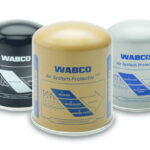
- WABCO Air Dryer Range Targets Heavy Vehicle UptimeZF Aftermarket has highlighted its WABCO air dryer cartridge range for Australian commercial vehicle operators, with the products designed to protect compressed-air systems from moisture, oil and other contaminants. The range was showcased at the recent Australasia Bus & Coach Expo, where ZF demonstrated the role air treatment can play in maintaining the reliability of
- Five-year warranty becomes part of Hino’s aftersales retention strategyHino Australia is positioning its five-year warranty as part of a broader aftersales package designed to give fleet buyers more certainty over vehicle ownership costs. At the company’s recent business briefing, Hino Australia President and CEO Richard Emery said the warranty extension was one element of a wider focus on the customer lifecycle after delivery.
- Why trailers are the missing link in linehaul fuel efficiencyWhen linehaul fleets look for fuel savings, attention often turns first to the prime mover. Engine specification, cruise control settings, driver behaviour, aerodynamic packages and route planning all matter. But a TruckShowX case study has highlighted another area that can quietly undermine efficiency: the trailer. Speaking during a practical TruckShowX session, Lachlan Van de Haar,