

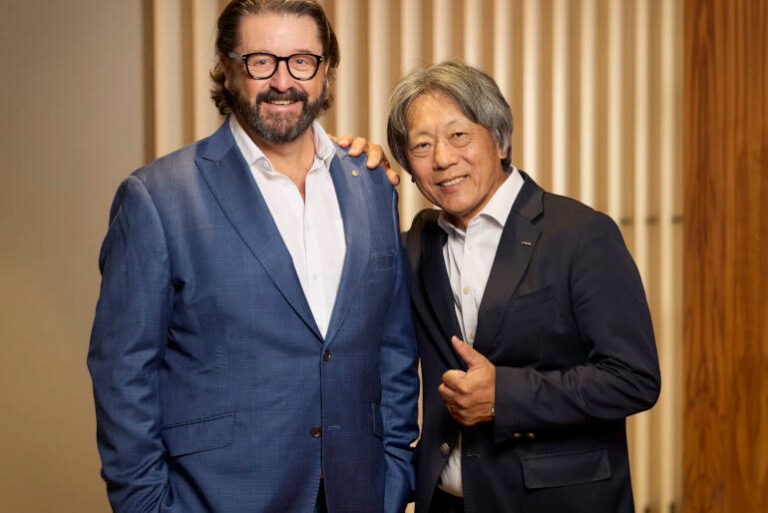
Isuzu Australia Limited (IAL) has confirmed a leadership transition that will see long-serving executive Andrew Harbison appointed Managing Director and Chief Executive Officer, following the departure of current CEO Takeo Shindo at the end of March.
Shindo will conclude his five-year assignment in Australia on 31 March 2026, returning to Japan to take up a new role with parent company Isuzu Motors Limited. Harbison, currently Director and Chief Operating Officer, will step into the top role from 1 April 2026.
End of a significant tenure
Shindo arrived in Australia in 2021 with more than three decades of global experience across the Isuzu organisation, having held senior roles in Japan, North America, Africa and Southeast Asia.
His tenure coincided with a period of disruption and change across the automotive sector, including supply chain constraints and shifting customer expectations. During this time, Isuzu maintained its position as Australia’s leading truck brand while preparing for a major product transition.
A key milestone was the rollout of the MY25 model range, described as the most significant product changeover in the company’s history.
Reflecting on his time in Australia, Shindo acknowledged both the professional and personal significance of the role.
“Australia holds a very special place in the global Isuzu network, and it has been a great honour for me to serve as Managing Director and CEO of Isuzu Australia Limited,” he said.
He also highlighted the unique demands of the local market, noting the importance placed on reliability, durability and customer support.
Internal succession signals continuity
Harbison’s appointment represents a continuation of internal leadership, having been with IAL since 2005. His experience spans roles including Queensland Zone Manager, along with previous positions at Holden, Auto One Australia, and within the tyre industry.
In acknowledging Shindo’s contribution, Harbison pointed to the strength of the business during his tenure.
“The years that he has been with us, have been some of our most successful,” Harbison said.
He credited Shindo’s leadership and global connections with strengthening Isuzu’s position in Australia, particularly across areas such as sales strategy, product development and long-term planning.
Focus shifts to broader mobility role
Looking ahead, Harbison indicated that Isuzu’s next phase will involve expanding beyond its traditional focus on vehicle supply.
“The Australian transport landscape is evolving rapidly, and Isuzu Trucks is well positioned to respond,” he said.
“A key part of our strategy moving forward will be strengthening our role as a mobility partner for Australian businesses.”
This signals a shift towards integrated transport solutions, services and technologies, aligning with broader trends across the commercial vehicle sector where OEMs are increasingly positioning themselves as service providers rather than just manufacturers.
Harbison also reinforced the importance of Isuzu’s dealer network and its connection to the global parent company, noting that alignment with Isuzu Motors Limited will remain central to future growth.
Positioned for the next phase
The transition comes at a time when the Australian truck market is facing structural change, including evolving emissions standards, new technologies and shifting customer expectations around uptime and total cost of ownership.
With a new model range already in market and an established leadership team in place, Isuzu appears to be prioritising continuity while preparing for the next stage of its development in Australia.
For fleet buyers, the leadership change is unlikely to signal any immediate disruption, but the emphasis on broader mobility solutions suggests a gradual shift in how the brand engages with customers beyond the vehicle itself.




