

In industries where equipment cannot stop — whether it is a prime mover hauling freight across state borders, a mining machine operating on a continuous shift, or a generator supplying power to essential infrastructure — reliability is measured in uptime. When a critical engine or power system fails, the consequences extend beyond repair costs. Production can halt, deliveries can be delayed, and safety risks can increase.
That reality is driving renewed attention to remanufacturing and lifecycle support programs across transport, mining, energy and industrial sectors. Rather than replacing major components at the end of their service life, operators are rebuilding engines and systems to original specifications, extending asset life while maintaining performance.
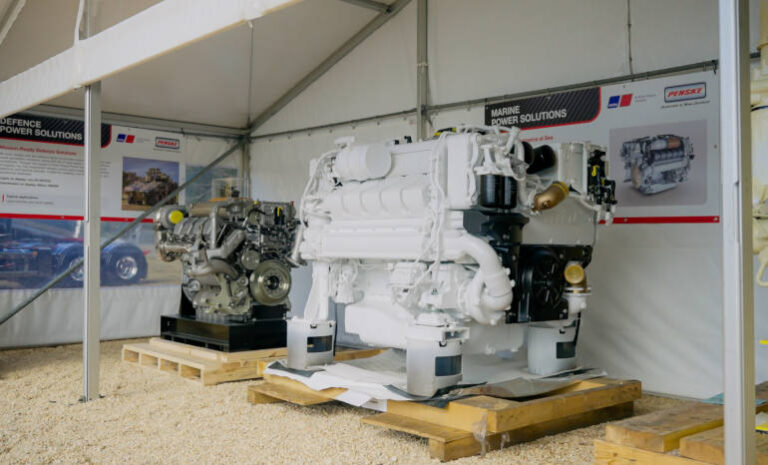
The topic was a practical focus during the Power of Penske Showcase at the Australian Automotive Research Centre (AARC) in Anglesea during March, where technical teams demonstrated how remanufactured engines and power systems support a wide range of applications — from heavy vehicles and marine propulsion to standby generators used in hospitals, data centres and remote operations. The discussion highlighted how lifecycle support is becoming an operational strategy rather than simply a maintenance function.

From Repairs to Planned Lifecycle Management
Maintenance strategies in heavy industries have evolved significantly over the past decade. Instead of responding to failures after they occur, many organisations now plan maintenance around equipment condition and expected service life.
Remanufacturing plays a central role in that transition.
Rather than waiting for a component to fail, operators can schedule replacement during planned maintenance intervals. The original component is then rebuilt and returned to service as part of a rotating inventory. This approach reduces unplanned downtime and improves maintenance efficiency, particularly for fleets and facilities where equipment utilisation is high.
The ability to exchange major components quickly is especially important in operations that run continuously. A truck that remains off the road for several days can disrupt freight schedules. A generator failure can interrupt operations in essential services. A piece of mining equipment that stops unexpectedly can halt production across an entire site.
Planned remanufacturing helps reduce these risks by ensuring replacement components are available when needed.
Managing Whole-of-Life Cost
For Fleet Managers and asset owners, remanufacturing aligns closely with whole-of-life cost management principles. Rebuilding components can reduce capital expenditure while maintaining operational performance.
For high-value equipment, the cost of remanufacturing is typically lower than purchasing a new component. Over the life of an asset, these savings can be significant, particularly in industries where engines and major systems represent a substantial portion of operating costs.
Equally important is cost predictability.
Scheduled remanufacturing allows organisations to plan maintenance budgets with greater accuracy, reducing the likelihood of unexpected expenses associated with emergency repairs or premature replacement. Predictable maintenance cycles also support better asset planning, helping organisations align maintenance schedules with operational requirements.
Extending Asset Life During Technology Transition
The heavy vehicle and industrial equipment sectors are experiencing rapid technological change, particularly in areas such as emissions reduction, electrification and digital monitoring. While new technologies offer performance and environmental benefits, many existing assets will remain in service for years to come.
Remanufacturing provides a practical way to maintain these assets while planning for future upgrades or replacement.
For example, operators may choose to rebuild engines to extend the life of equipment while preparing for the introduction of new powertrain technologies or infrastructure changes. This staged approach allows organisations to maintain operational continuity while managing investment timing.
The strategy is especially relevant in industries where equipment investments are significant and replacement cycles extend over decades.
Reliability Across Multiple Sectors
Reliability is increasingly viewed as a business requirement rather than a technical objective. Equipment availability influences operational performance, financial outcomes and customer service across transport, mining and energy sectors.
Transport fleets depend on consistent vehicle availability to meet delivery commitments. Industrial operations rely on equipment uptime to maintain production targets. Infrastructure providers require dependable power systems to support essential services.
In these environments, remanufacturing becomes part of a broader reliability strategy.
The approach supports continuity of operations by ensuring that critical components are maintained in serviceable condition throughout the life of the asset. It also allows organisations to manage risk more effectively by reducing the likelihood of unexpected failures.
Supporting Sustainability Through Reuse
In addition to reliability and cost control, remanufacturing contributes to environmental sustainability by reducing waste and conserving resources.
Reusing major components lowers demand for raw materials and energy associated with manufacturing new equipment. It also reduces the volume of equipment entering the waste stream and supports more efficient use of existing assets.
For organisations with emissions reduction or resource efficiency targets, extending asset life through remanufacturing can support broader sustainability objectives while maintaining operational performance.
A Practical Tool for Reliable Operations
The discussions at the Power of Penske Showcase reinforced a consistent message across industries: reliability is the result of planning, not chance.
Remanufacturing is one of the practical tools that enables organisations to manage equipment performance over extended lifecycles. By rebuilding engines and systems rather than replacing them prematurely, operators can maintain reliability, control costs and support continuity of operations.
For fleet managers and asset owners, the lesson is straightforward. Trucks, generators and industrial equipment may operate in different industries, but they share a common requirement — dependable performance over time.