

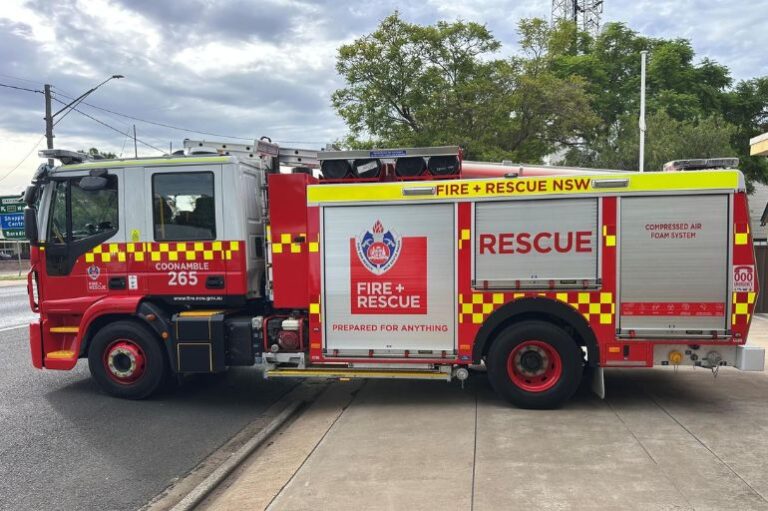
Fire and Rescue NSW (FRNSW) has delivered a new $560,000 fire engine to the community of Coonamble, reinforcing the importance of fit-for-purpose fleet investment in regional emergency services.
The new Compressed Air Foam System (CAFS) Class 2 Pumper recently arrived at the Coonamble Fire Station after rolling off the FRNSW production line. Designed to handle a wide range of incidents, the vehicle represents a practical example of how modern fleet technology can improve operational capability, safety, and environmental performance at the same time.
A versatile appliance for diverse operational demands
Regional fire brigades often require equipment that can respond to varied incidents across large geographic areas. The new CAFS pumper has been specified to manage structural fires, grass fires, chemical incidents, and road crashes, while also supporting flood response operations.
One of the key operational advantages is the compressed air foam system itself. The technology enables firefighters to suppress flames more efficiently while using significantly less water — an important consideration in regional communities where water supply can be limited.
FRNSW reports that the system can use up to five times less water than conventional firefighting methods, while delivering stronger “knock down” capability and reducing smoke generation at the fire scene. That combination can shorten incident duration, limit property damage, and reduce exposure risks for crews and the community.
From a fleet management perspective, this highlights the value of investing in technology that improves productivity and resource utilisation, rather than simply replacing older vehicles on a like-for-like basis.
Safety and emissions improvements built into the platform
The new appliance is built on a Euro 6 compliant cab chassis, reflecting the gradual transition of heavy vehicle fleets toward lower-emission technology. While emergency response vehicles operate in demanding conditions, the adoption of cleaner engines is becoming increasingly relevant as public sector fleets align with emissions reduction targets and community expectations.
The vehicle also incorporates modern crash avoidance systems, supporting crew safety during high-risk response situations. For emergency services, safety upgrades are often one of the most compelling drivers for fleet renewal, particularly when vehicles operate under time pressure and in unpredictable environments.
These types of improvements reinforce a broader trend across public sector fleets — moving beyond basic compliance to adopt advanced safety technologies that reduce risk exposure for both operators and the public.
Supporting long-term service delivery in regional communities
Emergency Services Minister Jihad Dib said the delivery of the new appliance forms part of a broader investment in frontline capability.
“The Minns Labor Government is investing an additional $17 million over two years in the renewal of the state’s firefighting fleet to strengthen our frontline emergency response,” Dib said.
“This truck will serve the Coonamble community well for many years to come. It’s the latest in a long line of new FRNSW vehicles, in which government is investing.”
Member for Barwon Roy Butler said the new vehicle had been well received by the local brigade.
“I handed over the keys to this impressive bit of kit recently when I was in Coonamble,” Butler said. “It was clear that they’re very proud of the new appliance which enhances their firefighting capabilities, as well as the safety of the crew and the community.
“I want to thank the Minister for this investment in our regional emergency services.”
Fleet readiness and familiarisation phase
Following delivery, the local crew will undertake a structured familiarisation period to ensure the vehicle can be used effectively in operational conditions.
FRNSW Assistant Commissioner – Regional Operations Steven Hayes said the introduction of new technology requires time for training and capability testing.
“I know the local fire crew has been very keen to get its hands on this new pumper and put it through its paces,” Hayes said. “The firefighters will spend the next few weeks familiarising itself with the truck and testing its capabilities.”
A practical example of fit-for-purpose fleet investment
For Fleet Managers, particularly in local government and emergency services, the Coonamble delivery illustrates several recurring themes in modern fleet planning:
- Technology that improves operational efficiency, such as reduced water usage and faster fire suppression
- Safety upgrades that lower risk exposure for operators and the public
- Lower-emission powertrains that support sustainability targets
- Versatility to handle multiple incident types across diverse operating environments
Rather than focusing solely on acquisition cost, these investments are increasingly assessed through a whole-of-life lens — balancing performance, safety, reliability, and community outcomes.
In regional settings especially, a single vehicle often carries significant operational responsibility. Ensuring that asset is capable, reliable, and adaptable is central to maintaining service levels and community confidence.