

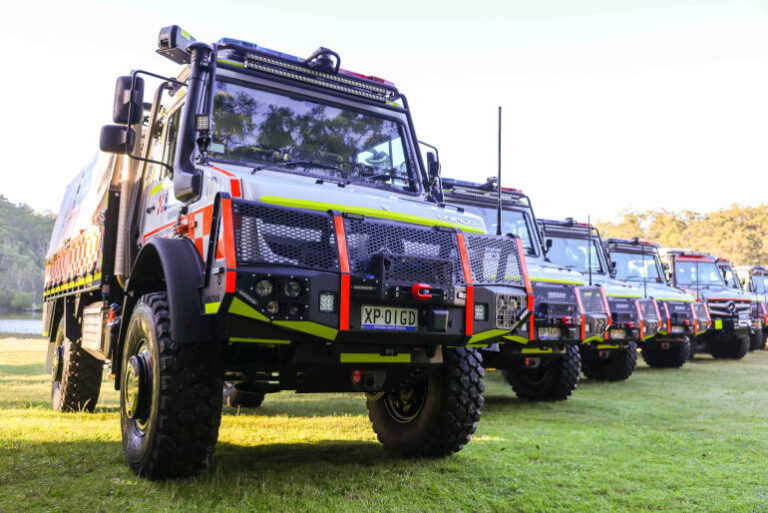
The New South Wales State Emergency Service (NSW SES) has strengthened its flood and disaster response capability with the addition of eleven new Mercedes-Benz Unimogs, taking its total fleet of the specialised vehicles to 20.
The NSW SES has been operating Unimogs since 2022, citing their capability and durability as key reasons for expanding the fleet.
Classified as High Clearance Vehicles, the Unimogs are designed for extreme conditions, featuring a 1200mm wading depth and portal axles that deliver significant ground clearance. These capabilities are critical for accessing flood-affected areas and navigating challenging terrain during emergency operations.
The latest U5023 models underwent final preparation at Revesby Beach before being deployed across key locations in New South Wales. Positioning the vehicles strategically allows the NSW SES to pre-deploy assets ahead of severe weather events or respond rapidly when emergencies occur.
NSW Minister for Emergency Services, Jihad Dib, said the investment would improve the state’s ability to respond to natural disasters.
“These 11 new high clearance vehicles will make a significant difference to communities across NSW and by placing them in key locations we can pre-deploy them or respond quickly during storms to bring rapid help when people need it most,” he said.
“I know they will make a real difference protecting communities and supporting our volunteers.”
The Unimogs are expected to play a key role in reaching isolated communities, particularly during flood events where conventional vehicles are unable to operate. In addition to personnel transport, some units are equipped with integrated cranes, enabling them to carry and load heavy equipment and supplies for resupply and recovery missions.
NSW SES Commissioner Mike Wassing AFSM said the additional vehicles represent a step change in operational capability.
“Whether it’s wading through more than a metre of floodwater, navigating fire trails, or delivering supplies to residents cut off by floodwaters, this new fleet means that help will arrive faster when communities need it most,” he said.
The expansion reflects a broader trend among emergency services to invest in specialised heavy vehicles that can operate in extreme conditions. For fleet managers, it highlights the importance of aligning vehicle selection with operational requirements, particularly where access, resilience and payload flexibility are critical to service delivery.
As climate-driven weather events continue to increase in frequency and severity, assets like the Unimog are becoming an essential part of emergency response fleets, offering a combination of off-road capability, versatility and durability that standard platforms cannot match.