





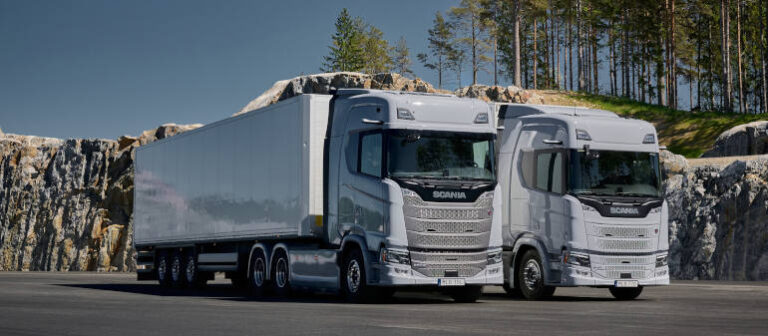
Scania has revealed a major update to its R- and S-series trucks, with the new Scania Dynamic package targeting lower energy consumption, improved aerodynamics and a more comfortable working environment for drivers.
The changes apply across both battery-electric and combustion-engine powertrains, with Scania claiming total energy consumption can be reduced by around 2 per cent, depending on vehicle specification and operating conditions.
For heavy vehicle fleets, that improvement is significant because it applies to the energy being consumed regardless of whether the truck is running on diesel or electricity. Lower consumption can translate into reduced fuel costs for combustion vehicles, while electric trucks can make better use of the energy stored in their batteries.
Scania President and CEO Christian Levin said the changes were part of the manufacturer’s strategy of continually refining its existing truck platform.
“At Scania, we don’t take our position for granted. We need to keep our offering premium,” Levin said.
“With the introduction of Scania Dynamic, we level up on the driver environment, as well as the energy efficiency.”
Aerodynamics do the heavy lifting
Much of the efficiency improvement comes from reducing aerodynamic drag.
Changes include digital rear-view mirrors, extended side skirts, redesigned A-pillars, new door handles and changes to the front of the truck to support Increased Vehicle Dimension legislation.
Digital mirrors are one of the most visible additions. Scania says replacing conventional mirrors helps reduce air resistance while also improving visibility around the vehicle.
Drivers receive two full-HD screens, with standard, zoom and wide-angle viewing modes available depending on the task. Adjustable reference lines are designed to assist when reversing and manoeuvring in confined spaces, while heated camera lenses help manage fog, ice and snow.
For fleet operators, the combination of aerodynamic improvements is another example of manufacturers looking for incremental efficiency gains rather than relying solely on major powertrain changes.
Over high annual kilometres, relatively small improvements in consumption can become meaningful when multiplied across an entire heavy vehicle fleet.
Driver environment gets an overhaul
Scania has also put considerable attention into the cab, reflecting the importance of attracting and retaining drivers as well as keeping them comfortable during long shifts.
The Dynamic interior receives revised materials, new upholstery and an updated colour scheme. Sustainability has also been incorporated into the materials, with curtains made from 100 per cent recycled material and wall and ceiling panels containing 70 per cent recycled content.
Seats have been updated to meet new headrest safety regulations while also improving ergonomics, and an optional 800mm reclining bed allows the back section to be adjusted by up to 60 degrees.
Interior lighting is also available in several levels, ranging from functional white lighting to the Ambient+ package with selectable colours and lighting themes.
Scania Senior Vice President and Head of Solutions Management Lars Gustafsson said the objective was to make the truck a better workplace as well as improving comfort during rest periods.
“For drivers who spend hours on the road, these improvements make the cab a great place to work, rest and recover,” Gustafsson said.
He said a more intuitive working environment could help drivers maintain focus and reduce fatigue.
Better lighting and more driver assistance
The updated R- and S-series trucks also receive revised headlamps designed to provide a longer high-beam range, wider illumination and improved low-beam performance.
Automatic high beam is designed to maximise forward lighting without unnecessarily disturbing other road users.
Driver assistance functions include Safe Stop Assist, Forward Distance Alert and Vulnerable Road User, while Speed Sign Cruise Control and Curve Speed Cruise Control are intended to support smoother driving.
The technology continues a broader heavy vehicle industry trend towards using driver assistance not only as a safety measure but also to reduce workload during long and demanding operating cycles.
Small changes aimed at everyday operations
Some of the Dynamic updates are considerably simpler but have been designed around everyday driver use.
A magnetic wireless phone charger delivers 15W charging while holding the device in position and allowing airflow underneath to reduce heat build-up.
Scania has even added a ventilated glove hanger in an external storage compartment, allowing wet or dirty work gloves to be stored outside the cab rather than brought into the driver’s environment.
These details may appear minor compared with powertrain development, but they reinforce Scania’s approach of treating the truck as both a productive asset and a driver’s workplace.
For fleet managers evaluating new heavy vehicles, the Scania Dynamic update demonstrates how the efficiency equation is increasingly extending beyond the engine or battery.
Aerodynamics, driver assistance, visibility, ergonomics and cab design can all contribute to operating costs, driver productivity and vehicle utilisation.
And with the same efficiency philosophy being applied across diesel and battery-electric trucks, the improvements also allow fleets to pursue incremental energy savings regardless of where they currently sit in the transition to lower-emission heavy vehicles.