

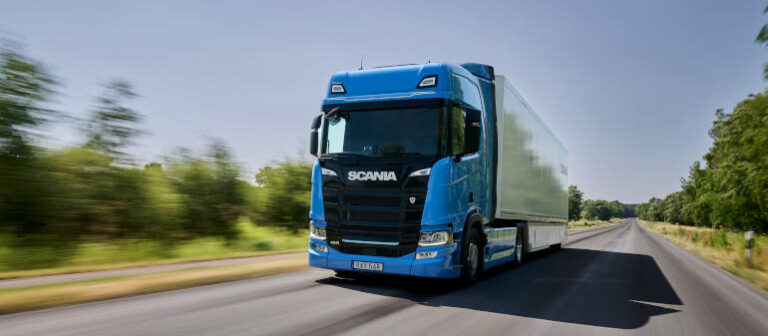
Scania’s G-series and R-series have achieved five-star ratings in Euro NCAP’s haulage assessment, recording a 96 per cent score for crash avoidance.
The results cover four configurations: G-series and R-series 4×2 prime movers and 6×2 rigid trucks. Both model ranges also received Euro NCAP’s City Safe Award, adding to the five-star results previously achieved by Scania’s L-series and P-series.
For heavy vehicle fleet operators, the assessment highlights the role of driver visibility, assistance systems and vehicle specification in reducing risk across long-haul and regional transport operations.
Crash avoidance drives strong result
Scania attributed the 96 per cent crash avoidance score to technologies including Advanced Emergency Braking and its Vulnerable Road User Brake System.
The trucks also feature Speed Sign Cruise Control and Curve Speed Cruise Control, which support drivers in managing vehicle speed, alongside Safe Stop Assist.
Euro NCAP highlighted the R-series’ performance in safe driving and collision avoidance. According to Scania, the assessment recognised its emergency braking performance in avoiding collisions with other vehicles, including two-wheelers, and people.
Optional camera monitor systems were also highlighted for improving front corner visibility and reducing driver workload.
“Safety in long-haulage starts with supporting the driver,” said Lars Gustafsson, Head of Trucks at Scania.
“Visibility, comfort, driver assistance, and vehicle control all contribute to safer operations.”
Cab design supports visibility
The G-series was recognised for balanced safety performance, with Euro NCAP describing it as a safe all-rounder when specified with the appropriate safety equipment.
Its lower cab, deep windows and low belt line support direct vision in mixed transport environments, where drivers may encounter a combination of highway traffic, urban roads and vulnerable road users.
The City Safe Award for both ranges adds an urban safety dimension to results from an assessment focused on long-haul and highway-oriented operations.
Scania’s modular vehicle system also provides a familiar layout and controls across its truck range. For fleets operating multiple Scania cab types, that consistency can help drivers move between vehicles with greater familiarity.
Safety specification matters for fleets
The results give fleet managers another reference point when assessing heavy vehicle safety, but the equipment fitted to the vehicle remains an important part of the purchasing decision.
The G-series assessment specifically recognised performance with the appropriate safety equipment, while the R-series findings included optional camera monitor systems.
For Australian operators, that makes it important to confirm how the safety equipment on a proposed vehicle compares with the configurations assessed by Euro NCAP.
Procurement discussions should consider the truck’s operating environment, driver visibility requirements and available assistance systems, alongside payload, productivity and whole-of-life costs. Driver familiarisation should also cover how the fitted systems operate.
“Safe trucks are essential for everyone who shares the road,” Gustafsson said.
For fleets reviewing replacement vehicles, the five-star results reinforce the value of making safety equipment a clear requirement in the vehicle specification.