


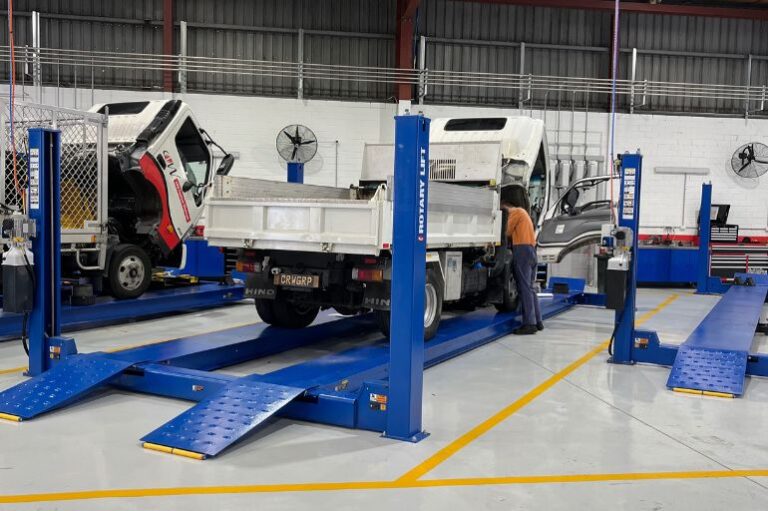
Hino Australia is seeing customers postpone larger repairs as difficult economic conditions put pressure on business spending, raising a warning for fleet managers reviewing maintenance budgets.
The change is not a wholesale retreat from scheduled servicing. Hino says service activity remains strong, but customers are becoming more selective about additional work identified when trucks visit dealerships.
For fleet managers, that distinction matters. Keeping a service appointment does not resolve a defect if the recommended repair is repeatedly deferred.
Speaking at an exclusive media briefing during the Hino 300 Series Euro 6 launch and drive, Gus Belanszky, General Manager – Service & Customer Support at Hino Australia, said customers were increasingly delaying bigger repair jobs.
“We’re seeing customers putting off major repairs, so servicing is pretty consistent,” he said.
Previously, customers were more likely to authorise additional work identified during a service. Now, some are choosing to bring the vehicle back later.

Servicing holds up while other work softens
Belanszky said Hino’s service repair orders were up about two per cent, while total repair orders were down about two per cent.
The figures describe activity within Hino’s dealership network rather than an industry-wide measure. However, they offer an insight into how operators are responding to financial pressure.
Hino Australia President and CEO Richard Emery said the behaviour differed from the strong trading conditions experienced during the COVID-era freight surge.
At that time, operators were purchasing new trucks while retaining older vehicles to meet demand. Keeping those trucks working supported a greater willingness to approve workshop recommendations.
Now, the instruction is more restrained.
“Get the service and get the essential things done, but the other stuff … that’ll have to wait,” said Emery.
The concern for fleet managers is how “essential” is defined, who makes that decision and whether deferred work remains visible after the truck leaves the workshop.
A service stamp does not close out a defect
Scheduled servicing and corrective repairs perform different roles.
A truck can receive its routine service and still have outstanding work requiring attention. Completing one does not remove the need to assess the other.
Some work can reasonably be planned for a later date following a competent technical assessment. Cosmetic repairs, for example, may offer flexibility where they do not affect safe operation.
Work affecting brakes, steering, tyres or other safety systems requires a different response. A budget target cannot establish whether a vehicle is fit to remain in service.
The decision to defer a repair should therefore begin with the condition of the vehicle and the consequences of failure. It should include advice from an appropriately qualified person, a clear completion date and any operating restrictions required in the meantime.
An instruction to “leave it until next month” provides none of those controls on its own.
Older trucks need a realistic maintenance allowance
The pressure on repair spending is occurring while some operators are also extending vehicle replacement cycles.
Emery said fleets were retaining trucks a year or two longer than they would prefer. Belanszky also pointed to the continued operation of older Hino vehicles as evidence that customers were keeping equipment longer.
For fleet managers, extending a replacement date should trigger a review of the maintenance forecast.
Retaining a truck may reduce immediate capital expenditure, but its condition, utilisation and repair requirements still need to be funded. Assuming an older vehicle can keep working with a smaller maintenance allowance risks building an unrealistic budget.
It can also shift expenditure into less controllable forms: breakdown recovery, replacement hire, interrupted work and urgent repairs.
A deferred workshop job may appear to improve this month’s result while increasing the likelihood of a larger operational disruption later.
Make deferred repairs visible
Hino’s observations provide a reason for fleet managers to examine what happens after a workshop identifies additional work.
A useful starting point is the outstanding defect list. Each deferred item should have a recorded assessment, an accountable decision-maker and a date for review or completion.
Fleet reporting should also distinguish between scheduled services completed and defects rectified. A strong servicing compliance result can obscure a growing backlog of unresolved repairs if the two are treated as the same measure.
Where budgets are under pressure, fleet managers can scrutinise low-use assets, unnecessary vehicle numbers, idle time and the scheduling of non-urgent work. Those reviews can identify savings while preserving the maintenance needed to keep working vehicles safe.
Hino’s dealership experience suggests businesses are already making harder spending decisions. For fleet managers, the task is to ensure financial restraint does not become an informal policy of running trucks until something fails.