

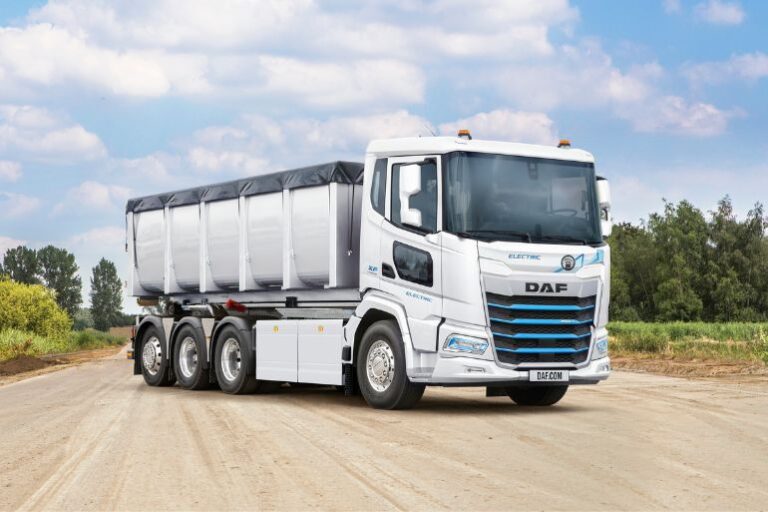
DAF is expanding its electric truck range with new XG and XG+ models for long-haul transport, alongside additional tractor and rigid configurations for distribution and construction applications.
Presented at IAA Transportation 2026, the expanded range combines modular battery configurations with a choice of axle layouts, giving operators more options to match an electric truck to a particular task.
DAF claims driving ranges of more than 550 kilometres on a single charge across its electric offering, depending on specification and application. The announcement does not confirm Australian availability or local specifications.
LFP batteries across the range
All DAF Electric trucks use lithium iron phosphate (LFP) batteries, which carry an eight-year warranty.
The batteries are cobalt- and nickel-free. According to DAF, they offer high thermal stability and can be charged to 100 per cent daily without compromising durability.
For Fleet Managers, the ability to use a full charge each day could help with route planning and vehicle utilisation. However, the suitability of any configuration will depend on its working load, operating conditions and access to charging.
Larger cabs for longer routes
The new XG and XG+ Electric models build on the XD and XF Electric, which were named International Truck of the Year 2026.
Their larger cabs extend DAF’s electric offering into applications where drivers need more space for working, resting and sleeping.
The XG and XG+ cabs are 33 centimetres longer than the XF cab. Combined with additional height, they provide an interior volume of up to 12.5 cubic metres and standing height of up to 2.2 metres.
For operators considering electric trucks on longer routes, the additional accommodation brings driver comfort into the purchasing assessment alongside range, payload and charging requirements.
More configurations for specialist work
DAF is also broadening its electric range with 6×2, 6×4 and 8×4 tractor and rigid models.
New 6×2 tractors feature a steered pusher or trailing axle, targeting distribution work where operators need additional carrying capacity and manoeuvrability in confined yards.
A 6×2 rigid with a 10-tonne, dual-wheel trailing axle is aimed at tipper and demountable container applications.
For construction work, the new 6×4 and 8×4 models feature driven tandem axles rated at 19 or 21 tonnes, with single-reduction and hub-reduction options.
DAF has also developed 4×2 and 6×2 rigid chassis for German BDF swap-body applications. These use a dedicated configuration of up to five battery packs, designed to maintain access to body twist locks.
Battery positioning targets payload
A revised battery layout is another focus of the expanded range.
DAF has introduced a configuration that removes the battery pack from beneath the cab and positions up to four packs further towards the rear. The company says this reduces front axle load by approximately 700 kilograms, improving weight distribution and potentially increasing usable payload by up to 2.5 tonnes.
Separately, DAF says its XD, XF, XG and XG+ Electric models can offer up to 500 kilograms more payload than equivalent diesel versions where legislation permits an additional registration weight of up to two tonnes for electric trucks.
These claims depend on vehicle configuration and the applicable weight rules. Australian fleet buyers would need local specifications and axle-load assessments before applying the figures to their operations.
DAF’s supporting services include consulting, charging equipment and battery storage systems through PACCAR Power Solutions. For fleets assessing the technology, those infrastructure requirements form part of the investment decision alongside the truck itself.