

For many Fleet HV News readers, the Cummins brand has long been synonymous with diesel engines powering trucks, heavy equipment and remote industrial operations. That reputation remains—but Cummins used All-Energy Australia 2025 to make it clear that its future reach goes well beyond diesel.
The company’s Destination Zero™ strategy is reshaping its product portfolio around lower-emission technologies including battery energy storage systems (BESS), hydrogen engines, fuel cells, and integrated microgrid controls. The message for heavy-vehicle and fleet operators is simple: Cummins intends to power the next era of transport and off-grid operations with a broader mix of technologies, not a single solution.
A long-term shift, not a sudden pivot
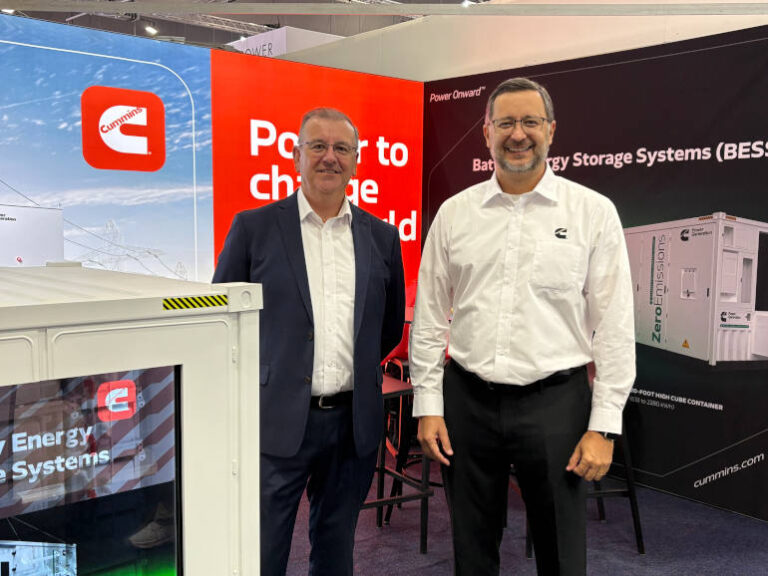
Lucio Kroll, Senior Director – New Energy Solutions at Cummins Power Systems, said the energy transition is part of a sustained strategic plan.
“The battery energy storage system is well aligned at Cummins… it supports the Destination Zero strategy.”
Cummins has backed this commitment by establishing Accelera, a dedicated business unit focused on new-energy products. While diesel remains essential for many applications, the company now frames its identity around reliability, support, and technology breadth, not a single fuel type.
Still diesel where it counts — but with new options alongside
For heavy-vehicle and transport operators, diesel isn’t disappearing. Craig Wilkins, Director & General Manager – Power Generation, Cummins Asia Pacific, acknowledged that many duty cycles still require it.
“Some applications are still very diesel-driven… but customers also want emission solutions and the ability to integrate renewables.”
This reflects the reality facing fleet operators: the transition to net zero will happen at different speeds depending on the task, payload, location and infrastructure limits.
Cummins’ strategy recognises this. Rather than pushing an immediate shift away from diesel, it is building hybrid systems that combine:
- diesel or gas generation
- battery storage
- solar or other DER inputs
- smart controls
This allows organisations to reduce fuel burn and emissions without compromising uptime or operational resilience.
Battery Energy Storage: a practical bridge
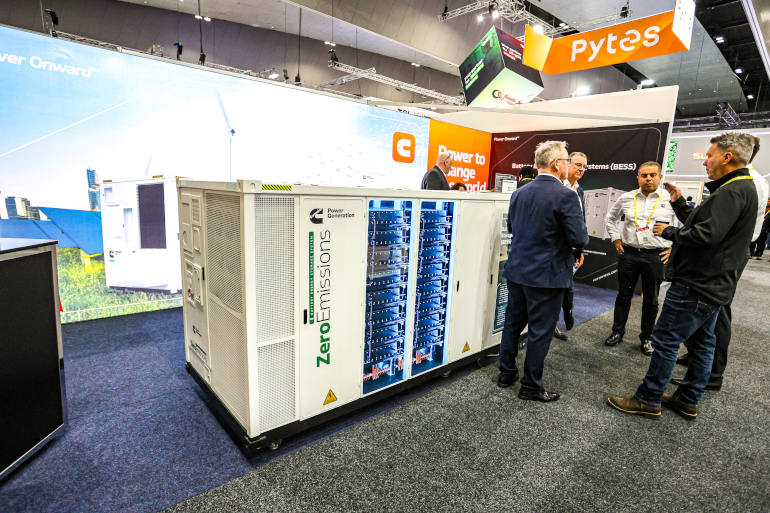
The launch of the Cummins BESS is a key step in supporting this hybrid model.
Available in containerised units from 200 kWh to 2 MWh, the system can:
- store renewable energy
- reduce genset run hours
- support peak shaving
- stabilise microgrids
- improve off-grid reliability
For transport depots, distribution centres and remote heavy-vehicle operations, storage provides a way to lower diesel use while preparing for future electrification.
Lucio described it as:
“A bridge technology to what’s going to come next.”
Why it matters to the heavy-vehicle sector
For fleets, the strategic shift means:
- More options during transition – diesel remains supported but can be paired with storage and renewables.
- Lower operating costs – peak management and hybrid systems reduce fuel burn.
- Improved reliability – especially for remote operations and regional councils.
- A clearer pathway to future technologies – including hydrogen engines and advanced microgrids.
And importantly, Cummins continues to bring its national service network, integration capability and lifecycle support—factors that matter deeply to heavy-vehicle operators.
As Craig noted:
“There’s plenty of people who can sell a battery… but managing it from concept through to service support is the unique part of what Cummins does.”
The takeaway for fans of Cummins
Cummins is not walking away from diesel. It is broadening the toolkit to support organisations through a staged, realistic transition. For heavy-vehicle fleets planning for decarbonisation, the company’s strategy offers a practical path: reduce emissions where possible today, without compromising the operational demands of tomorrow.