


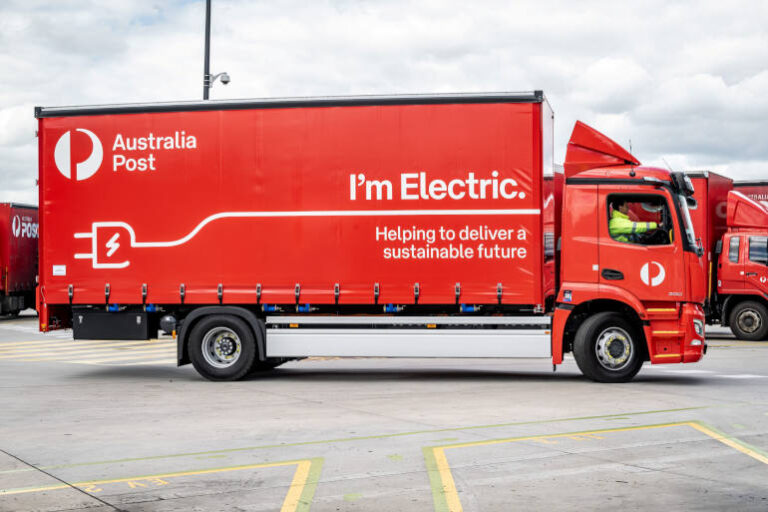
The range of electric trucks available to Australian operators continues to broaden, with new models entering the market across light, medium and heavy vehicle segments. The latest MOV3MENT Electric Truck Report (March 2026) highlights a steady increase in vehicle choice, alongside growing manufacturer commitments to supply the local market.
According to the report, the number of electric truck brands operating in Australia has grown significantly in recent years, rising from three brands in 2023 to around 15 in early 2026, with further models expected to follow.
The availability tables in the report provide a detailed snapshot of both vehicles currently on sale and models announced for release over the next 12 to 24 months, reflecting a market that is still developing but expanding quickly.
Light-duty segment remains the most mature
Light-duty vehicles — including vans and smaller rigid trucks — continue to represent the most established part of the electric truck market in Australia. These vehicles are typically used for urban delivery, service and municipal operations where daily travel distances are predictable and vehicles can return to base for overnight charging.
Models such as the Farizon SV Cargo Van, LDV eDeliver series and Ford eTransit are already operating in commercial fleets, demonstrating how early adoption has focused on shorter-range urban tasks. The report notes that these smaller vehicles are often available with shorter lead times compared with heavier trucks, making them a practical entry point for operators exploring electrification.
While the technology is well suited to city-based operations, the report indicates that utilisation remains a key factor in the business case, as lower daily distances can limit the opportunity to offset higher upfront purchase costs through operational savings.
Medium-duty trucks gaining traction in specialised roles
Medium-duty electric trucks are increasingly being deployed in applications such as waste collection, distribution and construction support. These operations often involve defined routes and regular return-to-depot patterns, which align with current battery range and charging requirements.
The report highlights several examples of fleets transitioning from pilot programs to broader deployment, particularly in municipal and waste services. This shift suggests that some operators are moving beyond evaluation phases and integrating electric vehicles into routine operations where duty cycles are predictable.
However, the report also notes that adoption in this segment still depends on infrastructure planning and operational adjustments, particularly around charging capacity and depot electrical upgrades.
Heavy-duty segment shows early momentum but longer lead times
Electric prime movers and heavy rigid trucks are beginning to appear in the Australian market, although availability remains more limited and delivery timelines can be longer. Many of these vehicles are supplied through factory orders rather than stock, with lead times commonly ranging from six to twelve months.
The report indicates that heavy-duty electric trucks are increasingly being trialled in freight operations, including longer-distance routes, as manufacturers introduce higher-capacity battery systems and faster charging technology. Some vehicles are already capable of operating over several hundred kilometres per trip, demonstrating the technical progress being made in the segment.
Despite these developments, the report suggests that large-scale adoption will depend on continued improvements in vehicle supply, charging infrastructure and operational confidence among fleet operators.
More models expected as market develops
The report identifies a pipeline of additional vehicles scheduled for release in Australia during 2026 and beyond, particularly in the medium-duty category. Many of these models are still subject to regulatory compliance and local engineering requirements, which can influence delivery timing.
It also notes that not all vehicles available overseas will necessarily be introduced to the Australian market, as manufacturers weigh demand levels and certification costs before committing to local supply.
Overall, the availability data presented in the report suggests the electric truck market is transitioning from early adoption to broader commercial deployment, particularly in urban and regional freight tasks where operating patterns align with current technology capabilities.
- “You Can’t Manage What You Can’t Measure”: Why Most Fleets Still Don’t Know Their Accident Costs
 Fleet Managers are under increasing pressure to demonstrate control over costs, risk and operational efficiency. Fuel spend, lease rates and servicing are typically tracked in detail. Accident and repair costs, however, remain one of the least visible areas of fleet operations. According to Shaun Janks, Co-Founder and Chief DingGo at DingGo, many fleets still do not
 - MAN to invest €300 million in European service networkMAN Truck & Bus has announced plans to invest around €300 million in the expansion and modernisation of its European service network by 2030, marking the largest service-network investment in the company’s history. The investment will focus on expanding workshop capacity, improving regional coverage, and preparing the network to support the growing number of electric
- Genuine vs Non-Genuine: What Hino’s Skills Contest Teaches About Parts QualityParts availability and accuracy are fundamental to keeping trucks on the road, and Hino’s National Skills Contest places equal emphasis on the often-overlooked profession of parts interpretation. General Manager – Service & Customer Support Gus Belanszky says parts performance directly affects customer outcomes. The contest tests interpreters through a counter role-play, a live identification exercise and, for
- Top Tips for Employers to Help Apprentices SucceedAt the Australian Trucking Association’s Technology and Maintenance Conference (TMC) 2025, a powerful message resonated across the room: the industry’s future depends on how well today’s employers train, mentor and retain apprentices. The panel session Working with TAFEs to Get Training Results brought together four experienced voices — Ashley Belteky, (Apprenticeship Mentor – Women in Male-Dominated Trades at
- Hino’s Parts Distribution Centre Marks Five Years of Strong GrowthAs Hino Australia’s 9,272m² purpose-built Parts Distribution Centre (PDC) approaches its fifth anniversary, the company says the facility continues to make a measurable difference to supply performance for customers and dealers across the country. Greg Bleasel, Vice President – Product Support for Hino Australia, said the business had outgrown its previous location well before the