
EROAD has signed a substantial long-term agreement with Cleanaway Waste Management Ltd to deliver an integrated monitoring, reporting and compliance solution across the company’s fleet of more than 3,000 heavy vehicles nationwide.
For the heavy-vehicle sector — where safety, compliance and system reliability are non-negotiable — the collaboration represents a significant commitment from two large industry players with shared priorities around safer operations and improved risk management.
A comprehensive safety and compliance package
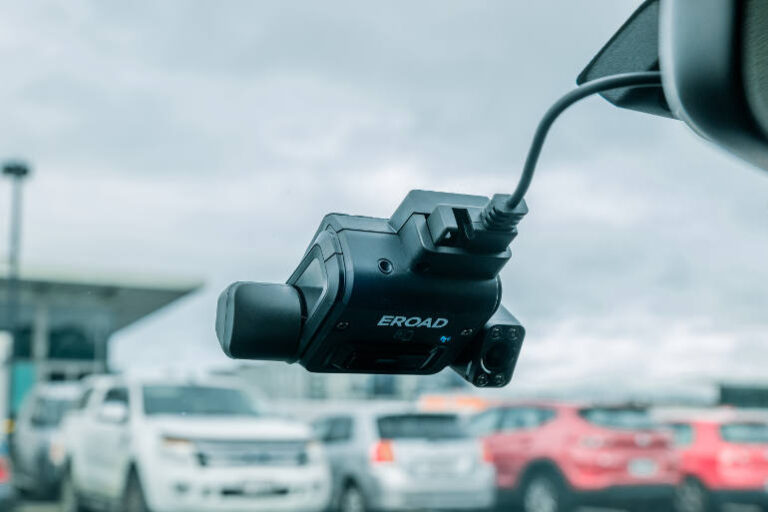
The rollout covers multiple connections per standard and dual-sided vehicle, bringing together a suite of technologies designed to support driver safety, operational oversight and compliance reporting. These include:
- Location tracking
- Dashboard-mounted and internal fatigue-monitoring cameras
- Seat-shaker alerts
- Rollover alerts
- Duress buttons
- Critical-event monitoring
- Satellite connectivity for remote-area operations
Installations are already underway, with full implementation scheduled for completion by November 2026. Once operational, the agreement is expected to generate more than A$5 million in annual recurring revenue, supported by fixed annual escalators. The contract extends for five years, with an option for Cleanaway to continue for a further three years.
Commitment to long-term safety performance
EROAD CEO Mark Heine said the partnership reinforces the company’s investment in advanced camera technology and workflow systems that align with the operational and compliance demands of large heavy-vehicle fleets.
“EROAD is incredibly privileged to partner with Australia’s leading total waste management, industrial and environmental services company,” Heine said. “This partnership underscores both our shared commitment to health and safety and the potential of the Australian market. Securing this large enterprise agreement is the result of our continued investment in new camera technology and workflow to ensure it meets our customers’ operational and compliance needs. It also demonstrates our long-term commitment to supporting Australian industry with best-in-class solutions.”
Cleanaway strengthens its safety foundation
Cleanaway will integrate the full EROAD suite as part of its ongoing strategy to enhance safety, improve incident response, and support its frontline workforce with real-time visibility and smarter tools.
Nicholas Dhar, Cleanaway’s Head of Fleet Safety and Compliance, said the decision followed a detailed assessment of available systems.
“At Cleanaway, safety is more than a priority, it’s the foundation of everything we do. Our partnership with EROAD reflects our commitment to embracing smart technology that supports safer, more efficient operations,” Dhar said. “After a thorough evaluation, EROAD stood out for its comfort, flexibility, ongoing support and strong commitment on safety. It’s a meaningful step forward in creating safer roads and a safer working environment for our people.”
What it means for fleet operators
For heavy-vehicle operators across waste, logistics and essential services, the partnership highlights several emerging trends:
- Increasing adoption of fatigue-monitoring technology and in-cabin alert systems
- Greater integration between telematics, safety and compliance workflows
- Growing reliance on satellite connectivity for remote and regional operations
- Long-term commercial partnerships that embed continuous improvement and system upgrades
For the HV sector, this agreement signals continued momentum towards fully connected fleets where safety data, driver behaviour insights and compliance reporting are embedded into everyday operations.
Fleet managers will be watching closely as the Cleanaway rollout progresses, particularly how multi-device installations and satellite-supported operations perform at scale across one of the largest heavy-vehicle fleets in Australia.
- Blacktown targets the biggest emitters first
 Electrifying passenger vehicles might deliver some quick wins for fleet emissions, but Blacktown City Council is looking further down its fleet list to find where the biggest emissions are actually being produced. That has put garbage trucks firmly in the spotlight. Speaking during the Fleet News Group Awards finalists panel at Everything Electric Sydney, Blacktown
 - Fleet sustainability goes beyond the drivetrainThe race to reduce heavy vehicle emissions is often framed around the choice between diesel, battery electric, hydrogen and other alternative fuels. But a case study presented at TruckShowX showed that fleet sustainability reaches much further than the powertrain. Scott Donnelly, New Energy & Emissions Reduction Lead at TR Group, and Will Samuel, General Manager
- Cutting truck emissions will take more than electric vehicles: Hino CEOAustralia could reduce road transport emissions sooner by taking a broader approach that includes newer trucks, alternative fuels, hybrids and driver training rather than waiting for the entire heavy vehicle fleet to become electric. That is the view of Hino Australia President and CEO Richard Emery, who believes governments need to consider the unique operating
- BetterFleet data reveals the hidden efficiency gap inside electric truck depotsSwitching from diesel to electric removes tailpipe emissions, but BetterFleet says that is only the beginning of the emissions and efficiency story. Speaking at TruckShowX, BetterFleet Vice President APAC Markets Russ Yell said the way energy is managed after it enters a depot can have a significant impact on operating costs, carbon performance and the
- Hydrogen freight network targets Australia’s fuel security challengeAustralia’s reliance on imported diesel has become a business continuity risk for the freight industry, according to transport and energy leaders speaking at TruckShowX. During a panel session, Hiringa Founder and CEO Andrew Clennett joined Ofload Director of Growth Drew McKinnel and Ofload Senior Director Karishma Bhatt to examine how hydrogen, freight data and greater