

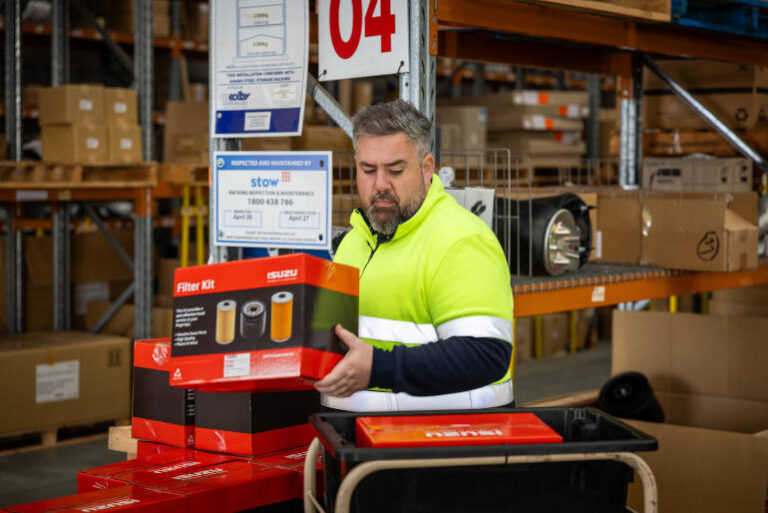
Isuzu Australia Limited (IAL) is highlighting the workforce behind Australia’s truck parts industry, pointing to the role local suppliers, technicians and apprentices play in keeping commercial fleets operational.
According to Isuzu, the truck parts sector directly supports an estimated 40,000 to 60,000 Australian jobs. These span warehousing, logistics, component manufacturing, dealership workshops, parts interpretation and technical support.
For fleet managers, this network underpins access to replacement parts, scheduled servicing and repairs throughout a vehicle’s working life.
IAL National Parts Sales Manager Joel Gledhill said the industry’s contribution extended well beyond the trucks themselves.
“Behind all of this is the broad range of businesses and workers supporting those vehicles long after they leave the dealership,” he said.
“It’s a huge employer as every truck on the road requires parts supply, servicing, technical support and ongoing maintenance.”
Support beyond the sale
Isuzu says it consistently accounts for close to a quarter of Australia’s new truck sales, creating an ongoing requirement for parts availability and service capability across its national network.
Gledhill said that position brought a responsibility to invest in the infrastructure and relationships needed to support customers throughout ownership.
“Customers choose Isuzu because they know they’ll be supported throughout the life of the vehicle,” he said.
Delivering that support involves dealers, service outlets, parts suppliers and industry partners. For operators, the strength of these relationships can influence how quickly a truck returns to work when maintenance or repairs are required.
It also makes aftersales capability an important consideration when selecting vehicles. A truck’s purchase price is only one part of the decision; access to skilled technicians and replacement components remains relevant throughout its service life.
Local suppliers build capability
Isuzu is also pointing to local procurement and collaborative product development as ways to support Australian industry.
Recent examples include Australian-manufactured lubricants developed for its Genuine Parts range.
Gledhill said working with local suppliers helped draw on expertise suited to Australian operating conditions while supporting domestic employment and investment.
“In our experience, local expertise really does matter,” he said.
“When we engage local suppliers and manufacturers, we’re supporting skills, investment and employment that remain here in Australia and further develops the capability of the local industry.”
The broader support network includes body builders, engineering specialists, tyre suppliers, battery providers and component distributors. Together, these businesses provide the products and services required to keep trucks working across different applications.
Skills remain essential to fleet uptime
Isuzu identified shortages in technical and maintenance occupations as an ongoing industry issue, reinforcing the need for investment in training, skills development and collaboration.
As Australia’s freight task grows, maintaining workshop capacity and developing the next generation of technicians will remain important to fleet reliability.
Gledhill said each truck delivered contributed to a much wider employment network.
“This includes apprentices starting out in their trades, technicians keeping trucks in operation, local businesses expanding their operations and suppliers investing in new competencies,” he said.
For fleet managers, the message is practical: the people supporting a vehicle are as much a part of its operating capability as the equipment itself. Understanding a supplier’s service coverage, parts support and workforce capacity can help operators assess whether that support will meet their needs over the long term.