

Australian refrigerated transport operators are interested in alternatives to diesel-powered refrigeration, but they are not prepared to adopt new technology on promises alone.
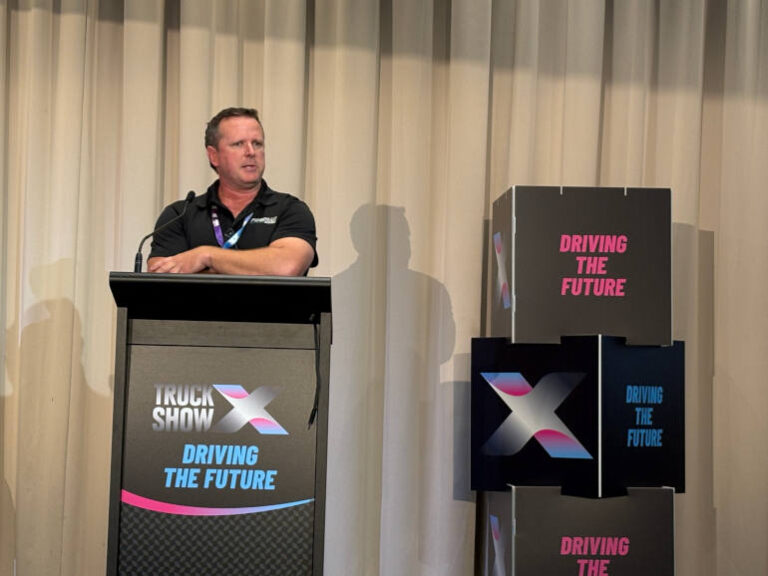
That was the clear message from research presented at TruckShowX by Protrans Solutions General Manager Grant Turner, who surveyed 140 transport refrigeration customers before launching a new battery-electric refrigeration solution into the Australian market.
The independent research generated more than 1,000 responses across 63 questions, giving Protrans Solutions a detailed view of how operators assess new technology, where demand is strongest and what is slowing adoption.
Turner said the appetite for change was real, particularly among major retailers and large third-party logistics operators.
“We knew the big retail customers were ready. We knew the big 3PLs were ready,” Turner said.
Smaller operators, however, were more likely to wait until the technology had been proven in local fleets.

Operators want Australian evidence
The research showed that operators were aware diesel refrigeration would eventually need to change, but many did not know which technologies were available or how they would work in practice.
Some customers wanted a cleaner alternative but lacked enough information to make a confident decision.
For Turner, that meant overseas performance claims were not enough.
“Australian customers want to see it run,” he said.
“They’ll buy off testimonials. They couldn’t buy off a spec sheet. They couldn’t buy something from overseas.”
That finding shaped the Protrans Solutions approach. Rather than relying on manufacturer data, the company invested in two trailers and began running local trials across linehaul, supermarket distribution and multi-drop freight tasks.
The goal was to give operators evidence drawn from Australian temperatures, routes and operating practices.
Cost remains a barrier
Upfront cost was one of the most common concerns raised by operators, alongside familiar questions about battery capacity, overnight operation and the reliability of the technology in poor weather.
Turner said those concerns were understandable, particularly because electric refrigeration units do not fit neatly into existing categories for battery-electric vehicles or conventional trailer equipment.
That can also make funding and finance more difficult to navigate.
Operators want to understand how the equipment will be financed, whether incentives are available and how the capital cost compares with long-term diesel and maintenance savings.
Turner said education and access to finance would be critical to moving more fleets from interest to adoption.
Retrofit capability matters
The research also reinforced the importance of solutions that do not force fleets to replace otherwise serviceable equipment.
Battery-electric refrigeration can be installed on an existing trailer by replacing the diesel-powered unit mounted on the front wall.
“This bolts on the wall and replaces what they currently have, with no change of trailers,” Turner said.
For fleets, that makes the transition more practical. Operators can reduce diesel use without waiting for the replacement of the prime mover or the trailer itself.
This is particularly important in refrigerated transport, where trailers often remain in service longer than trucks and are expected to perform across a wide range of routes.
The market is interested, but cautious
The research suggests the refrigerated transport sector is not resisting new technology. It is demanding evidence.
Large operators are actively looking for ways to reduce fuel use and emissions, while smaller fleets are watching early adopters closely.
The challenge for suppliers is to demonstrate that new systems can complete real freight tasks, integrate with existing trailers and deliver a credible financial return.
For Turner, local trials and customer education are now as important as the technology itself.
The message from operators is straightforward: they are prepared to change, but the solution must work in Australia, fit their operation and be backed by evidence.