
Scania Australia is using AFAC 2026 in Melbourne to highlight the next generation of its emergency services vehicle range, with the first future firefighting chassis powered by the new Super 11 engine among the vehicles on display.
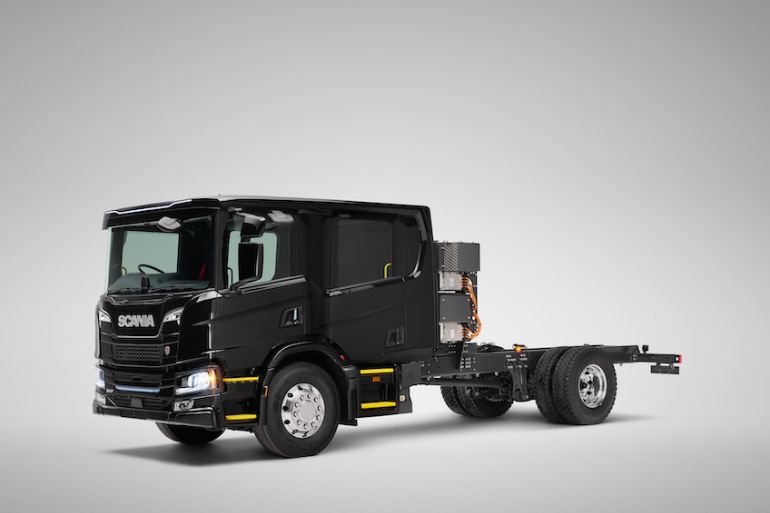
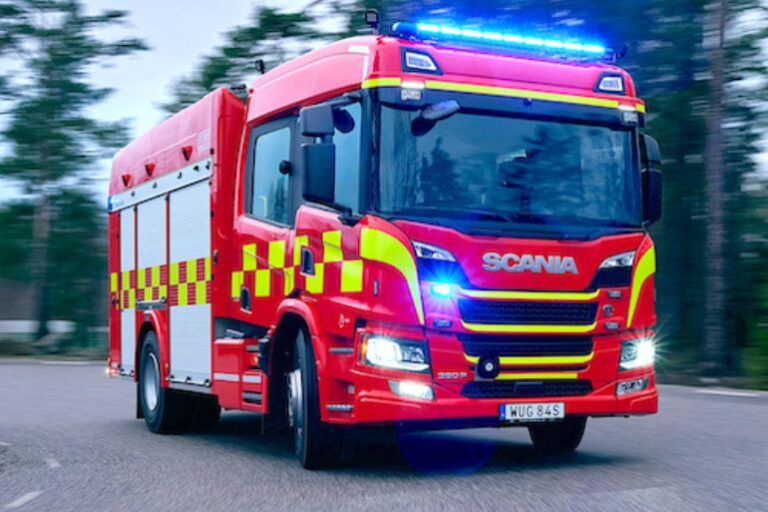
The company’s stand also features a completed CrewCab firefighting appliance destined for Tasmania, while Scania’s Special Vehicles Team will discuss the potential introduction of its recently revealed battery-electric CrewCab to Australia.
Super 11 targets emergency services applications
Central to Scania’s AFAC display is a 430 P 8×4 chassis powered by the new 11-litre, five-cylinder Super 11 engine and fitted with a CP17 Low Roof Day Cab.
Scania says the chassis is well suited to an aerial-type firefighting appliance and provides an early look at how the Super 11 could be applied to Australian fire and emergency services fleets.
The Super 11 engine is available with outputs of 350 hp, 390 hp and 430 hp.
Benjamin Nye, Director of Truck Sales for Scania Australia, said the engine’s combination of performance, fuel efficiency and servicing benefits makes it well suited to emergency vehicle applications.
“The new Super 11 engine family will be ideally suited to firefighting and emergency services appliances of all types, with its range of 350 hp, 390 hp and 430 hp outputs,” Nye said.
He said the engine offers a claimed seven per cent fuel saving compared with Scania’s previous five-cylinder powertrain, creating the potential to reduce fuel consumption across emergency services fleets.
The operating profile of fire appliances is also an important consideration, with vehicles often spending extended periods stationary while operating equipment through power take-offs.
“Firefighting equipment spends a lot of time stationary but with PTOs activated, and so the new Super 11 engine will be well suited to this task,” Nye said.
Scania also points to longer servicing intervals and an extended working life for the new engine family. Its Fleet Monitoring Systems can be used to determine servicing requirements based on vehicle operation rather than relying only on kilometres travelled or engine hours.
Tasmanian CrewCab on display
Alongside the new chassis, Scania is displaying a completed P 360 4×2 CP28 CrewCab that will enter service in Tasmania.
The appliance uses Scania’s 9-litre five-cylinder engine paired with an Allison six-speed automatic transmission.
CrewCab configurations are an important part of the emergency services market because they allow operational crews and equipment to be transported together while providing a purpose-designed cab for firefighting applications.
Safety is also a major focus of Scania’s emergency vehicle offering. The manufacturer highlights its crash-tested all-steel cab construction, driver SRS airbag and the availability of curtain airbags for occupants.
The vehicles can also be equipped with advanced driver assistance systems including vulnerable road user and pedestrian collision warnings, advanced emergency braking, Blind Spot Warning and Lane Departure Warning.
Renewable fuels broaden emissions options
Scania is positioning the Super 11 as another option for emergency services organisations seeking to reduce operational emissions without immediately moving away from internal combustion engines.
All Super 11 variants can operate on Hydrotreated Vegetable Oil, while the 390 hp and 430 hp versions can also use B100 renewable diesel.
Scania says the use of renewable fuels can deliver significant reductions in CO2 emissions, depending on the fuel and application.
The ability to use alternative fuels could be particularly relevant for emergency services fleets, where range, operational readiness, payload and the requirement to run auxiliary equipment can influence vehicle specification.
Battery-electric CrewCab also on the agenda
Scania will also use AFAC to discuss its battery-electric CrewCab, recently released in Europe, and its potential application in Australia.
Nye said a battery-electric emergency vehicle could offer benefits beyond eliminating tailpipe emissions.
“The release in Europe of the new Battery Electric CrewCab means that Australian firefighting and emergency services will soon have the ability to specify a Scania solution with zero tailpipe emissions,” he said.
He added that quieter operation could also be valuable when vehicles are operating equipment through PTO systems in built-up areas.
For fleet operators, the combination of conventional diesel, renewable fuel compatibility and battery-electric propulsion points to an expanding range of options as emergency services organisations plan future vehicle replacement programs.
“The options of renewable diesel or Battery Electric Vehicle propulsion means that Scania has a full range of low or zero tailpipe emissions solutions available for the fire and emergency services,” Nye said.
AFAC 2026 is being held at the Melbourne Convention and Exhibition Centre from 18 to 21 August, bringing together fire, emergency management, public safety, rescue and disaster resilience professionals from across Australasia.