
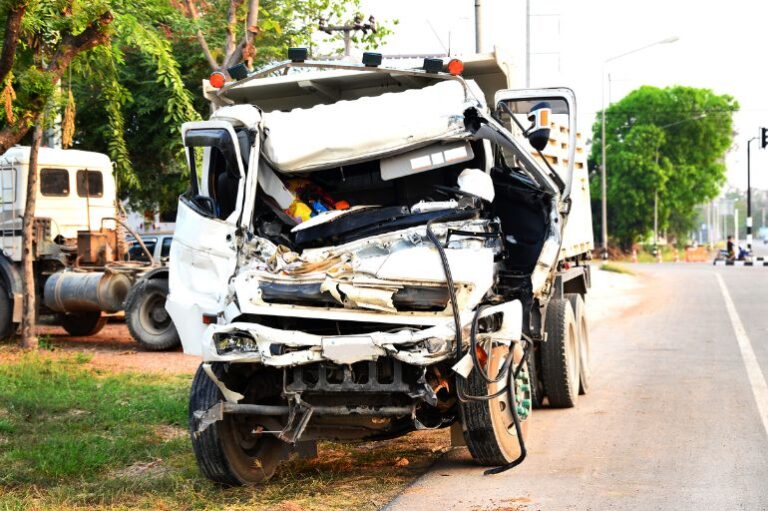
Inattention, inappropriate speed and inadequate following distance accounted for 38% of major heavy vehicle incidents in 2025, according to new research that gives fleet managers a clear starting point for reviewing their safety priorities.
The 2026 National Truck Accident Research Centre (NTARC) Major Incident Investigation Report found human factors contributed to 54.7% of all major incidents analysed. Within that category, these three risks accounted for more than two-thirds of incidents.
The report draws on NTI insurance claims and was produced through a partnership involving NTI, the National Road Safety Partnership Program and the Monash University Accident Research Centre.
Its 2025 dataset includes 1,374 major loss claims exceeding $50,000, a 22.3% reduction compared with 2024. However, the decline was accompanied by increases in incident rates attributed to inappropriate speed and inadequate following distance.
For fleet managers, the findings highlight the importance of looking beyond the total number of incidents to understand which risks are improving and which need further attention.
Inattention remains a leading concern
Inattention and distraction remained the largest individual contributor, accounting for 13.8% of major incidents in 2025.
There was encouraging progress. The incident rate fell from 25.0 per 10,000 insured heavy vehicles in 2024 to 17.0 in 2025, a reduction of 32%.
Nevertheless, almost two-thirds of crashes attributed to inattention or distraction involved only the insured heavy vehicle. The risk therefore extends well beyond busy intersections and interactions with other road users.
The report distinguishes between distraction, where something diverts attention from driving, and inattention, where the driver loses mental focus. It identifies potential distractions including mobile phones, console displays, route-planning systems and electronic work diaries.
For fleet operators, this raises questions about how information reaches drivers during a journey. Reviewing dispatch communications, device use and the timing of non-driving tasks could help identify demands that compete with attention to the road.
The decline in the incident rate is positive, although the research does not establish which interventions produced it.
A legal speed can still be inappropriate
Incidents attributed to inappropriate speed increased from 12.1 to 15.6 per 10,000 insured heavy vehicles in 2025, a rise of 28.9%.
This classification concerns speed that is incompatible with vehicle dynamics, road geometry or prevailing conditions. It does not necessarily mean the truck was exceeding the posted limit.
As the report explains: “Importantly, this classification does not suggest the heavy vehicle was exceeding the posted speed limit.”
Load weight and configuration, road curvature, weather and vehicle condition can all influence the speed at which a truck can operate safely.
The consequences were significant: 61.8% of inappropriate speed incidents resulted in a rollover, while 90.2% involved only the insured heavy vehicle. More than a quarter occurred in zones with posted limits of 60 km/h or below.
These findings make speed selection a broader fleet management issue. Monitoring compliance with posted limits is useful, but operators also need to consider how drivers understand the handling characteristics of their vehicle and load, particularly on unfamiliar routes.
Following distance becomes an urban priority
Inadequate following distance accounted for 11.6% of all major incidents in 2025, with its incident rate increasing by 11.7% compared with 2024.
The pattern was strongly urban. Major cities accounted for 74.4% of incidents in this category, despite representing 40% of major incidents overall.
Rigid trucks were particularly affected. Inadequate following distance was attributed to 17.8% of rigid truck incidents, compared with 6.7% for articulated combinations.
Maintaining sufficient space in congested traffic is a practical challenge, especially when other vehicles move into the gap ahead. The findings support a focus on driver coaching and reviewing how safe spacing is maintained during everyday operations.
Use the findings to ask better questions
The report provides evidence for targeting safety efforts, but its authors acknowledge important limitations.
The dataset covers NTI-insured vehicles and major losses above $50,000. It includes non-crash events such as theft, fire and flood, and should not be treated as a count of all Australian truck crashes.
Each incident is also assigned a single code identifying its immediate dominant cause. This can simplify events involving several contributing factors and overlook wider organisational issues. Changes to data collection and validation during 2025–2026 may also affect comparisons with earlier years.
For fleet managers, the three leading risks provide a useful framework for reviewing operations. An incident attributed to inattention, speed selection or following distance should prompt questions about the circumstances surrounding it, including communication, training, route conditions and work demands.
The opportunity is to turn those findings into targeted changes—and measure whether they reduce risk.