
When people think about Chain of Responsibility (CoR), they often think about overloaded trucks, load restraint breaches and weighbridge inspections.
The new Master Code of Practice under the Heavy Vehicle National Law (HVNL) takes a much broader view.
The Code dedicates seven transport activities to loads, loading and unloading, beginning with the design and packaging of goods and continuing through loading, restraint, unloading, mass management, dimension compliance and weighbridge operations. Together they reinforce a key principle of modern CoR: load safety is created throughout the supply chain, not just at the loading dock.
The activities highlight how manufacturers, warehouse operators, loaders, drivers, transport operators and customers all play a role in ensuring goods can be transported safely.
Load Safety Starts with Product Design
One of the more surprising inclusions in the Master Code is Activity 30 – Manufacturing and Packaging Goods.
The Code recognises that safety risks can be created long before freight enters the transport network.
Businesses are encouraged to consider how goods will be transported, handled, loaded and restrained during the design phase. Products, packaging and containers should be robust enough to withstand transport forces and loading conditions. Clear labelling, documentation and communication with other CoR parties are also recommended.
For manufacturers, this means transport safety is no longer someone else’s problem once the product leaves the factory gate.
Loading Is More Than Putting Freight on a Truck
Activity 31 focuses on loading and reinforces the importance of planning.
The Master Code recommends obtaining detailed information about the load, the vehicle and any restraint requirements before loading begins. Where appropriate, loading plans should be developed that explain how freight should be distributed and secured.
The Code also emphasises establishing the total mass of the vehicle before it enters the road network and ensuring loads remain within legal mass limits.
Importantly, employees and drivers should be empowered to refuse loads that are unsafe.
That reflects the broader philosophy of the Master Code, where individuals are expected to identify and respond to risks rather than simply follow instructions.
Load Restraint Is Everyone’s Responsibility
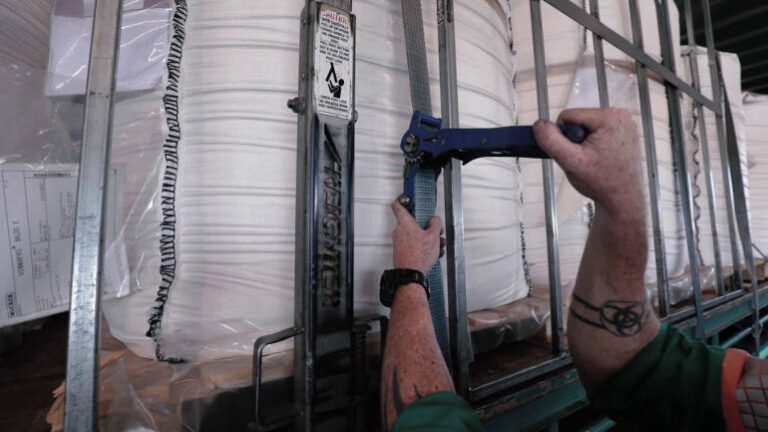
Load restraint remains one of the most detailed sections within the load management activities.
The Code recommends providing appropriate restraint equipment, maintaining that equipment, training employees and developing load restraint systems for common freight types.
However, the guidance goes further than traditional load restraint practices.
Businesses should ensure drivers have the opportunity to participate in the restraint process or at least satisfy themselves that the load has been properly secured before commencing the journey. Sufficient time must also be built into schedules to allow restraint to be completed properly.
This recognises that poor scheduling and operational pressure can be contributing factors to restraint failures.
The Master Code also includes specific guidance for tankers, external storage compartments, movable equipment and other specialised transport tasks where load movement creates additional risks.
Safe Unloading Requires Planning Too
Loading often receives most of the attention, but the Master Code also focuses heavily on unloading.
Activity 33 recommends developing unloading plans, providing appropriate equipment and training employees to unload safely.
Importantly, unloaders should be informed about any issues that occurred during transport that could affect unloading operations.
The Code also recommends establishing procedures for dealing with loads that arrive over-mass or poorly restrained and providing feedback to other CoR parties when problems are identified.
This creates a feedback loop that allows safety issues to be identified and addressed across the supply chain.
Mass Management Is a Shared Responsibility
Activities 34 and 36 demonstrate just how much emphasis the Master Code places on mass compliance.
The guidance extends far beyond simply weighing vehicles.
Businesses should understand the mass limits that apply to each vehicle, establish accurate load weights, share mass information with other CoR parties and verify compliance on an ongoing basis.
The Code encourages the use of technology, including on-board scales, connected weighing systems and real-time information sharing.
Perhaps most importantly, it recognises that accurate mass management relies on collaboration. Loaders, transport operators, drivers and receivers all possess information that can help ensure compliance.
The Code also recommends reviewing estimated masses against confirmed masses to improve loading accuracy over time.
This reflects the broader safety management approach running throughout the Master Code, where businesses are expected to continuously improve their systems rather than simply react to breaches.
Dimensions Matter Too
Vehicle dimensions receive their own dedicated activity within the Master Code.
Businesses are encouraged to measure loads accurately, train employees to use measuring systems correctly and verify ongoing compliance based on the level of risk.
A simple but practical recommendation is displaying vehicle height information inside the cab to assist drivers in avoiding infrastructure strikes.
With bridge strikes and infrastructure incidents continuing to occur across Australia, this small control highlights how relatively simple measures can significantly reduce risk.
The Weighbridge Is No Longer Just a Compliance Tool
The Master Code also redefines the role of weighbridges.
Rather than simply identifying over-mass vehicles, weighbridge operators are encouraged to become active participants in safety management.
This includes calibrating equipment, training staff, retaining records, providing mass information to CoR parties and immediately notifying operators when non-compliance is detected.
The Code also encourages weighbridge operators to establish clear safety expectations with transport operators and provide feedback when patterns of non-compliance emerge.
A Supply Chain Approach to Load Safety
The overall message from these activities is that load safety cannot be managed by one party acting alone.
The Master Code repeatedly emphasises communication, information sharing, training, planning and collaboration between manufacturers, loaders, drivers, transport operators, receivers and other CoR parties.
Rather than focusing solely on enforcement and compliance checks, the Code encourages organisations to identify hazards early and implement controls throughout the entire transport task.
For businesses involved in freight and logistics, the activities provide a reminder that load safety begins well before a vehicle arrives at a loading dock and continues long after the freight reaches its destination.
That shift from compliance to risk management sits at the heart of the new Master Code and reflects the NHVR’s broader vision for Chain of Responsibility under the HVNL.