

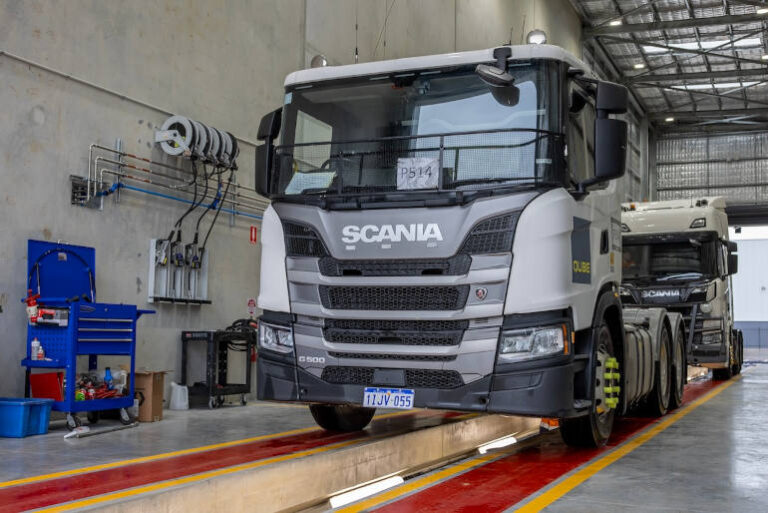
Australia’s truck market has entered a cooling phase in 2025, with new data from the Truck Industry Council (TIC) confirming that heavy vehicle sales have slowed across all segments following several years of record-breaking growth. Despite the downturn, total sales for the first half of 2025 remain the third highest on record, highlighting a soft landing rather than a collapse.
June 2025 saw 4,888 new trucks and vans sold (above 3.5 tonnes GVM), a drop of 10.5% compared to June 2024’s high watermark of 5,461 units. Year to date, 22,582 heavy vehicles have been delivered, down 12.1% from the record 25,698 achieved in the first six months of 2024.
A Predictable Slowdown After Record Years
Truck Industry Council CEO Tony McMullan said the downturn had been expected.
“Last year the sales market for trucks was strong — in fact, it was a record year representing the third year in a row where the sales record was broken year on year,” McMullan explained.
“For 2025, while it was hoped that sales would remain strong, it is not surprising to see the market coming off these highs. A federal election year, tight economic times, a lessening of demand for product, and general uncertainty are the key determinants for the drop in sales.”
Heavy Duty Segment Takes the Biggest Hit
The Heavy Duty truck segment has been hit hardest. In June, just 1,481 units were sold, down 18.5% year-on-year. Over the second quarter (April–June), the segment recorded 3,763 deliveries — well short of the 4,981 units sold in Q2 2024. At the halfway mark of 2025, Heavy Duty truck sales are down 18.5%, with 7,143 units delivered compared to 8,769 for the same period in 2024.
Despite the slowdown, Kenworth continues to lead the heavy segment, followed by Isuzu and Volvo Trucks. While Volvo has slipped 33% compared to last year, Isuzu has managed to stay close to its 2024 performance, reflecting some resilience in the local segment.
Medium Duty Holds Ground Better
The Medium Duty truck segment experienced a more modest contraction. June deliveries fell to 764 units, a 13.9%decline on June 2024. Second quarter results showed a decline of 11.4%, and year-to-date totals sit at 3,698 units, down 8.4% compared to the first half of 2024.
This segment, often the workhorse for local councils, infrastructure contractors and urban freight operations, has not experienced the same sharp decline as Heavy Duty, likely due to ongoing construction and civil projects that continue to support demand.
Light Duty Trucks Drop, Vans Gaining Ground
Light Duty truck sales (GVM between 3,500kg and 8,000kg) also fell significantly, with 1,332 deliveries in June 2025 — a 12.3% drop from June 2024. Across Q2, Light Duty sales were down 17.7%, and for the first six months of the year, sales totalled 6,222 units, down 13.1% year-on-year.
In a notable shift, the Light Duty Van segment continues to narrow the gap with trucks. June saw 1,311 vans delivered, just 21 units behind Light Trucks — the closest margin on record. While YTD van sales are still down 3.7%, this relative strength hints at a long-term trend towards smaller, more agile vehicles for urban delivery and last-mile logistics.
Outlook for the Second Half of 2025
With no clear sign of economic recovery and continued uncertainty around emissions policy and supply chain stability, truck sales are unlikely to rebound strongly in the second half of the year.
“It is hard to predict the next six months, although it is fair to assume that uncertainty will remain and that sales will not be as strong as were seen in 2024,” McMullan concluded.
For truck OEMs and body builders, this shift may require increased focus on targeted customer support, pre-regulatory compliance guidance, and flexible finance options to maintain momentum into 2026.
Key Data Summary: First Half 2025
| Segment | YTD Sales | Change vs 2024 |
|---|---|---|
| Heavy Duty Trucks | 7,143 | ▼ 18.5% |
| Medium Duty Trucks | 3,698 | ▼ 8.4% |
| Light Duty Trucks | 6,222 | ▼ 13.1% |
| Light Duty Vans | 5,519 | ▼ 3.7% |
| Total Heavy Vehicles | 22,582 | ▼ 12.1% |