
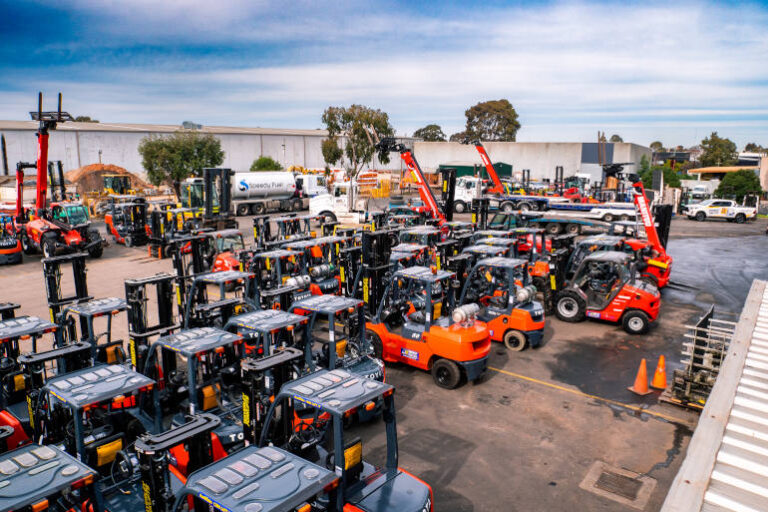
Waverley Forklifts has been lifting Australia since 1973. From one-tonne electric units in warehouses to 16-tonne diesel machines on construction sites, the company runs one of the country’s largest rental fleets – more than 7,000 forklifts supported by a national network of 30 trucks.
Owner Charlie Schwerkolt says rental has become the smart choice for most businesses. “Eighty-five percent of forklifts in Australia are rented,” he explains. “It takes away the headaches of service, maintenance and compliance, while giving customers the flexibility to scale up or down.”
Electric Takes Over Warehouses
The forklift market has flipped in the past decade. Gas and diesel once dominated, but now 65 percent of new forklifts sold are electric. Warehousing is leading the change as property costs push facilities higher and narrower.
“Ten years ago, a six-metre lift was considered tall. Now 11 or 12 metres is normal,” Schwerkolt says. “Electric reach trucks and double-deep machines are essential for making the most of that space.”
While outdoor jobs like events and construction still rely on gas and diesel, Schwerkolt sees warehouses heading to 90–95 percent electric in the near future.
Serving Every Sector
Waverley Forklifts’ reach goes far beyond warehouses. Construction sites depend on rough-terrain forklifts and telehandlers, while agriculture drives short bursts of seasonal demand for fruit and crop harvesting. The events industry is another strong market, with Waverley providing machines for concerts, major sporting fixtures and the Spring Racing Carnival.
“We might have 20 to 30 machines at a single event like the Formula One Grand Prix,” Schwerkolt says. “From staging to flooring, forklifts keep it all moving.”
Toyota Tops the Market
When it comes to brands, Toyota is as dominant in forklifts as it is in cars, holding close to 50 percent market share in Australia. Schwerkolt says their reputation is well-earned. “Toyota forklifts are like a LandCruiser – they just go forever if you look after them.”
Other major players include Linde, Crown and Hyster-Yale, while Chinese manufacturers are entering with cheaper options. But Schwerkolt warns against chasing price alone. “You’ve got to think about total cost of ownership and resale value. Without parts and support, the savings disappear fast.”
Beyond the Forklifts
Waverley’s own truck fleet plays a critical role in keeping the rental operation seamless. With 30 trucks – from tilt trays to low loaders – the company delivers and collects more than 120 forklifts a day across the country.
That focus on control and service is what sets the business apart, Schwerkolt says. “We move, rent and service everything ourselves. Customers know they can rely on us.”
Looking Ahead
Technology is moving quickly in the forklift world. Telematics, fleet monitoring systems and lithium-ion batteries are becoming more common, while hydrogen and automation are on the horizon. Still, Schwerkolt believes fit-for-purpose decisions will keep gas and diesel in use for many years to come.
“Every industry has its own needs,” he says. “The key is having the right machine, backed by the right support. That’s what we’ve built Waverley Forklifts on for over 50 years – and that’s what keeps us growing.”