




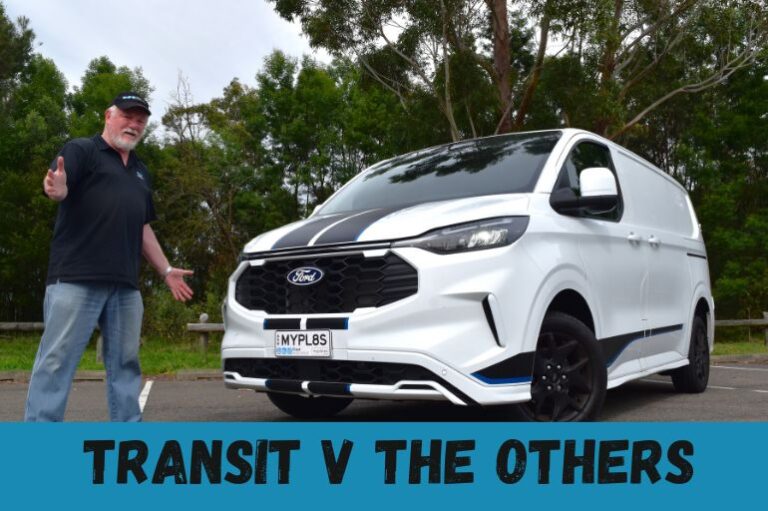
You’ve probably heard the saying, “A van’s a van — just pick one and get on with it.” Well, that’s not quite true. After spending a week behind the wheel of three of Australia’s most popular mid-size vans — the Renault Trafic, Ford Transit Custom, and Hyundai Staria Load — I can tell you that not all vans are created equal.
For this test, I wanted to get beyond the spec sheets and see what these workhorses are really like in the real world. Think tradies doing early morning starts, business fleets clocking 20,000 km a year, and couriers who treat their van like a second home.
Renault Trafic – Stylish and Smart
The Renault Trafic looks surprisingly sharp for a van. It’s got that European flair that makes you feel a little more civilised pulling up to a job site. The proximity key is a nice touch — handy when you’ve got your arms full of gear. Inside, there’s good tech with wireless Android Auto and Apple CarPlay, and a clever fold-down desk that turns the cab into a mobile office. The only downside? No driver’s footrest — and trust me, on a long day that’s something you miss.
Fuel economy sits around 7.3L/100km in real-world driving, and CO₂ emissions are 171 g/km, which adds up to about 3.4 tonnes per year for most fleets. Not bad at all.
Ford Transit Custom – The Everyday Hero
Now, here’s the one that surprised me most — the Ford Transit Custom. This thing drives like a car. Seriously. With 125 kW from its 2.0L EcoBlue diesel and 390 Nm of torque through an 8-speed auto, it’s smooth, quiet, and effortless.
The driver’s seat is where Ford really nailed it: eight-way electric adjustment, lumbar support, armrest, and even a proper footrest (looking at you, Renault). For someone who spends most of the day in the seat, that’s gold.
Ford lists fuel use at 8.0L/100km, but I managed 7.2L/100km — pretty impressive for a fully loaded van. Inside, it’s roomy and well thought-out, with plenty of cup holders, storage bins, and a big touchscreen with wireless CarPlay and Android Auto.
With 5.8 cubic metres of load space and a 3.05-metre load length when you open the clever bulkhead hatch, it’s built for work. If I had to pick one to drive every day, this is it.
Hyundai Staria Load – Futuristic and Functional
Then there’s the Hyundai Staria Load. It looks like it just drove out of a sci-fi movie — sleek, rounded, and very modern. Under the bonnet, it’s got the most grunt of the bunch: a 2.2L diesel with 130 kW and 430 Nm. It’s comfortable and capable, with a payload just over a tonne and 2.5-tonne towing capacity.
There’s a heap of safety tech, too — cameras everywhere, active cruise control, blind-spot monitoring, and autonomous emergency braking. The only catch? The wire mesh bulkhead makes it a bit noisy inside, and the aircon works overtime on hot days. But if you option the solid bulkhead, that issue disappears.
Real-world economy sits at about 7.0L/100km, with emissions of 183 g/km — roughly 3.7 tonnes of CO₂ a year.
The Verdict
After driving all three, I asked myself one question: which van would I want to live with day in, day out? For me, the Ford Transit Custom takes the win. It’s the most comfortable, most refined, and easiest to drive — and when you’re spending hours behind the wheel, that counts.
But don’t just take my word for it — watch the full video review on the Fleet News Group YouTube channel, and let me know which van you’d choose in the comments.
Until next time, drive safe, stay comfortable, and may your coffee never spill in the cup holder.
- Daimler Truck Crowns Top Technicians
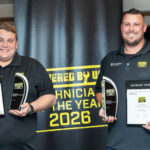
 Daimler Truck Australia Pacific has named its 2026 Freightliner and Mercedes-Benz Trucks Technicians of the Year, putting a spotlight on the technical capability required to keep increasingly complex heavy vehicles operating reliably. The national finals were held at the Daimler Truck Training Academy in Mulgrave, Victoria, where leading technicians completed technical theory assessments, real-world diagnostic
 - Penske Crowns 2026 Master TechniciansPenske Australia & New Zealand has named Luke Andrew and Luke Reid as its 2026 Penske Guild Master Technicians, recognising technical excellence across the company’s on-highway and off-highway operations. Andrew, a leading hand at Penske’s Perth branch, claimed the on-highway title, while Darwin-based Reid took out the off-highway category. The biennial Penske Guild competition brings
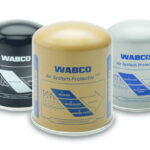
- WABCO Air Dryer Range Targets Heavy Vehicle UptimeZF Aftermarket has highlighted its WABCO air dryer cartridge range for Australian commercial vehicle operators, with the products designed to protect compressed-air systems from moisture, oil and other contaminants. The range was showcased at the recent Australasia Bus & Coach Expo, where ZF demonstrated the role air treatment can play in maintaining the reliability of
- Five-year warranty becomes part of Hino’s aftersales retention strategyHino Australia is positioning its five-year warranty as part of a broader aftersales package designed to give fleet buyers more certainty over vehicle ownership costs. At the company’s recent business briefing, Hino Australia President and CEO Richard Emery said the warranty extension was one element of a wider focus on the customer lifecycle after delivery.
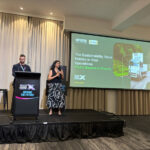
- Why trailers are the missing link in linehaul fuel efficiencyWhen linehaul fleets look for fuel savings, attention often turns first to the prime mover. Engine specification, cruise control settings, driver behaviour, aerodynamic packages and route planning all matter. But a TruckShowX case study has highlighted another area that can quietly undermine efficiency: the trailer. Speaking during a practical TruckShowX session, Lachlan Van de Haar,