




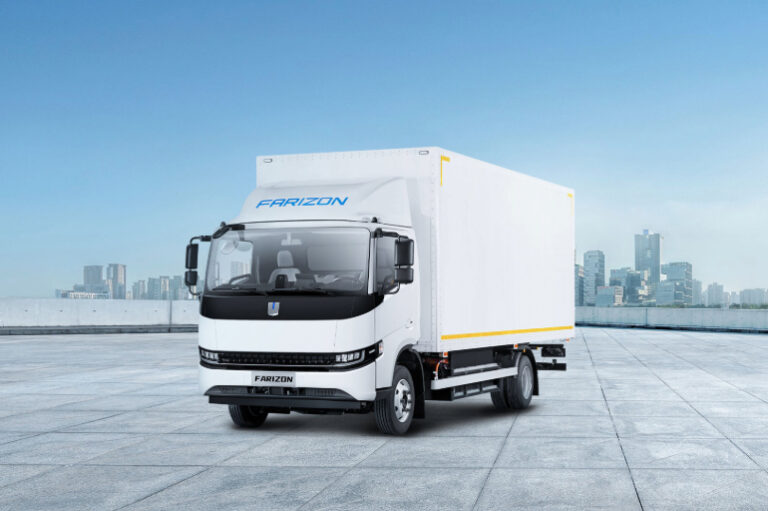
A clear message emerged from an AFMA webinar in early 2026: electric trucks and vans are no longer a future concept, but they are also not a simple replacement for diesel. The session, Total Cost of Ownership: a roadmap for fleet transition, focused on commercial vehicles and vans and brought together perspectives from fleet advisers, charging specialists, government and OEMs.
Hosted by the Australasian Fleet Management Association and sponsored by JET Charge, the discussion centred on how fleets should assess suitability, viability and charging when considering electrification.
TCO, not purchase price, drives decisions
Opening the session, AFMA Executive Director Mace Hartley framed the discussion around total cost rather than headline pricing, noting the focus was “around commercial vehicles and vans”.
Fleet decarbonisation consultancy Movement has spent the past year analysing electric truck economics. Founder and Director Mark Gjerek explained the motivation behind its recent electric truck TCO report.
“We saw a real gap and information gap in the market, where you couldn’t go to a single place to find information about what trucks were available, how much they cost, both from an upfront price and total cost of ownership as well,” Gjerek said.
He stressed that electric trucks typically shift costs rather than eliminate them.
“Typically, EVs have lower variable costs… but they have higher fixed cost, like the capital cost of buying the truck,” he said. “The key to making an EV work against a diesel is to minimise the higher fixed costs and maximise the lower variable cost.”
Movement’s modelling assumed a seven-year fleet life, with conservative depreciation assumptions for electric trucks. Gjerek was clear this did not mean the asset was finished at that point.
“We’re talking about a seven-year life in its first life with the first owner,” he said. “We’re not suggesting that that truck is dead at the end of seven years.”
Fit-for-purpose electrification
A consistent theme was that electrification works best when vehicles are specified for clearly defined tasks. Gjerek outlined where battery-electric trucks currently make the most sense.
“An EV electric truck works really well in an application where you’ve got predictable routes, you’ve got overnight parking and somewhere to charge them,” he said, adding that moderate payloads and stop-start urban work further improve suitability.
The session highlighted that trying to replicate diesel-style flexibility can quickly undermine the business case.
“When you’re buying an EV, the truck is generally energy limited,” Gjerek said. “Specifying a truck that’s going to do all of the diesel applications in your depot is going to be really expensive.”
Charging becomes a fleet strategy issue
Charging infrastructure featured heavily, with JET Charge Director of Major Projects Alex Bowler describing charging as a core fleet asset rather than an add-on.
“One of the classic questions we get is: how long does it take to charge and how much is it going to cost?” Bowler said. “You usually get a ‘how long is a piece of string’ answer.”
Bowler broke charging into four main options: home, depot, destination and public hubs. For most fleets, depot charging remains the foundation.
“If it’s your site, either leased or owned, you control energy into that site, and you control your own infrastructure,” he said.
Cost control, however, depends on more than hardware.
“If you’re not putting the same rigour of cost control onto electricity as you do on petrol or diesel, you’re throwing money away into the gutter,” Bowler said.
He also pointed to falling equipment costs as a positive trend.
“Roughly speaking, there’s been a 50 per cent reduction over the last four or five years in the cost of equipment,” he said, driven by scale and improved production.
Grants help, but don’t replace a business case
The role of government support was addressed by Alex Grant, Director of Zero Emission Vehicle Strategy Implementation at Australian Renewable Energy Agency.
“ARENA provides grant funding to projects to take on risk and to prove out the technical and commercial challenges,” Grant said.
Since 2017, ARENA has approved more than $270 million for transport-related projects, with recent programs focused on scaling fleet deployments rather than single vehicles.
“Grant funding is there to help induce these bold efforts,” Grant said, “but the projects still need to stand up over the long term.”
More choice, more complexity
OEM participation in the electric commercial vehicle market has expanded rapidly. Jameel Motors Australia Country General Manager Adam Lawson said the growth in available models is both an opportunity and a challenge for fleets.
“There’s plenty coming on and plenty more choice coming through,” Lawson said, pointing to increasing activity in the van segment as an entry point for electrification.
Residual values remain an area of uncertainty, particularly for new entrants, but Lawson said warranties play a role in building confidence.
“We warrant the batteries up to eight years,” he said. “We do that on purpose so people have confidence in the second life as well.”
A measured path forward
Rather than pushing a one-size-fits-all solution, the webinar reinforced the need for data-driven, staged adoption. As Bowler noted, waiting indefinitely for better technology also carries risk.
“If you wait, you’re going to benefit from better technology and lower costs,” he said. “But you also need to consider what the benefit is of transitioning some or part of your fleet sooner.”
For Fleet Managers and Procurement Managers, the takeaway was clear: electric trucks and vans can already stack up on TCO in the right applications, but success depends on careful specification, realistic utilisation assumptions and a clear charging strategy.
As Gjerek summarised during the session, “It’s not about yes or no. It’s about where you start, and how well you design it.”