




As debate continues around battery electric and hydrogen trucks, Craig Lee, Executive General Manager – On-Highway at Penske Australia & New Zealand, believes Australia may be overlooking a far more immediate emissions opportunity.
“If you actually want to make the single biggest emission reduction that you can in Australia,” Lee said, “provide significant incentives to run multi-combination Euro 6 vehicles.”
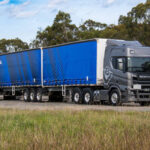
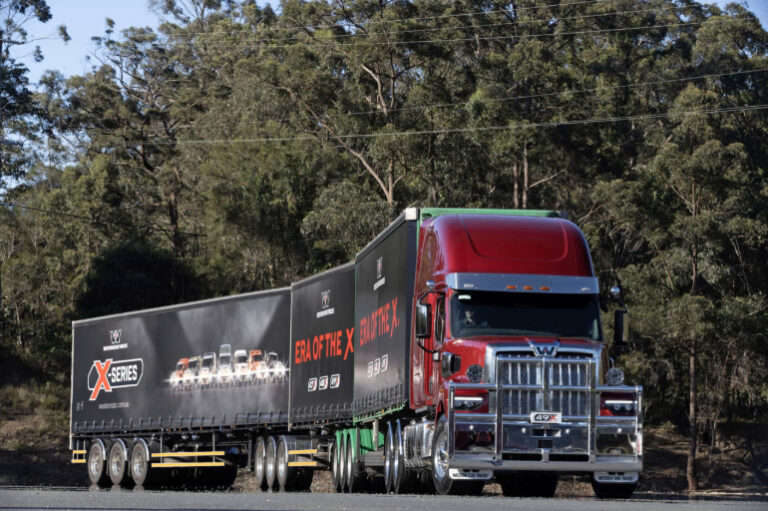
It’s a practical argument rather than a futuristic one. Around half of the prime movers operating on the east coast are pulling single trailers. Trailers create no emissions — the truck does. Moving more freight with fewer prime movers, particularly with modern Euro 6 engines, has a measurable impact on fuel burn and total fleet emissions.
Lee is clear that the conversation needs to shift from what is technically possible to what is commercially achievable at scale.
“The Australian market is unbelievably difficult in heavy transport to implement non-liquefied fuel technology,” he said. While battery electric trucks and hydrogen have roles in specific applications, he argues that cost and infrastructure barriers remain “astronomically high” for widespread long-haul deployment.
Instead, he sees multi-combination vehicles as the fastest way to reduce both emissions and pressure on the driver market.
“If you can run a B-double instead of a single trailer, you address a lot of problems,” Lee said. “You’ve got fewer trucks on the road, lower emissions per tonne moved, and you ease the driver shortage.”
Driver availability remains one of the industry’s most constrained resources. Increasing payload per vehicle means fewer prime movers are required to move the same freight task. That reduces fuel consumption per tonne-kilometre while improving productivity — a combination that appeals to operators focused on margin preservation.
Lee believes policy settings need to reflect this reality.
“Euro 6 is very important from an emissions perspective, but that needs to be incentivised,” he said. “Otherwise, what’s the motivation?”
Australia’s freight task is forecast to continue growing broadly in line with GDP over the long term. The challenge is reducing emissions while meeting that demand without imposing commercially unworkable solutions.
Lee suggests that if governments are serious about decarbonisation at scale, measures such as incentives for multi-combination Euro 6 fleets — or even phasing out older Euro 4 and earlier vehicles — would deliver more immediate impact than niche alternative-fuel deployments.
“If you actually want to fix it, just ban everything pre-Euro,” he said bluntly.
The argument is not anti-technology. Penske itself is active in low- and zero-emission initiatives across both on-highway and off-highway portfolios. But Lee maintains that transitional strategies matter.
For fleet operators navigating cost pressure, compliance obligations and tightening safety standards, the message is pragmatic: the biggest emissions lever may not be new fuel types, but smarter deployment of proven technology.
In a market facing economic headwinds and structural adjustment, Euro 6 engines combined with multi-combination productivity could represent the most realistic step forward — at least for now.
- Geotab adds mass management to heavy vehicle telematics
 Geotab has expanded its Australian heavy vehicle compliance offering by adding Smart On-Board Mass capability through a certified integration with Airtec Corporation, allowing heavy haulage operators to manage telematics and mass data through a single platform. The certification means Geotab can now support Telematics Monitoring Application schemes both with and without Smart OBM requirements, as
 - Bridge Strikes Start Before the Truck Reaches the BridgeA bridge strike may happen in seconds, but the circumstances that lead to it can develop much earlier in the journey. That is one of the key fleet-management implications to emerge from HoustonKemp Economists’ report, The economic costs of bridge strikes in Australia, prepared for HERE Technologies and the Australian Logistics Council. The report estimates
- Electric Trucks and Vans Join the Spotlight at Everything Electric SydneyThe transition to electric transport is moving beyond passenger cars, and fleet operators will get a closer look at the growing range of electric trucks, vans and commercial vehicles when Everything Electric returns to Sydney in September. The three-day event, held at Sydney Showground from 18–20 September 2026, is expected to attract more than 40,000
- Truck Access, PBS and EV Rules Targeted in Major Reform ReportAustralia’s road freight productivity has stalled for more than a decade, and the Productivity Commission says regulatory reform is needed if the industry is to capture the benefits of safer, more productive and lower-emission heavy vehicles. The Commission’s Impacts of heavy vehicle reform study examines five areas where changes to road access, permits, zero-emission vehicle rules, charging
- Active safety: what fleet buyers should ask for when purchasing trucksWhen buying trucks, it is easy to focus on engine output, payload, cab comfort, service intervals and price. But one of the most important procurement decisions is the active-safety specification. Active safety technologies are designed to prevent a crash or reduce its severity before impact. They use cameras, radar, sensors, braking systems, steering assistance and