




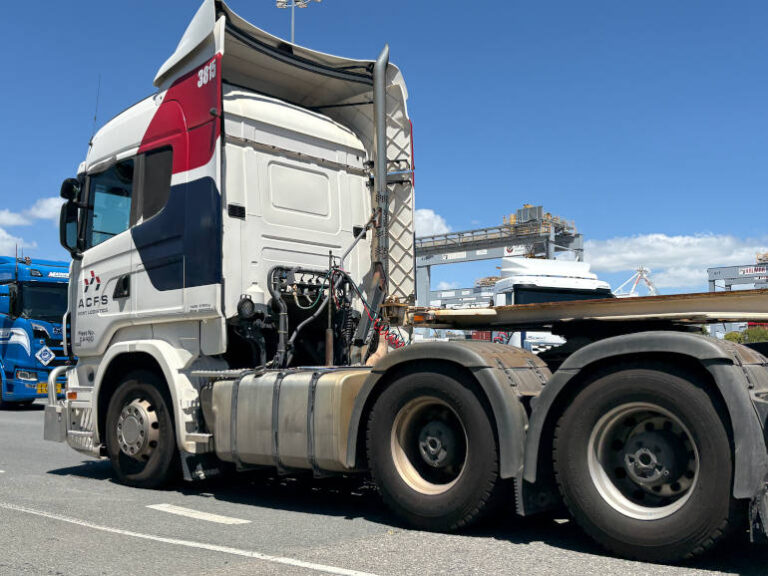
The Australian trucking industry has welcomed the federal budget’s decision to retain fuel tax credits, despite a Productivity Commission proposal to phase out the scheme for on-road heavy vehicles over ten years.
Australian Trucking Association Chair Mark Parry said the decision showed the Government had listened to industry concerns about the cost impact of removing the credits at a time when operators are already under pressure from higher fuel prices.
“The ATA carried out a strong, evidence-based campaign to retain fuel tax credits, supported by detailed modelling,” Parry said.
“I’d like to thank Treasurer Jim Chalmers, Transport and Infrastructure Minister Catherine King and Assistant Climate Change Minister Josh Wilson for considering the industry’s views.”

Fuel tax credits reduce the effective fuel tax paid by trucking operators. The system is designed so heavy vehicle operators pay fuel tax in line with the cost of heavy vehicles’ use of the road network, through the road user charge.
The Government has temporarily reduced the road user charge to zero in response to the Iran war. However, the charge is currently scheduled to return to 32.4 cents per litre from 1 July.
Parry said retaining fuel tax credits would help reduce freight cost pressures across the economy, including for rural exporters and households already dealing with cost-of-living pressures.
“Removing fuel tax credits would increase costs for industry and hard-pressed Australian households, who face continued cost of living pressures as the effect of the high fuel prices flows across the economy,” Parry said.
“Removing fuel tax credits would also hit trucking businesses hard. They have already paid a 19 per cent increase in fuel tax over the last three years, and the cost of diesel has increased dramatically because of the war.”
The ATA said that while the industry had secured support measures, including the Fair Work Commission’s fuel cost recovery order, many trucking businesses would still need time to recover from sustained cost increases.
Parry said the Government should now consider extending the temporary reduction in the road user charge for another three months.
“The Government’s immediate focus should now be on considering whether to extend the temporary reduction in the road user charge for another three months,” he said.
The Productivity Commission’s proposal had been linked to transport decarbonisation, but the ATA argued that removing fuel tax credits would not deliver the intended emissions outcome.
“Abolishing fuel tax credits would not address the engineering reality that there is no single technology available to replace diesel engines,” Parry said.
“Many regional communities rely on trucking operators to move and deliver all their daily necessities. Because this requires diesel engines, the commission’s approach would just be an unavoidable increase in tax.”
The ATA said that for operators able to consider alternatives to diesel, higher fuel tax costs would reduce the financial capacity to invest in newer vehicles, alternative fuels or low-emission equipment.
Parry said the industry wanted to work with government on practical measures to lower emissions and reduce Australia’s reliance on imported fossil fuels.
“The ATA looks forward to working with the Government on measures that would be effective at reducing the industry emissions and Australia’s reliance on imported fossil fuels, including a voucher scheme to reduce the up-front cost of electrification or alternative fuel options, a low carbon fuel standard to encourage the use of renewable diesel, and support for high productivity and low emission vehicles,” he said.
The ATA also welcomed the Government’s fuel security and resilience plan, which aims to increase Australia’s diesel and jet fuel reserves to 50 days.