
Australian trucking operators are warning customers to prepare for higher freight costs as diesel prices surge, according to the Australian Trucking Association (ATA).
Australian Trucking Association CEO Mathew Munro said the rapid increase in global diesel prices is already flowing through to Australian retail fuel prices and will inevitably affect transport costs across the economy.
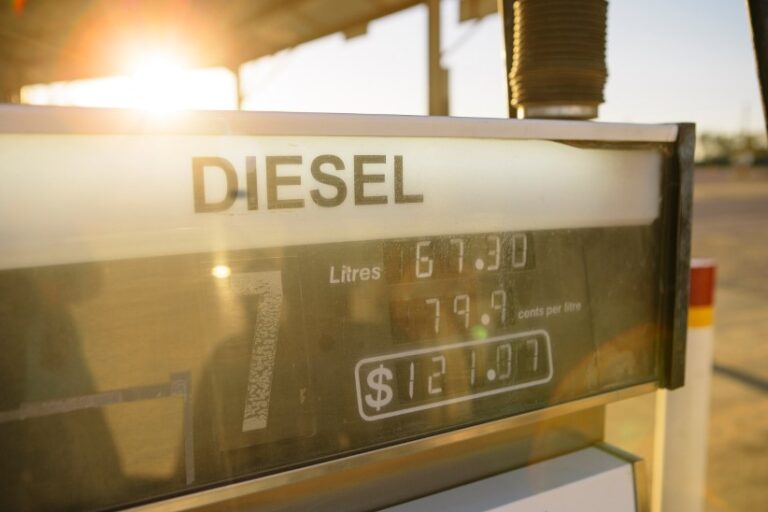
The market price for diesel has risen sharply, increasing from around A$130 per barrel on Friday 27 February to almost A$220 per barrel, while retail diesel prices have climbed nearly 19 cents per litre since Sunday.
Munro said trucking businesses operate on tight margins, meaning fuel cost increases cannot be absorbed by operators.
“Fuel is typically one of the top three costs for a trucking business. Any increase in fuel prices has a big impact,” he said.
Many operators use fuel levies that automatically adjust freight invoices when fuel prices change. Others rely on periodic contract reviews, while some contracts have no mechanisms at all to account for sudden price increases.
Munro said operators should review their cost structures and discuss adjustments with customers where necessary.
“Trucking businesses need to review their costs and, if necessary, have open conversations with their customers about the need to bring forward the next fuel levy adjustment or rate review,” he said.
Operators have also been warned to plan ahead when ordering fuel, as demand spikes can lead to delays in supply.
“Trucking businesses cannot be expected to absorb the cost of increased fuel prices. Our industry is already under extreme pressure, with one in every 12 businesses closing in the 12 months to November 2025,” Munro said.
Fuel security concerns remain
Munro said the price spike highlights long-standing concerns about Australia’s fuel security and the country’s dependence on imported fuels.
Australia is required, as a member of the International Energy Agency, to hold oil stocks equivalent to 90 days of net imports.
The ATA has campaigned since 2014 to strengthen Australia’s fuel security and previously opposed plans to store national fuel reserves in the United States.
Munro said progress has been made through the Minimum Stockholding Obligation (MSO) rules introduced in 2021, which require fuel importers and refiners to hold baseline levels of fuel stocks.
Around three billion litres of diesel are currently held under the MSO system, equivalent to about 33 days of supply, with stocks either in Australia or on ships nearby. In total, Australia’s oil reserves equate to roughly 50 days of net imports under IEA calculations.
However, Munro said more work is needed to reach the 90-day target.
“The Australian Government has made progress on Australia’s fuel security, but it’s been a problem for many years. Australia needs to have the 90 days of net import cover that we signed up to hold,” he said.
Contract reforms still years away
The ATA also linked the diesel price spike to its submission to the Fair Work Commission regarding proposed contractual chain orders for the road transport industry.
The Commission is considering rules that could apply across the road transport contract chain, including requirements for annual rate reviews and more frequent fuel price adjustments unless contracts already include fuel levy mechanisms.
However, Munro said those changes are unlikely to take effect until late 2027 at the earliest.
“In the meantime, trucking companies need to monitor their costs closely and speak with their customers,” he said.
“The ATA will continue working with government and fuel suppliers to understand the situation and emphasise the critical importance of road freight transport to everyone in Australia.”
- Blacktown targets the biggest emitters first
 Electrifying passenger vehicles might deliver some quick wins for fleet emissions, but Blacktown City Council is looking further down its fleet list to find where the biggest emissions are actually being produced. That has put garbage trucks firmly in the spotlight. Speaking during the Fleet News Group Awards finalists panel at Everything Electric Sydney, Blacktown
 - Fleet sustainability goes beyond the drivetrainThe race to reduce heavy vehicle emissions is often framed around the choice between diesel, battery electric, hydrogen and other alternative fuels. But a case study presented at TruckShowX showed that fleet sustainability reaches much further than the powertrain. Scott Donnelly, New Energy & Emissions Reduction Lead at TR Group, and Will Samuel, General Manager
- Cutting truck emissions will take more than electric vehicles: Hino CEOAustralia could reduce road transport emissions sooner by taking a broader approach that includes newer trucks, alternative fuels, hybrids and driver training rather than waiting for the entire heavy vehicle fleet to become electric. That is the view of Hino Australia President and CEO Richard Emery, who believes governments need to consider the unique operating
- BetterFleet data reveals the hidden efficiency gap inside electric truck depotsSwitching from diesel to electric removes tailpipe emissions, but BetterFleet says that is only the beginning of the emissions and efficiency story. Speaking at TruckShowX, BetterFleet Vice President APAC Markets Russ Yell said the way energy is managed after it enters a depot can have a significant impact on operating costs, carbon performance and the
- Hydrogen freight network targets Australia’s fuel security challengeAustralia’s reliance on imported diesel has become a business continuity risk for the freight industry, according to transport and energy leaders speaking at TruckShowX. During a panel session, Hiringa Founder and CEO Andrew Clennett joined Ofload Director of Growth Drew McKinnel and Ofload Senior Director Karishma Bhatt to examine how hydrogen, freight data and greater