




TruckShowX 2026 opened in the Hunter Valley with a clear message for Australia’s heavy vehicle and transport sector: the future of freight will be shaped by technology, sustainability and productivity, but people must remain at the centre of the conversation.
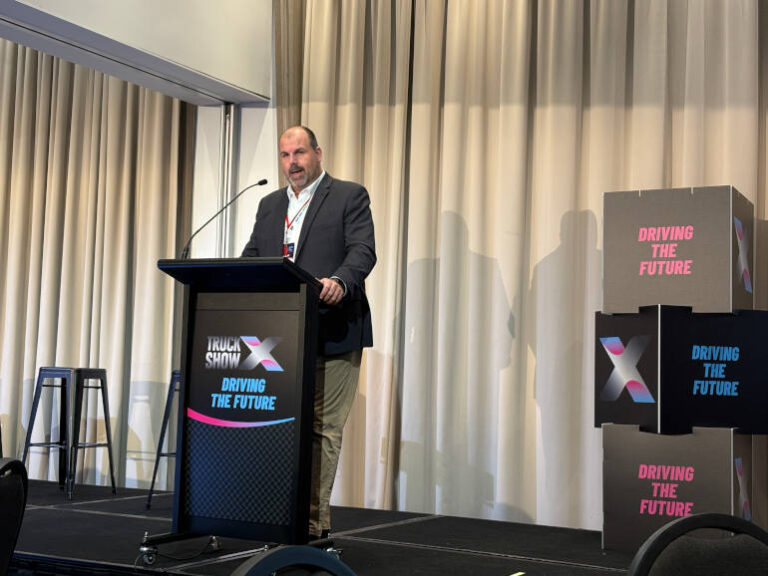
The opening address was delivered by Todd Hacking, Chief Executive Officer at Heavy Vehicle Industry Australia (HVIA), who welcomed delegates to the event and described TruckShowX as more than a conference. He said it had been created as a place for the industry to come together, share ideas, challenge assumptions, showcase innovation and help shape the future of freight and transport in Australia.

With the theme of “Driving the Future”, Hacking said the timing was important as the industry continues to navigate major change across technology, sustainability, productivity, safety and supply chain disruption.
Over two days, delegates will hear from transport operators, suppliers, innovators, technical experts and industry leaders, with exhibitors showcasing trucks, trailers, components and technology across the event site. Hacking encouraged attendees to use the conference to ask questions, meet new people, explore the expo and make the most of the drive day opportunities.
He also thanked the event’s sponsors and partners, including major sponsor NTI, strategic sponsors the NSW Government and Destination NSW, and media partners including Fleet News Group.
While the conference is focused heavily on technology and innovation, Hacking used the opening session to remind the industry that its most important asset remains its people. That message provided the link to the opening presentation from Ben Maguire AM, Director Corporate Affairs at Healthy Heads in Trucks & Sheds.
Maguire told delegates that while the Australian community is becoming more comfortable talking about mental health, transport remains one of the most challenged industries when it comes to mental wellbeing and suicide risk. He said Healthy Heads in Trucks & Sheds was established almost six years ago by senior industry leaders to address those challenges with the support of organisations across the sector.
He shared a practical framework for understanding mental health as a spectrum, explaining that everyone moves across different points depending on what is happening in their life. Maguire used a personal example from rural life to explain how noticing a change in someone, asking whether they are okay, encouraging them to seek help and checking back in can make a meaningful difference.
His message to the industry was direct: people do not need to be mental health professionals to help. They need to be prepared to notice changes, start a conversation and connect people with support.
Maguire encouraged delegates to download the Healthy Heads app, which provides resources for people working across road transport, warehousing and logistics. He also highlighted the Healthy Heads podcast hosted by Shane Jacobson, which shares stories of lived experience from people connected to the industry.
The opening session positioned TruckShowX as both a technology event and a people-focused industry gathering. The vehicles, energy systems, telematics, charging infrastructure and safety technologies on display will help shape the next phase of freight, but the message from the stage was that a stronger future also depends on supporting the people who keep the industry moving.
- EHAULA targets the heavy end of freight with electric-powered trailers
 Australian technology company EHAULA is developing an electric trailer system designed to help heavy freight operators reduce fuel use without sacrificing the payload and productivity that underpin their businesses. Speaking at TruckShowX, EHAULA Founder and CEO Dr Joshua Allwright said conventional battery-electric prime movers face significant challenges when applied to Australia’s heaviest combinations, particularly long-distance
 - Waste could fuel Australia’s heavy transport futureAustralia’s household and commercial waste could become a major source of locally produced hydrogen and low-carbon liquid fuels for the heavy transport industry, according to XSeed Solutions Director and Co-founder Craig Allen. Speaking at TruckShowX, Allen outlined a proposed network of regional sustainability precincts that would convert organic-rich waste into hydrogen, methanol and electricity. The
- Heavy transport needs practical decarbonisation, not a single technologyHeavy transport operators should avoid treating battery-electric, hydrogen and transitional fuels as competing technologies, according to TR Group Group General Manager NZ and AUS Brendan King. Speaking at TruckShowX, King said the operating demands of freight meant there was unlikely to be one universal pathway to lower emissions. Heavy trucks work longer hours than passenger
- Renewable diesel gives fleets a practical bridge to zero emissionsHeavy-vehicle operators do not need to wait for electric or hydrogen trucks to begin reducing emissions, according to Viva Energy Australia Carbon Solutions Manager Robert Cavicchiolo. Speaking at TruckShowX, Cavicchiolo said hydrotreated vegetable oil—commonly known as HVO or renewable diesel—could provide an immediate emissions-reduction pathway for fleets using existing diesel vehicles, storage tanks and refuelling
- Dual-fuel hydrogen offers fleets a practical pathway to lower emissionsHeavy transport operators do not buy drivetrains. They buy reliability, payload, uptime and economics. That was the central message from Gareth Wishart, General Manager Technology and Innovation at Change Fuel Tech, during his presentation at TruckShowX. Change Fuel Tech is part of New Zealand-based HW Richardson Group, a privately owned organisation comprising 49 companies across