
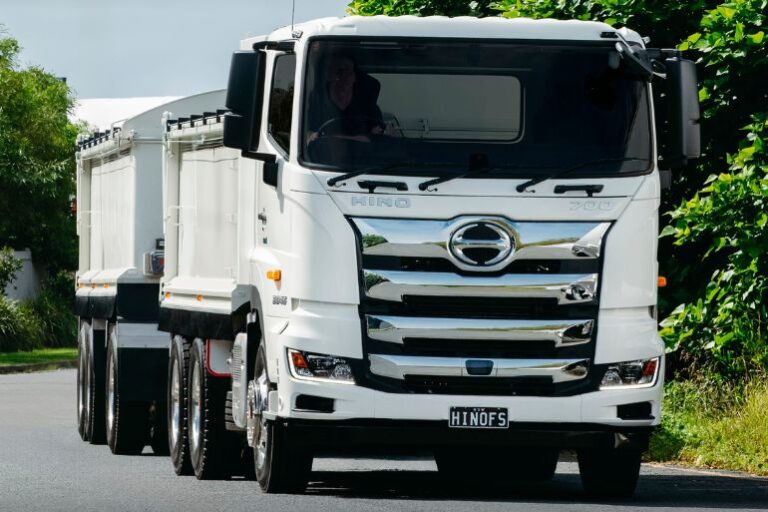
Hino Australia says demand for its 700 Series is strengthening as supply improves and fleets return to the heavy rigid market.
Speaking at Hino’s recent business briefing, President and CEO Richard Emery said 700 Series order intake had nearly tripled in the previous six months.
“We believe it’s been a bit of a quiet achiever over the last few years since launch.”
Orders build as supply improves
The increase in orders comes after a period when the truck market was affected by production constraints, supply disruptions and the transition to Euro 6 emissions standards.
Emery said Hino was now seeing a more positive response from both dealers and customers as stock availability and model choice improved.
“The noise is certainly getting louder now, and we can see that in our order intake,” he said. “Our order intake on 700 Series has close to tripled in the last six months.”
He said the growth had been supported by three factors: better supply, a stronger value proposition and a broader line-up.
“Today we have better supply, a strong value proposition together with the expanded line-up,” Emery said.
For Fleet Managers replacing heavy rigid trucks, better supply matters as much as specification. Delivery delays can leave ageing vehicles in service longer, increase maintenance risk and disrupt replacement schedules.
Heavy rigid market regains attention
The 700 Series operates in Hino’s heavy-duty rigid range, covering applications such as distribution, waste, construction, local government, trade services and vocational work.
These fleets often need a truck that can be configured for a specific body or equipment package, including tippers, cranes, trays, hook-lifts, refuse bodies and refrigerated equipment.
That makes availability of the chassis only one part of the buying decision. Fleet buyers also need to consider body-build timing, axle configuration, wheelbase, payload, safety systems, dealer support and the availability of replacement parts.
Hino’s comments suggest that operators are again able to move from enquiry to order with more confidence than during recent supply-constrained years.
Recovery is about more than volume
Emery said Hino expected the broader truck market to remain relatively flat through 2026, before returning to steadier growth from early 2027.
For Hino, the 700 Series order lift is therefore less about a sudden market boom and more about recovery in the company’s ability to serve a core segment.
“We have the product. We have a great value proposition in place, and now we have a much broader model line-up than before,” Emery said.
The company sees the 700 Series as a key part of rebuilding its overall truck volumes while its 300 and 500 Series ranges return to fuller availability.
Hino’s 500 Series is expected to return to sale from July 2026, with deliveries beginning in early 2027. The phased return of the medium-duty range should further improve Hino’s ability to compete across replacement programs that span light, medium and heavy rigid trucks.
What fleet buyers should test
A near-tripling of order intake is a useful market signal, but it should not replace fleet evaluation. For buyers considering a heavy rigid replacement, the important questions remain:
- Does the available configuration suit the body and payload requirement?
- What is the confirmed chassis and body-build lead time?
- Are servicing and parts support suitable for the operating area?
- How do safety, fuel use and whole-of-life costs compare with competing trucks?
- Does the truck’s specification support the required future task, rather than only the current one?
The 700 Series order growth indicates Hino is regaining momentum in the heavy rigid market. The larger test will be whether improved supply, broader choice and aftersales support translate into sustained fleet replacement activity as the market moves through 2026 and into 2027.