

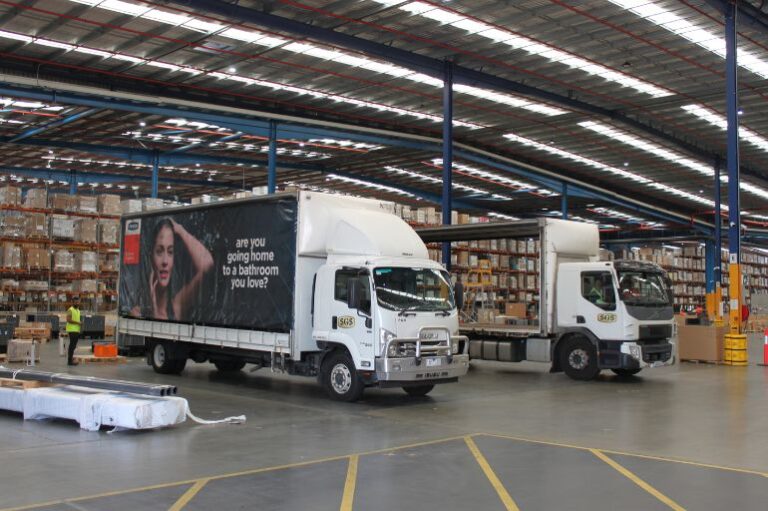
The transport industry talks increasingly about net zero targets, electric trucks and sustainability commitments. But according to one logistics operator working directly with customers across Australia, there is still a significant gap between environmental ambition and commercial reality.
Speaking at Sustainability Business Live in Melbourne, Luke Sadler, Director at SGS Logistics, said many customers are enthusiastic about reducing emissions, but their priorities often change when the costs of transitioning to lower-emission transport are put on the table.
“At this stage, they want us to be across it,” Sadler said. “A lot of our customers are saying that they want to electrify, and they’re saying they want to be part of the solution when it comes to zero emissions.”
However, the conversation often changes once the financial implications become clear.
“Then you put the numbers in front of them and they have a little bit of a different answer, or their timeframes change,” he said.
The comments highlight a challenge facing many organisations pursuing sustainability goals. While environmental targets are becoming increasingly common in annual reports and corporate strategies, the willingness to absorb the additional costs associated with new technologies can be more difficult to secure.

For SGS Logistics, the response has been to stay informed and prepared rather than rushing ahead of customer demand.
“We’re being driven by our customers on this,” Sadler said.
Rather than positioning itself as an early adopter for the sake of appearances, the company is focusing on understanding emerging technologies and monitoring the market so it can respond quickly when customers are ready to move.
“Our motivation is probably more that we think it’s important that we’re across what’s on offer,” he said.
That means keeping up to date with developments in electric vehicles, charging infrastructure and other low-emission technologies, even if widespread adoption remains some distance away for many customers.
Sadler believes this approach will allow SGS Logistics to act quickly when commercial and operational conditions eventually align.
“When our customers do at some point say either it makes commercial sense or we’re at a point in our business where we need to be seen to be better on this front, and we’re prepared to pay for that, we’re ready to jump,” he said.
The strategy reflects a growing reality across the freight and logistics sector. Many transport providers are finding themselves caught between customer expectations around sustainability and the practical economics of delivering transport services.
For Sadler, being prepared is more important than making symbolic commitments.
“We’re not just dipping our toes in the water for the first time,” he said.
Importantly, he believes transport operators should be building enough expertise to help guide customers through the transition, rather than simply reacting to requests.
“If as part of this process of trying to stay ahead of it means that we find something out that means that we can go back to our customers and say, ‘Hey, this is actually more commercially viable than you might think,’ well, at that point we might push it,” he said.
That role as a trusted adviser may become increasingly valuable as vehicle technology evolves and the economics continue to improve.
“What’s important to me, I want to make sure that we’re suggesting things to our customers, not the other way around,” Sadler said.
His comments suggest that the future of fleet decarbonisation may depend on more than just new vehicles and government incentives. It will also require transport operators who understand the technology well enough to identify when the tipping point has arrived.
For now, many customers remain interested in lower-emission transport solutions, but interest alone is not enough to drive change.
The challenge for suppliers, vehicle manufacturers and policymakers is finding ways to bridge the gap between sustainability aspirations and commercial reality.
Until then, the demand for zero-emission transport may continue to grow faster than the willingness to pay for it.