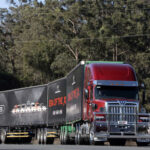

Australian trucking operators are warning customers to prepare for higher freight costs as diesel prices surge, according to the Australian Trucking Association (ATA).
Australian Trucking Association CEO Mathew Munro said the rapid increase in global diesel prices is already flowing through to Australian retail fuel prices and will inevitably affect transport costs across the economy.
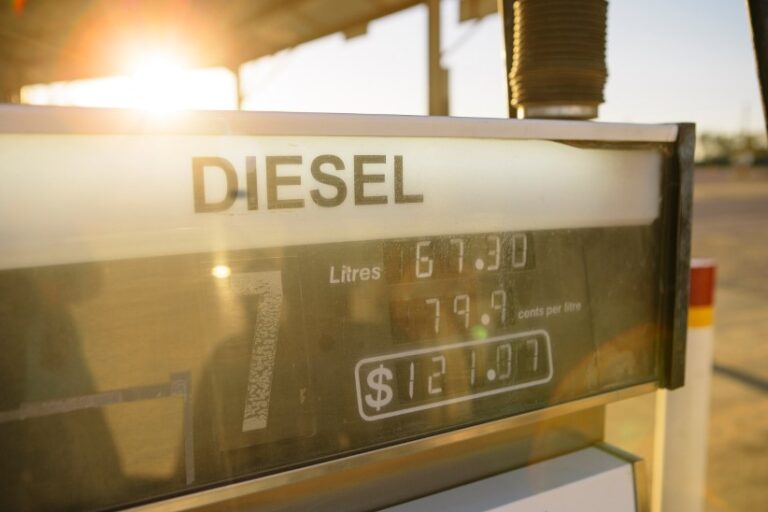
The market price for diesel has risen sharply, increasing from around A$130 per barrel on Friday 27 February to almost A$220 per barrel, while retail diesel prices have climbed nearly 19 cents per litre since Sunday.
Munro said trucking businesses operate on tight margins, meaning fuel cost increases cannot be absorbed by operators.
“Fuel is typically one of the top three costs for a trucking business. Any increase in fuel prices has a big impact,” he said.
Many operators use fuel levies that automatically adjust freight invoices when fuel prices change. Others rely on periodic contract reviews, while some contracts have no mechanisms at all to account for sudden price increases.
Munro said operators should review their cost structures and discuss adjustments with customers where necessary.
“Trucking businesses need to review their costs and, if necessary, have open conversations with their customers about the need to bring forward the next fuel levy adjustment or rate review,” he said.
Operators have also been warned to plan ahead when ordering fuel, as demand spikes can lead to delays in supply.
“Trucking businesses cannot be expected to absorb the cost of increased fuel prices. Our industry is already under extreme pressure, with one in every 12 businesses closing in the 12 months to November 2025,” Munro said.
Fuel security concerns remain
Munro said the price spike highlights long-standing concerns about Australia’s fuel security and the country’s dependence on imported fuels.
Australia is required, as a member of the International Energy Agency, to hold oil stocks equivalent to 90 days of net imports.
The ATA has campaigned since 2014 to strengthen Australia’s fuel security and previously opposed plans to store national fuel reserves in the United States.
Munro said progress has been made through the Minimum Stockholding Obligation (MSO) rules introduced in 2021, which require fuel importers and refiners to hold baseline levels of fuel stocks.
Around three billion litres of diesel are currently held under the MSO system, equivalent to about 33 days of supply, with stocks either in Australia or on ships nearby. In total, Australia’s oil reserves equate to roughly 50 days of net imports under IEA calculations.
However, Munro said more work is needed to reach the 90-day target.
“The Australian Government has made progress on Australia’s fuel security, but it’s been a problem for many years. Australia needs to have the 90 days of net import cover that we signed up to hold,” he said.
Contract reforms still years away
The ATA also linked the diesel price spike to its submission to the Fair Work Commission regarding proposed contractual chain orders for the road transport industry.
The Commission is considering rules that could apply across the road transport contract chain, including requirements for annual rate reviews and more frequent fuel price adjustments unless contracts already include fuel levy mechanisms.
However, Munro said those changes are unlikely to take effect until late 2027 at the earliest.
“In the meantime, trucking companies need to monitor their costs closely and speak with their customers,” he said.
“The ATA will continue working with government and fuel suppliers to understand the situation and emphasise the critical importance of road freight transport to everyone in Australia.”
- Euro 6 and Multi-Combination Trucks: The Emissions Lever Hiding in Plain Sight
 As debate continues around battery electric and hydrogen trucks, Craig Lee, Executive General Manager – On-Highway at Penske Australia & New Zealand, believes Australia may be overlooking a far more immediate emissions opportunity. “If you actually want to make the single biggest emission reduction that you can in Australia,” Lee said, “provide significant incentives to
 - NewVolt breaks ground on Melbourne fast-charging network for electric trucksConstruction has commenced on a new fast-charging network designed specifically for heavy vehicles, marking a significant step in the development of Australia’s electric truck infrastructure. Energy and infrastructure company NewVolt confirmed it is building Stage 1 of the NewVolt Network — a three-hub, open-access fast-charging network located across Melbourne’s major freight precincts. The announcement coincides
- What Are Scope 1, 2 and 3 Emissions — and Why Fleet Managers Need to Understand ThemSustainability reporting is moving quickly from a corporate talking point to an operational requirement. For fleet managers, understanding Scope 1, 2 and 3 emissions is becoming as important as tracking fuel consumption, maintenance costs or utilisation. These emissions categories form the backbone of modern carbon reporting frameworks and are increasingly linked to customer expectations, contract
- Renewable Diesel (HVO) Emerges as Heavy Transport’s Transitional PathAs Australia debates the future of heavy vehicle decarbonisation, Craig Lee, Executive General Manager – On-Highway at Penske Australia & New Zealand, believes the most practical emissions lever may not be hydrogen or battery electric trucks — but renewable diesel. “It’s unsexy, because an engine still has a tailpipe,” Lee said. “But as far as
- Hydrogen Gains Momentum in New Zealand’s Heavy Transport SectorHydrogen is beginning to shift from pilot projects to early commercial deployment in New Zealand’s heavy transport market, supported by infrastructure investment, government backing and growing operator interest. Rodger Spillane, Manager – Hydrogen Programme at Toyota New Zealand, says the country’s hydrogen journey has accelerated over the past few years through coordinated industry and government